The Controversy over Amy Sherald’s Painting Highlights the Complexity of Cultural Symbolism
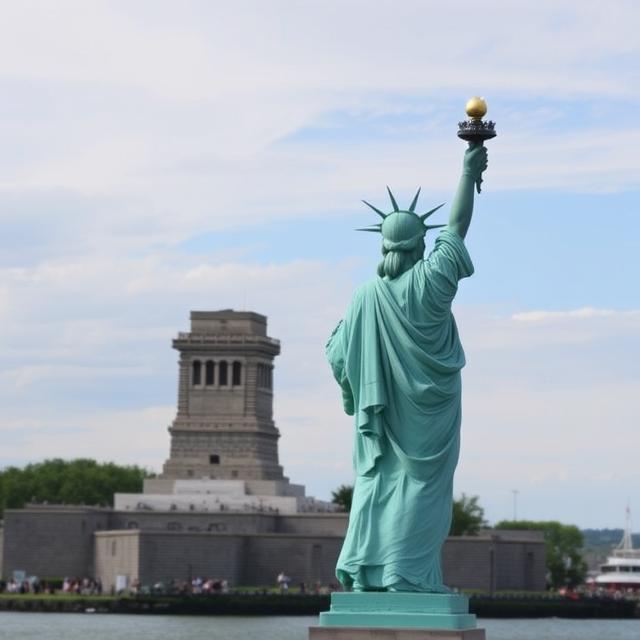
The Statue of Liberty, an iconic symbol of freedom and democracy, has long been a source of controversy in the United States. Recently, a painting by African American contemporary artist Amy Sherald has reignited the debate, sparking a culture war over the meaning of this national symbol.
Sherald’s painting, titled “Trans Forming Liberty,” reimagines the Statue of Liberty as a black transgender woman, a stark departure from the traditional depiction of the statue. The painting is part of Sherald’s touring exhibition, “American Sublime,” which is currently on display at the Whitney Museum in New York City.
The controversy surrounding Sherald’s painting is not new. The Statue of Liberty has been a source of debate since its unveiling in 1886, with suffragettes arguing that the sculpture’s depiction of a woman embodying liberty was ironic given the lack of women’s suffrage at the time. Conservatives, on the other hand, objected to the statue’s potential to attract immigrants to the United States.
The Statue of Liberty was a gift from France to the United States, and it was formally dedicated on October 28, 1886. The statue was designed by French sculptor Frédéric-Auguste Bartholdi, who was inspired by the Roman goddess Libertas and the Greek sun god Helios. The statue’s iconic torch, which is often seen as a symbol of freedom, was actually added later, in 1902, by architect Richard Morris Hunt.
Sherald’s painting aims to challenge these traditional interpretations of the Statue of Liberty by presenting a black transgender woman as a symbol of freedom. The painting’s use of a flat, periwinkle background and a vibrant ultramarine gown is meant to evoke a sense of otherworldliness and challenge viewers’ assumptions about what constitutes race.
The painting’s model, Arewà Basit, is a black artist who identifies as non-binary trans-femme. Basit’s presence in the painting is meant to highlight the struggles of black trans individuals, who often face marginalization and oppression. The painting’s use of a clutch of humble Gerbera daisies, traditionally a symbol of joy and hope, is meant to subvert the traditional notion of the Statue of Liberty as a symbol of freedom and instead emphasize the struggles of marginalized communities.
The controversy over Sherald’s painting has also highlighted the tension between artistic freedom and government censorship. The Smithsonian’s National Portrait Gallery had initially planned to include the painting in an exhibition, but after meeting with Vice-President JD Vance, who expressed concerns about the “woke” nature of the work, the organizers began to have second thoughts.
The incident has sparked a wider debate over the role of cultural symbols in American society. The White House has given the Independence National Historical Park in Philadelphia until the end of July 2025 to review its programs and ensure that they align with the administration’s vision of American history.
The controversy surrounding Sherald’s painting is a stark reminder of the complexities of cultural symbolism and the challenges of navigating the intersection of art, politics, and identity. As the debate over the meaning of the Statue of Liberty continues, it is clear that the symbol will remain a source of controversy and debate for years to come.
Amy Sherald’s exhibition “American Sublime” is currently on display at the Whitney Museum in New York City until August 10. The exhibition features a range of works that explore the complexities of American identity and the struggles of marginalized communities. The exhibition is a must-see for anyone interested in contemporary art and the ongoing debate over cultural symbolism.


 The Tower Post