The sudden halt of American funding leaves patients without care and health systems on the brink. David Pilling reports from Eswatini on a growing humanitarian crisis.
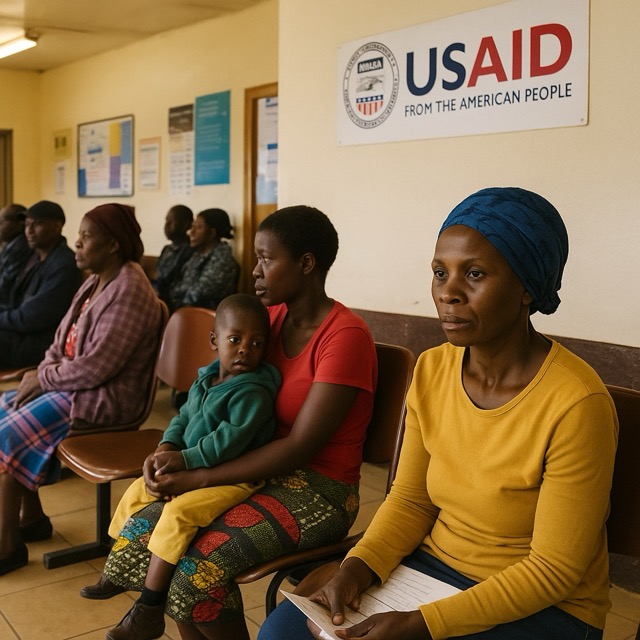
MATSAPHA, ESWATINI — The once-bustling waiting room at the Matsapha Health Centre now stands eerily quiet. What used to be a vital hub for HIV treatment and maternal care is today a shell of its former self. Just three months ago, it served hundreds of patients daily. Now, with the abrupt withdrawal of USAID funding, only a handful of staff remain — and they work without pay.
Across Eswatini and many other nations in Africa, Asia, and Latin America, the decision by the United States to cut development assistance programs has triggered chaos. Programmes that supported HIV/AIDS treatment, maternal health, tuberculosis prevention, and food aid have been frozen or dismantled entirely.
In Eswatini, where HIV prevalence remains one of the highest in the world, the consequences are immediate and devastating. ‘We’ve had to stop antiretroviral treatment for over 1,500 patients,’ said Dr. Nelisiwe Khumalo, director of the Matsapha facility. ‘Some have already fallen critically ill. Others have simply disappeared.’
The United States Agency for International Development (USAID) has long been a cornerstone of global health and development funding. But the Biden administration’s abrupt pivot — prompted by political opposition in Congress and redirected priorities at home — has resulted in the closure of offices and termination of local contracts in dozens of countries.
According to the Global Health Alliance, nearly 11 million people have lost access to life-saving medicines and public health interventions since the rollback began in March. In many rural and underserved areas, USAID-supported clinics were the only available source of care.
David Musonda, a regional coordinator for an HIV treatment program in Zambia, called the move ‘a betrayal of historic proportions.’ He added: ‘We were told to prepare for a transition, not a total abandonment. There was no handover, no sustainability plan, nothing.’
The effects are not only medical but economic. Thousands of local health workers, community educators, and logistics coordinators have been laid off. In Eswatini alone, an estimated 5,000 jobs were tied to USAID-supported operations. Many were the sole income earners in their families.
Some experts believe the damage will stretch far beyond immediate health metrics. ‘There will be long-term effects,’ said Anika Deshmukh, a development economist. ‘We’re talking about setbacks in childhood vaccination, malaria control, nutrition, and even education — all areas supported by U.S. aid in integrated community models.’
In Washington, officials have expressed regret over the fallout but defend the decision as part of a broader reorientation of U.S. foreign assistance. Privately, some diplomats admit the move has undercut U.S. influence and goodwill in critical regions at a time of rising competition with China and other emerging donors.
For communities like Matsapha, however, such geopolitical justifications mean little. ‘We don’t care about Washington politics,’ said Siphiwe Dlamini, a nurse now working without pay. ‘We care about the sick people knocking at our door. And now, we have nothing left to give.’




 The Tower Post