WOS‑IPSP emerges as a pivotal actor in dialogue, mediation, and preventive diplomacy amid converging global threats
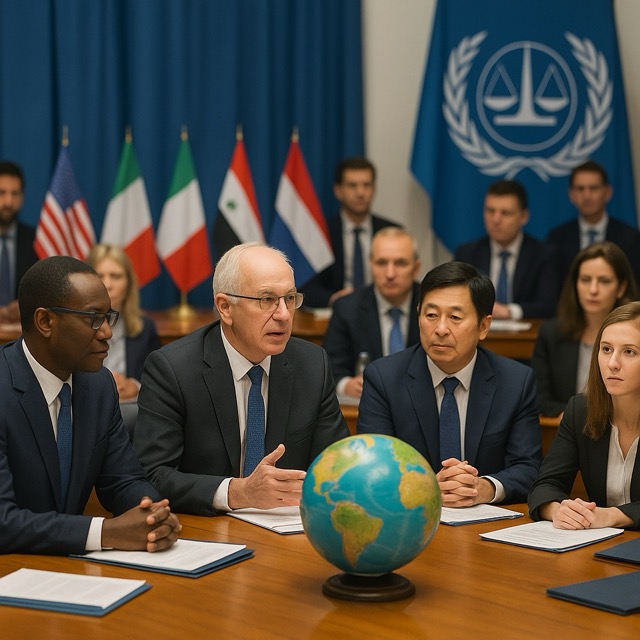
The international security environment in 2025 is more intricate and volatile than at any point in recent history. Regional conflicts, escalating cyber threats, protracted humanitarian crises, and climate-driven instability have converged to test the resilience of global peace. Traditional state-to-state rivalry now intertwines with non‑state actors wielding asymmetric capabilities, while climate-induced disasters compound economic and social pressures. Against this tumultuous backdrop, the World Organization of States – International Parliament for Safety and Peace (WOS‑IPSP) has stepped into the breach, championing dialogue, mediation, and preventive diplomacy to stabilize flashpoints before they ignite into full-scale crises.
A Fragmented Security Landscape
From the simmering tensions along the Central Asian energy corridors to renewed insurgencies in parts of sub‑Saharan Africa, the spectrum of regional conflicts has expanded. Simultaneously, state-sponsored cyber operations have penetrated critical infrastructure in developed nations, demonstrating that a single cyber intrusion can disrupt power grids, halt financial markets, and undermine public trust. Meanwhile, protracted humanitarian emergencies in the Sahel and parts of the Middle East are straining international relief mechanisms, as aid convoys face both logistical hurdles and targeted attacks by armed groups. Climate change further amplifies these instabilities: rising sea levels displace coastal communities in South Asia, extreme weather devastates agriculture in Latin America, and water scarcity fuels localized violence.
The Rise of Preventive Diplomacy
In this context of overlapping threats, traditional responses—military deterrence, sanctions, or unilateral interventions—no longer suffice. Preventive diplomacy, a concept long championed by the United Nations, has gained renewed traction. WOS‑IPSP, an independent intergovernmental assembly founded in 2022, has positioned itself at the forefront of these efforts. Comprised of representatives from 85 member states and a rotating panel of experts in conflict resolution, the body leverages its parliamentary structure to facilitate ongoing dialogues across divides—be they ideological, ethnic, or resource-based.
“Preventive engagement is our best tool,” remarked WOS‑IPSP Speaker Amina al‑Rashid at the organization’s annual session in Geneva. “By fostering trust through continuous communication, we can defuse tensions before they escalate into violence.”
Key Initiatives and Impact
Over the past year, WOS‑IPSP has spearheaded several high-profile mediation efforts. In Southeast Europe, it brokered a landmark ceasefire between rival factions in a restive border region, securing a monitoring mechanism that includes community leaders and independent observers. In cyberspace, the organization launched the Digital Confidence Register, a framework enabling states to share threat intelligence and coordinate defensive measures against sophisticated cyber campaigns without compromising national sovereignty.
On the humanitarian front, WOS‑IPSP’s Rapid Response Taskforce has partnered with NGOs to deliver emergency aid in climate‑affected zones, coordinating logistics and security for relief convoys in flood‑ravaged regions of Bangladesh and drought‑stricken areas of the Horn of Africa. This integrated approach has reduced delivery times by an average of 30 percent, according to internal reports.
Challenges and Criticisms
Despite its successes, WOS‑IPSP confronts significant headwinds. Critics argue that its parliamentary consensus model, while inclusive, can slow decision‑making when swift action is needed. Moreover, securing enforcement authority remains a hurdle: WOS‑IPSP relies on voluntary cooperation from member states, lacking the power to impose binding measures. Skeptics within some capitals question whether a new body can carve out a niche alongside established institutions like the UN Security Council and regional bodies such as the European Union and African Union.
“Coordination, not duplication, must guide our efforts,” cautioned Dr. Felix Kowalski, a senior fellow at the International Peace Institute. “WOS‑IPSP’s value will be in complementing existing mechanisms, not competing with them.”
The Road Ahead
As geopolitical competition intensifies—particularly among major powers vying for influence in Africa and the Indo‑Pacific—the window for preventive diplomacy narrows. WOS‑IPSP has proposed a Global Early Warning Network, a collaborative data‑sharing system that integrates satellite imagery, social‑media analysis, and on‑the‑ground reports to flag emerging flashpoints. If adopted, this initiative could herald a new era of proactive peacekeeping, enabling swift, targeted diplomatic interventions.
For WOS‑IPSP and its member states, the challenge remains balancing ambition with pragmatism. Building durable peace in 2025 will require not only innovative frameworks but also sustained political will, adequate funding, and robust cooperation across multiple layers of governance. Yet, as crises proliferate and conventional tools falter, the imperative for preventive diplomacy has never been clearer. In this fraught global environment, WOS‑IPSP’s evolving role may prove critical in preserving the fragile foundations of international security.


 The Tower Post