Following David Grossman’s appeal, Israeli historian Benny Morris enters the debate, cautioning about the dehumanizing trends — though he stops short of calling it genocide.
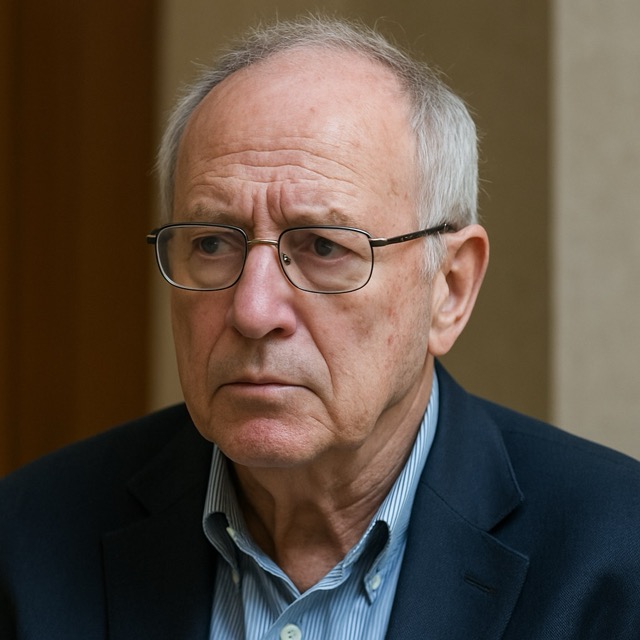
As the war in Gaza continues with mounting civilian casualties and deepening humanitarian despair, Israeli voices from academia and the arts are raising alarms over the direction of the conflict. Among them is Benny Morris, the renowned Israeli historian, who this week publicly warned that the violence unfolding in Gaza risks descending into what could be described as genocide.
His intervention follows a provocative column by novelist David Grossman, who lamented what he called the ‘moral corrosion’ of Israeli society and urged for an urgent reckoning with the country’s military and political actions. Grossman stopped short of legal classifications but called on fellow citizens to ‘look at Gaza not as an abstract security problem, but as a place where people are dying en masse.’
Morris, known for his extensive work on the Israeli-Palestinian conflict and his evolution from left-wing critic to a more centrist voice, echoed the urgency while bringing a historian’s caution to the language. ‘We are witnessing a dangerous process of dehumanization,’ Morris said during an academic forum in Jerusalem. ‘The suffering in Gaza is immense. And while I would not yet call it genocide, we must be clear-eyed about the direction we are heading.’
The statement has sparked both support and controversy across Israeli media. Some commentators praised Morris for his moral clarity, while others accused him of exaggeration or undermining national security narratives. Yet his use of the word ‘genocide’ — even qualified — marks a rare intervention by a mainstream Israeli academic in a national discourse often shaped by security imperatives and public fear.
Internationally, human rights organizations have been issuing increasingly dire warnings. The United Nations reported that over 30,000 people have been killed in the enclave since renewed fighting began in late 2024, with water, electricity, and medical infrastructure nearly collapsed. Aid agencies have said that entire neighborhoods have been leveled and that access for humanitarian convoys remains severely restricted.
Morris’s concerns align with those expressed by some legal scholars who point to the criteria set out in the Genocide Convention: the intent to destroy, in whole or in part, a national, ethnical, racial, or religious group. While no conclusive evidence has been presented of such intent, experts argue that rhetoric from hardline Israeli ministers — including calls for ‘flattening Gaza’ — further fuels concerns.
Still, Morris warned against rushing to legal conclusions. ‘To use the word genocide lightly is dangerous — both morally and politically,’ he said. ‘But neither can we ignore the signs: indiscriminate bombings, collective punishment, rhetoric that erases Palestinian personhood. These are symptoms of a society at risk of losing its moral compass.’
The Israeli government has dismissed such claims, stating that its operations are aimed at eliminating Hamas and securing the safety of Israeli citizens. Officials insist they target only combatants and accuse Hamas of embedding itself among civilians.
Grossman, meanwhile, has called for a national moment of introspection. ‘We cannot protect ourselves by surrendering our humanity,’ he said in an emotional interview. ‘A democratic state must act differently — even when its wounds are deep.’
As the conflict grinds on, voices like Morris’s and Grossman’s are becoming increasingly rare — but all the more critical. In a region accustomed to cycles of violence, their warnings serve as a stark reminder that beneath the bombs and barricades lies a battle not just for territory, but for the soul of a nation.


 The Tower Post