If recognition came today, 400,000 settlers would have to leave occupied land — a scenario seen as impossible. So why invoke it? The only real alternatives are grim.
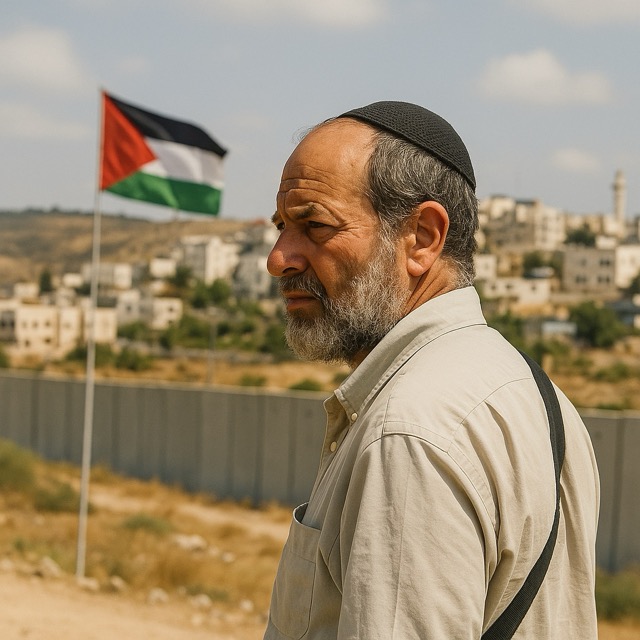
As international calls intensify for the recognition of Palestine as a sovereign state, a new wave of political and ethical debates has resurfaced across Israel, the Palestinian territories, and the broader Middle East. The numbers are stark: if such recognition were to be granted tomorrow under conditions aligning with international law, at least 400,000 Israeli settlers currently residing in the West Bank would be living on what would then become foreign soil — and would likely be required to leave.
The idea of reversing decades of settlement expansion — long considered illegal under international law — is viewed by many analysts as politically and logistically unworkable. Settlements are often fortified, deeply integrated into Israeli infrastructure, and backed by powerful ideological movements. For successive Israeli governments, evacuating them is a nonstarter.
So why does the notion of a two-state solution — predicated on such a withdrawal — persist in international forums? ‘It remains the only diplomatic framework with broad symbolic consensus,’ says Dr. Laila Sharif, a political scientist at Birzeit University. ‘But in practice, it is increasingly a fantasy. Everyone knows it’s unfeasible, but few dare to say so out loud.’
Indeed, the alternatives — rarely articulated in official speeches but looming ever larger — are both unsettling. One is the formalization of a single binational state in which Israelis and Palestinians share equal citizenship. This would upend the Jewish-majority identity of the Israeli state, a prospect that most mainstream Israeli politicians reject outright.
The other is more dystopian: a forced expulsion of Palestinians from Gaza and the West Bank. Though unthinkable to many in the international community, some ultranationalist voices within Israeli politics have begun hinting at such a possibility, citing demographic concerns and the perceived impossibility of coexistence.
‘The tragedy is that we’ve reached a point where each option seems to imply catastrophe for one side or the other,’ says Michael Klein, a former Israeli diplomat. ‘And in that vacuum, the status quo prevails — punctuated by waves of violence.’
The current Gaza conflict, with its unprecedented destruction and loss of civilian life, has only sharpened these choices. As of this month, over 2 million Palestinians remain under siege, and peace negotiations remain frozen. In the West Bank, settler violence and military raids have increased dramatically, further destabilizing the region.
International observers worry that continued ambiguity benefits only those interested in indefinite conflict. ‘Without a roadmap, the void will be filled by the extremes,’ warns UN special envoy Helena Markus. ‘Recognition without implementation is a gesture. But no gesture can substitute for a policy.’
And yet, invoking the two-state solution remains politically useful — a rhetorical lifeline for leaders unwilling or unable to address the darker options. It signals hope, even if that hope is more illusion than blueprint.
As the debate continues, one truth becomes unavoidable: any real resolution — two states, one state, or forced displacement — will demand a moral reckoning of historic proportions. The future of Israelis and Palestinians alike may hinge not only on what is possible, but on what the world is ultimately willing to accept.



 The Tower Post