A Rare 14% Slide Tests the ‘Buffett Premium’ Ahead of Succession
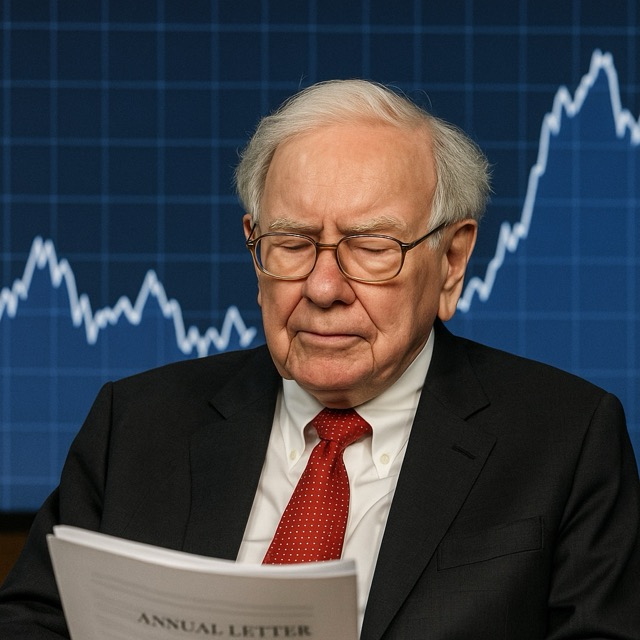
Omaha, Nebraska. Berkshire Hathaway, the conglomerate steered by legendary investor Warren Buffett since 1965, has seen its Class A shares plunge 14% since May 2nd, the last trading day before Buffett, 94, announced plans to hand over the reins to heir apparent Greg Abel. In contrast, the S&P 500 has rallied 11%, including dividends, leaving Berkshire trailing by one of its widest margins over any three-month span since 1990.
The slide, revealed in an analysis by the Financial Times, highlights growing investor anxiety over Buffett’s impending departure and concerns about whether Abel can preserve the storied value-driven, buy-and-hold philosophy that fueled decades of outperformance. “Buffett taught us to focus on intrinsic value and long-term horizon,” said Jane Kim, a senior portfolio manager at Eastwood Capital. “Now, the question is whether that approach can endure without its iconic architect.”
Historically, Berkshire outpaced the S&P 500 by more than 5 million percentage points during Buffett’s tenure, creating what is known as the “Buffett premium.” This gap has endured through market cycles, from the dot-com bust to the 2008 financial crisis. Yet recent volatility has tested this legacy, with investors weighing the reliability of Berkshire’s diverse holdings—ranging from insurance giants Geico and General Re to railroad operator BNSF—against broader market momentum.
Analysts note that short-term performance often obscures the firm’s long-term strengths. “Berkshire’s intrinsic portfolio fundamentals remain solid,” argued Thomas Levine of Midwestern Securities, pointing to robust underwriting profits and a healthy cash pile near $150 billion. Nonetheless, he acknowledged that market psychology can become self-fulfilling, as outflows pressure share prices further.
Meanwhile, personal stakes are high for Buffett himself, who has pledged that any successor will continue his investment creed. Greg Abel, vice chairman of non-insurance operations, has been a Buffett lieutenant for over a decade, overseeing energy, utility, and manufacturing divisions. Yet Abel must earn investor trust beyond his corporate titles, dispelling doubts over whether his decision-making style will measure up to Buffett’s.
Investor sentiment has shifted noticeably. Institutional holders such as mutual funds and pension plans have rebalanced, reducing Berkshire’s weighting in their portfolios in favor of sectors perceived as growth engines, such as technology and renewable energy. Retail investors, too, have voiced concerns on social media and at annual meetings, prompting Berkshire’s shareholder services to field an unusually high volume of inquiries.
In its quarterly shareholder letter, Berkshire acknowledged the underperformance but cautioned against overreacting to short-term swings. “Our patience has served us well,” the letter read. “We remain focused on acquiring high-quality businesses at fair prices and compounding capital over time.” Still, few if any communications have resonated as strongly as Buffett’s personal endorsement of Abel, issued when he first revealed the succession plan.
Critics argue that the market’s lukewarm response reflects structural shifts in global finance. With interest rates elevated and quantitative easing winding down, traditional conglomerate models face headwinds, while nimble, thematic funds capture investor interest. “The era of passive conglomerates is under pressure,” said Maria Gonzalez, head of equities at TransAtlantic Bank. “Berkshire must adapt to new market dynamics without losing its soul.”
Looking ahead, attention centers on Berkshire’s next acquisitions and capital allocation choices. With substantial dry powder, Abel may pursue deals to reinvigorate growth, potentially venturing into sectors like clean energy or technology. His first major move could signal whether the Buffett premium is transferable or destined to fade.
As Warren Buffett edges toward retirement, the financial world watches closely. If the conglomerate under new stewardship can navigate these challenges, the Buffett legacy will endure. If not, a storied chapter in investing history may close, leaving the market to ponder the limits of even the most celebrated investment approach.


 The Tower Post