Justice Officials, Former Prosecutors, FBI Chiefs to Testify as Maxwell Seeks Transcript Privacy
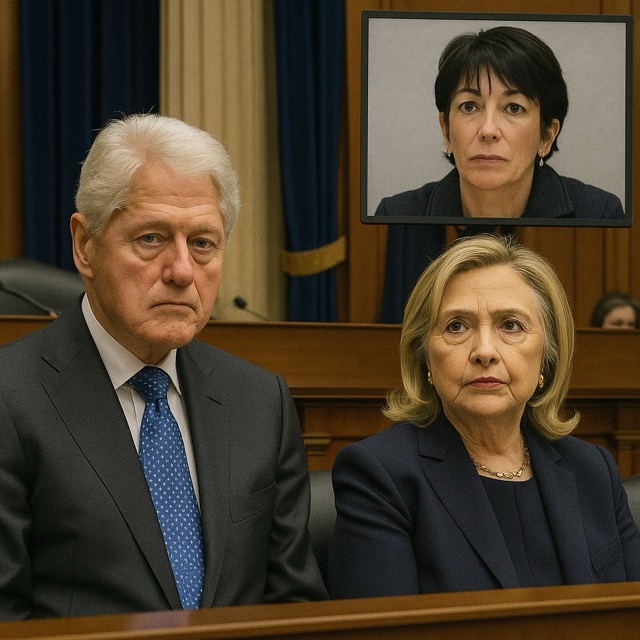
Washington, D.C.– The House Judiciary Committee has intensified its investigation into the Jeffrey Epstein case, issuing formal subpoenas for former President Bill Clinton and former Secretary of State Hillary Clinton. The high-profile summons comes amid mounting scrutiny over alleged connections between Epstein and prominent political figures.
In addition to the Clintons, the committee has called on Attorney General Merrick Garland, former U.S. Attorneys involved in the original Epstein prosecution, and current and former FBI directors. Witnesses are expected to appear before the committee starting later this month to address questions regarding witness tampering, investigative decisions, and the handling of evidence.
Committee Chair Representative Jim Jordan stated that the goal is to “leave no stone unturned” in understanding whether political influence or misconduct affected the course of the Epstein investigation. Jordan emphasized the committee’s commitment to transparency, despite objections from some Democratic members who argue that the probe risks becoming overly politicized.
While preparations for the hearings accelerate, defense attorneys for Ghislaine Maxwell have filed a motion objecting to the public release of her deposition transcript. Maxwell’s legal team contends that the transcript contains sensitive personal information and unverified allegations, arguing that publication would undermine her right to a fair process.
Legal experts are divided on Maxwell’s request. Professor Emily Bazelon of Yale Law School warns that sealing the transcript could fuel public suspicion, while other scholars stress the importance of protecting witness privacy in high-stakes cases.
Former U.S. Attorney Geoffrey Berman, one of the subpoenaed witnesses, has signaled his willingness to cooperate fully, stating that he has “nothing to hide” about the prosecutorial decisions made during the 2019 trial. FBI Director Christopher Wray’s testimony is expected to focus on intelligence-sharing protocols and allegations that informants were pressured to limit their cooperation.
Representative Alexandria Ocasio-Cortez, speaking for the Democratic minority, criticized the timing of the subpoenas, suggesting the committee is using Epstein’s case for political theater. “This investigation must be above partisan gamesmanship,” she declared, calling for a balanced approach that prioritizes factual clarity over political gain.
Hearings are scheduled to begin the week of August 18 in a specially equipped secure hearing room. Transcripts and video feeds will be made available to the public, barring any successful legal challenges. As the inquiry unfolds, the nation watches closely to see whether this investigation will bring long-awaited answers or deepen the controversies surrounding one of America’s most notorious criminal cases.



 The Tower Post