Envoy Witkoff Heads to Moscow as U.S. Pressure Rises on Kremlin Energy Strategy
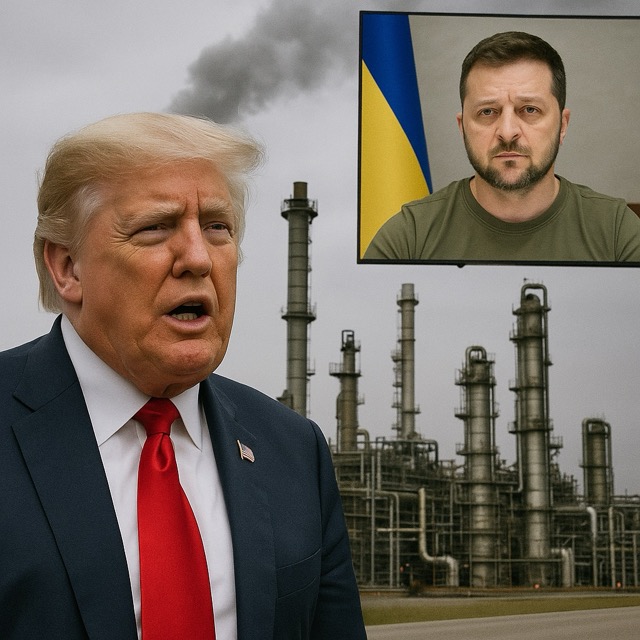
Washington, D.C.– In a bold diplomatic gambit, former President Donald J. Trump publicly challenged President Vladimir Putin of Russia over the Kremlin’s reliance on high oil prices, asserting that sustained pressure on global energy markets would compel Moscow to soften its stance on Ukraine and other geopolitical flashpoints.
Speaking at a press conference alongside high-profile energy advisers, Trump declared that the United States would leverage its own production capabilities to drive down oil prices, thereby cutting into Russia’s revenue streams. “If American wells keep pumping and European partners tap strategic reserves, Putin’s coffers will dry up,” Trump asserted.
The strategic move comes as part of a broader effort to tighten sanctions on Russia while providing economic relief to Western allies grappling with elevated fuel costs. Trump emphasized that lowering oil prices would not only undercut Russia’s financial base but also ease the burden on consumers in the United States and Europe ahead of next year’s elections.
Meanwhile, Trump held a phone call with Ukrainian President Volodymyr Zelensky, during which the two leaders discussed the next tranche of sanctions aimed at key Russian energy firms and oligarchs. According to sources familiar with the conversation, Trump and Zelensky agreed to coordinate closely on identifying and targeting financial networks that enable the Kremlin’s oil exports.
Amid these developments, newly appointed U.S. special envoy for energy and economic affairs, Gregory Witkoff, departed for Moscow today. His mission: to deliver a clear ultimatum to Russian officials. “Witkoff’s trip underscores the seriousness of our intent,” Trump stated. “It’s time for Russia to choose between economic collapse and diplomatic cooperation.”
In Moscow, Witkoff is expected to meet with senior figures at the Ministry of Energy and the Central Bank, urging them to reconsider their budget projections predicated on $100-per-barrel oil. U.S. officials believe that Russia’s fiscal year relies heavily on such high benchmarks, leaving the Kremlin vulnerable if prices fall.
On the sanctions front, Zelensky’s administration reported that the next package would include restrictions on shipping insurers facilitating Russian oil tankers and expanded asset freezes on Russian gas companies. The goal, Trump said, is to “strangle the financial pipelines that keep Putin’s war machine running.”
International reactions have been mixed. European Commission President Ursula von der Leyen commended the U.S. for taking decisive action but cautioned against market oversaturation, which could trigger volatility. Similarly, OPEC member states signaled concerns over potential production imbalances but stopped short of pledging immediate output cuts.
Back in Washington, opponents of the strategy warn it may provoke a Russian backlash in the energy sector, possibly driving Moscow to seek alternative markets in Asia. Senator Lisa Murkowski, a key figure on the Senate Energy Committee, called for “careful calibration” of price interventions to avoid unintended fallout.
As Witkoff arrives in Moscow and sanctions discussions continue, the unfolding policy signals a forceful American bid to reshape the energy landscape. Trump’s approach—melding market dynamics with targeted punitive measures—represents a high-stakes experiment in economic statecraft aimed squarely at Russia’s oil-dependent economy.

 The Tower Post