‘Never Surrender’: Japan Honors 200,000 Victims Amid an Era of Rising Nuclear Threat
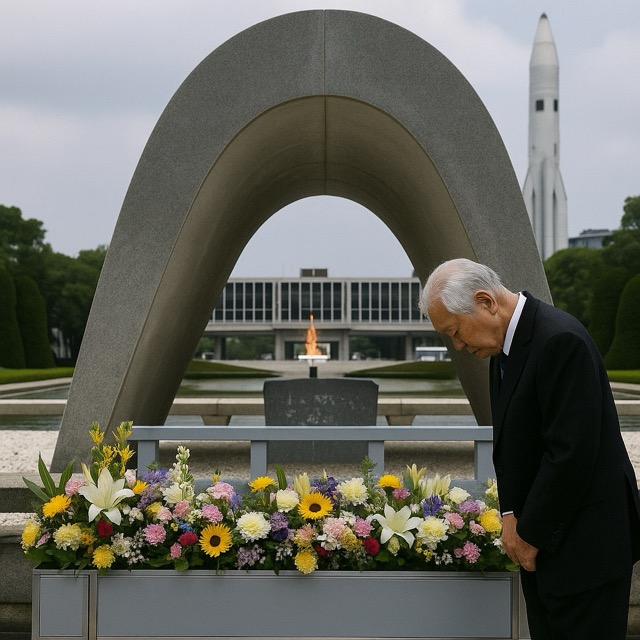
Hiroshima, Japan. August 6 marks the eightieth anniversary of the world’s first atomic bombing, an event that ended World War II in the Pacific but left an indelible scar on humanity’s conscience. As survivors, known as hibakusha, and dignitaries gather at the Hiroshima Peace Memorial Park, Japanese Prime Minister Fumio Kishida is expected to reiterate the enduring vow of “never surrender” in the face of unimaginable destruction.
At the annual ceremony, ceremonies will begin at dawn with a moment of silence at 8:15 a.m., the exact time when the Enola Gay dropped Little Boy on August 6, 1945. More than 200,000 people perished by the end of that year, victims of the initial explosion and subsequent radiation sickness. Today’s commemoration carries a poignant message: that nuclear weapons must never again be unleashed.
Yet, despite the hibakusha’s heartfelt appeals for disarmament, the international landscape tells a starkly different story. Nuclear-armed states are modernizing their arsenals, and global military spending has reached record highs. According to the Stockholm International Peace Research Institute, total world military expenditure surpassed $2.1 trillion in 2024, with the U.S., China, and Russia accounting for over 60%.
Experts warn that this rearmament cycle is pushing the world closer to a catastrophic miscalculation. Ambassador Nobuyasu Abe, Japan’s former representative to the United Nations, cautioned in a recent interview that “the threat of nuclear conflict has not been this elevated since the Cold War.” He stressed that diplomatic efforts to revive arms-control treaties are faltering amid strategic distrust.
The Hiroshima ceremony will feature speeches from Prime Minister Kishida and survivors, alongside the traditional floating of paper lanterns on the Motoyasu River, symbolizing a prayer for peace. International guests, including U.S. Ambassador Rahm Emanuel and special envoys from the United Kingdom and France, will pay tribute.
Despite these solemn rituals, anti-nuclear advocates fear their message risks becoming an “utopia,” as Kishida himself alluded to in last year’s address. Nuclear Posture Review documents from several nuclear-capable states reveal plans to develop smaller, more ‘usable’ nuclear warheads, undermining decades of non-proliferation progress.
Dr. Keiko Tanaka, a hibakusha and peace activist, warned that “we are living in the most perilous era since 1945.” She emphasized that public awareness is dwindling as generations pass, and that education on nuclear risks must be redoubled.
In parallel, geopolitical tensions in Eastern Europe and East Asia have intensified calls for enhanced deterrence. The North Atlantic Treaty Organization (NATO) recently approved a substantial upgrade to its nuclear forces, while North Korea’s expanding missile tests provoke fresh anxieties in Seoul and Tokyo.
As the world pays homage to the victims of Hiroshima, policymakers face a stark choice: heed the call to disarm or continue on a path toward ever-greater militarization. With the global nuclear stockpile estimated at 12,500 warheads, the question looms: can humanity break the cycle of armament before tragedy strikes once more?


 The Tower Post