The former Russian president’s social media shift shocks both supporters and critics
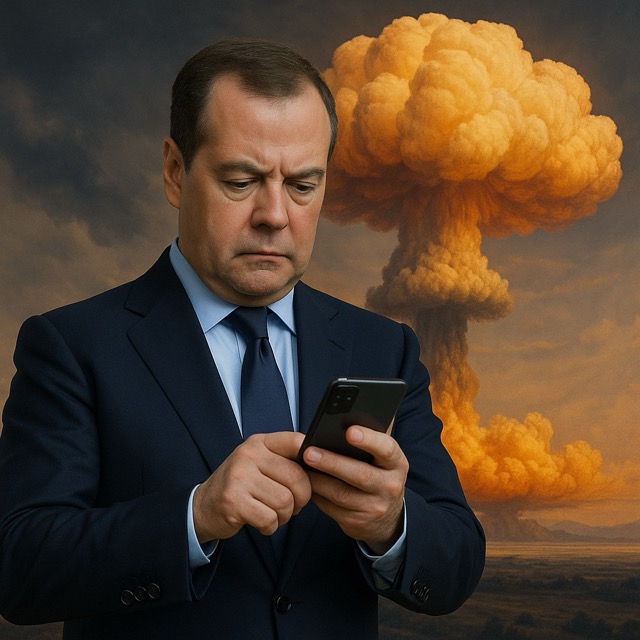
Moscow. Dmitry Medvedev, who served as Russia’s president from 2008 to 2012, has embarked on a startling transformation. Once viewed as a proponent of moderate reform and occasional liberalism, Medvedev’s recent social media posts reveal a stark pivot towards hawkish nationalism and nuclear saber-rattling. This dramatic shift has bewildered observers and ignited debate over the former leader’s true influence in contemporary Russian politics.
During his presidency, Medvedev engaged Western counterparts with rhetoric on modernization and rule of law, earning him the moniker of the Kremlin’s ‘white knight.’ He advocated limited market freedoms and initiated minor judicial reforms, creating a cautious optimism among liberal circles. However, analysts now question whether these earlier gestures were genuine or mere facades.
In recent months, Medvedev’s Telegram channel has become a platform for fiery commentary. He has lambasted NATO, threatened the deployment of tactical nuclear weapons in bordering states, and praised Russia’s military leadership for its ‘restoration of sovereign grandeur.’ Such posts stand in sharp contrast to his previous softer tone and have led some commentators to label him Moscow’s unofficial ‘nuclear warmonger.’
Political scientist Elena Petrova of the Moscow Carnegie Centre notes, “Medvedev is playing a dangerous game. By adopting an extremist stance online, he caters to hardliners and possibly undermines more moderate voices in the Kremlin. His trajectory raises concerns about the direction of Russian foreign policy under President Putin’s watch.”
Supporters argue that Medvedev’s harsh tone is a response to perceived Western encroachment and a tool to rally domestic unity. They point to his critiques of economic sanctions and portray him as a defender of Russian sovereignty. However, critics caution that his rhetoric risks escalating tensions and diminishing prospects for diplomatic resolution.
In one viral post, Medvedev declared that any interference in Russia’s ‘special military operation’ would invite ‘overwhelming retaliation.’ He went on to imply readiness to consider lower-yield nuclear ordnance for ‘tactical necessity.’ Such statements have drawn swift rebukes from NATO officials, who accuse Medvedev of irresponsible brinkmanship.
Despite no official position in government, Medvedev’s proximity to President Vladimir Putin affords his pronouncements considerable weight. His role as deputy chairman of the Security Council grants him a formal channel to influence military and security policies, blurring the lines between personal commentary and state posture.
As Medvedev continues to oscillate between reformist nostalgia and bellicose nationalism, the world watches closely. Will this former president revert to his earlier centrist approach, or is his descent into warmongering irreversible? The answer may determine Russia’s future engagement with the global arena.
Regardless, Medvedev’s social media evolution underscores a broader struggle within Russia: the tug-of-war between openness and militarism. In the digital age, where posts can fuel real-world consequences, his bizarre arc serves as a cautionary tale of how political personas can be weaponized for influence and ideology.

 The Tower Post