Rising seas and scarce resources threaten seaside communities from the US to Australia
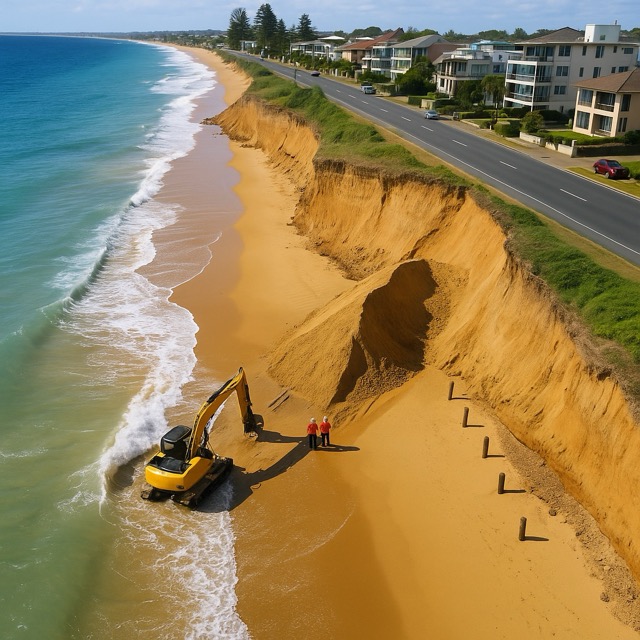
Coastal regions around the globe are witnessing unprecedented rates of shoreline erosion, as climate change intensifies storms and accelerates sea-level rise. From the sandy beaches of the US eastern seaboard to the iconic surf breaks of Australia’s Gold Coast, residents and local authorities are scrambling to defend their communities against the encroaching ocean.
Beach nourishment—also known as beach replenishment—has long been the frontline defence. By dredging and depositing sand along eroded stretches, governments aim to restore natural buffers that absorb wave energy and protect inland properties. However, the mounting financial and logistical challenges of sourcing suitable sand are putting these mitigation efforts under strain.
“The cost of sand has doubled in the past five years,” notes Dr. Helen Armstrong, a coastal geomorphologist at the University of Miami. “Not only is high-quality marine sand scarce, but stricter environmental regulations limit extraction from rivers and quarries. We’re reaching a tipping point where the economics of beach nourishment no longer add up.”
On the US eastern seaboard, states such as Florida and North Carolina have expanded their annual sand budgets, yet many municipalities report delays or cancellations of replenishment projects. In Florida alone, officials estimate an additional $200 million in unfunded requests for the next fiscal year.
Across the Pacific, Australia’s Sunshine Coast region faces similar woes. The Gold Coast, renowned for hosting international surfing competitions, requires up to 100,000 cubic meters of sand per winter season to maintain its beaches. With global demand surging, local councils now compete with mega-resorts and offshore island developers for limited supplies.
Communities are exploring alternative solutions, from artificial reefs and geotextile sand containers to innovative sediment traps. Yet these methods often carry high upfront costs and unproven long-term effectiveness. “We need a diversified toolbox,” says Armstrong. “Relying solely on imported sand will not sustain our shorelines indefinitely.”
Some researchers advocate for coastal restoration techniques that harness natural sediment flows. Projects in the Netherlands, for instance, have successfully widened barrier islands by directing alongshore currents to deposit sediment in strategic locations. Such ‘building with nature’ approaches require detailed modelling and cross-border cooperation, making them complex to replicate elsewhere.
Meanwhile, the private sector has begun marketing engineered alternatives, including crushed rock and recycled glass aggregates. While promising in pilot studies, these substitutes raise questions about ecological compatibility and beach aesthetics.
At the policy level, experts urge integrated coastal zone management that balances development pressures with environmental resilience. “Adaptation strategies must account for both today’s needs and tomorrow’s uncertainties,” argues Maria Delgado, director of the International Coastal Foundation. “This means coordinating federal, state, and local investments, while engaging communities in long-term planning.”
As shoreline erosion accelerates, the window for effective intervention narrows. The battle for sand underscores a broader reality: in a warming world, the resources we take for granted are finite, and strategic stewardship will determine the fate of coastal communities.




 The Tower Post