Investors frustrated as Trump’s trade war diminishes Eurozone earnings growth amid Silicon Valley boom
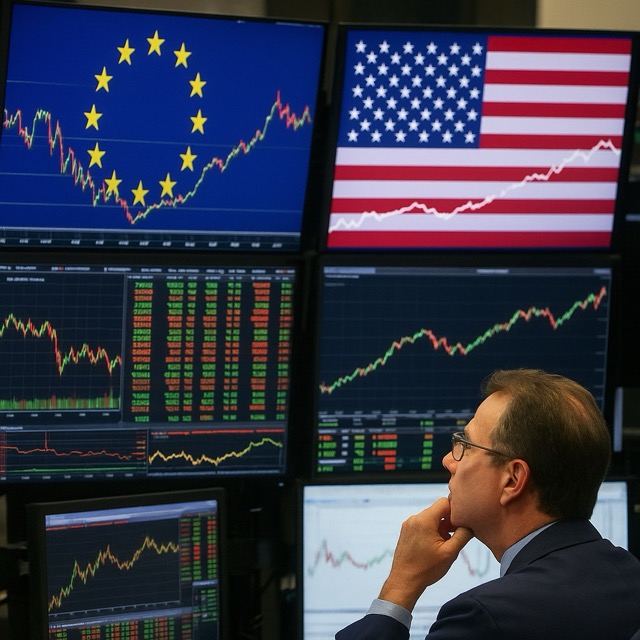
In August 2025, European companies find themselves at a crossroads as second-quarter earnings reports expose a yawning gap between their performance and that of their U.S. counterparts. With the specter of President Donald Trump’s trade war looming large, investors who had pinned their hopes on a resurgence for the region’s stock markets are now grappling with sober realities.
According to Bank of America, more than half of the constituents in the Stoxx Europe 600 have reported Q2 results, and they are on track for zero year-on-year earnings growth. This stark statistic has dampened optimism and led to renewed scrutiny of sectoral weaknesses, from automotive to industrials, which had initially promised a rebound following Europe’s fiscal stimulus measures.
By contrast, the S&P 500 is headed for an average 9% year-on-year earnings gain. Tech giants from Silicon Valley and Wall Street banks have powered this growth, underscoring the divergence between a U.S. economy buoyed by strong domestic demand and an export-dependent Eurozone facing tariff headwinds.
Earlier this year, European equities enjoyed a period of outperformance. Germany’s fiscal package and increased defense spending had given investors renewed confidence, while concerns about Washington’s unpredictable policy shifts temporarily took a back seat. Yet, as Q2 earnings rolled in, the initial momentum evaporated under the weight of missing revenue targets and profit warnings.
Market strategists highlight that the lack of earnings progression in Europe can be traced to several factors: currency fluctuations that erode profit margins, supply-chain disruptions in key manufacturing hubs, and a less robust tech sector compared to the U.S. Furthermore, Trump’s imposition of tariffs on key European exports has directly impacted headline figures for major conglomerates.
The disappointment has been reflected in share-price reactions. The Stoxx Europe 600 dipped nearly 2% in July following a string of lackluster reports, while the S&P 500 climbed to new highs. Fund managers now face difficult choices: whether to overweight U.S. stocks further or seek selective opportunities in resilient European niches such as green energy and pharmaceuticals.
Analysts caution that Europe’s earnings cycle is not irredeemable. Structural reforms, deeper capital markets, and a broader tech renaissance could yet narrow the gap. However, the near-term outlook remains clouded by geopolitical risks and the ongoing tug-of-war between Washington and Brussels.
As the summer draws to a close, investors will watch closely for Q3 guidance and any signs of détente in trade relations. For now, the tale of two earnings seasons tells a cautionary story: that in the global arena of corporate finance, the Atlantic divide has never looked wider.



 The Tower Post