Former Economic Advisors Vie to Steer the Fed’s Next Policy Chapter
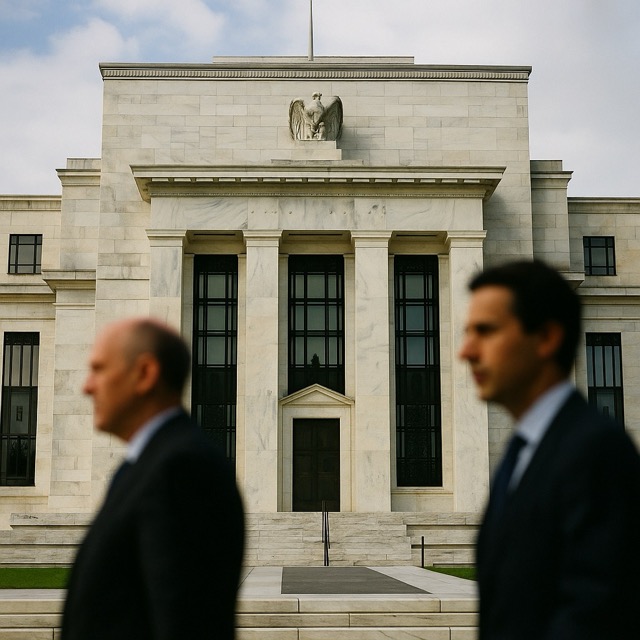
President Donald Trump publicly elevated two of his former economic advisers, Kevin Hassett and Kevin Warsh, as the leading candidates to replace Federal Reserve Chair Jerome Powell when his term ends this February. The White House announcement has set off a flurry of speculation on Capitol Hill and in financial circles, where markets will be closely watching the Fed’s future policy trajectory under new leadership.
Kevin Hassett, who served as chairman of the Council of Economic Advisers from 2017 to 2019, is widely credited with advocating for aggressive tax cuts and deregulatory measures. His tenure saw robust GDP growth and a surge in business investment, though critics warned that such policies overheated the economy. Supporters say Hassett’s deep familiarity with Trump’s economic agenda would ensure seamless continuity.
Kevin Warsh, Fed Governor from 2006 to 2011 and later a senior adviser at BlackRock, offers a contrasting profile. Known for his analytical rigor and institutional experience, Warsh was involved in critical decisions during the 2008 financial crisis. His backers highlight his independence and deep respect within the central banking community, arguing that he could bridge Trump’s political priorities and the Fed’s dual mandate of price stability and maximum employment.
The White House’s endorsement of both candidates underscores the administration’s desire to reshape the Fed’s stance on monetary policy. Trump has repeatedly criticized the central bank for keeping interest rates “too high” and hampering growth. In a statement released August 12, the President said, “Hassett and Warsh have the experience and the vision to put our economy first.” Yet, some analysts warn that aligning the Fed too closely with the White House risks undermining its credibility and independence.
In Washington, reaction has been swift. Senate Banking Committee Chair Senator Elizabeth Warren (D-MA) expressed concern over politicizing the central bank. “The Fed’s strength lies in its independence,” she said at a press briefing on August 14. Meanwhile, Republican senators like Tim Scott (R-SC) praised the choices as “sound and qualified.” The Senate will hold confirmation hearings late this fall, with a final vote expected in January.
Financial markets have already priced in the likelihood of a more dovish Fed under a Trump appointee. Benchmark Treasury yields dipped following the announcement, as traders anticipated slower rate hikes. The S&P 500 rose 0.9% on August 13, reflecting optimism that accommodative policy could buoy equity valuations. Yet, some bond strategists caution that markets may be underestimating inflation risks, especially if fiscal stimulus continues unabated.
International observers are also paying attention. European Central Bank President Christine Lagarde noted that any shift in U.S. monetary policy could have ripple effects on global rates and currency valuations. Emerging markets, in particular, could face renewed volatility if U.S. rates diverge significantly from international norms, potentially triggering capital flows back to the United States.
Analysts at the Peterson Institute for International Economics argue that either Hassett or Warsh would likely maintain a cautious approach to inflation, given recent CPI readings above 3%. “Neither candidate is expected to radically alter the Fed’s long-term inflation target,” said Institute fellow Linda Chen. “But their guidance and forward-looking statements could influence market expectations significantly.”
As Senate hearings approach, both candidates are ramping up outreach efforts. Hassett has scheduled town halls with manufacturing leaders in Ohio and Pennsylvania, while Warsh plans to testify before the Financial Services Roundtable in New York. The business community will be watching both closely, as the Fed’s next leader will face the challenge of balancing growth with price stability amid a complex geopolitical landscape.
With Powell’s term concluding in February 2026, the timetable is tight. President Trump must formally nominate his choice by early November to allow for vetting and Senate consideration. Whether he selects Hassett, Warsh, or another contender remains uncertain. One thing, however, is clear: the Fed’s next chair will play a pivotal role in sustaining the economic expansion and navigating the post-pandemic recovery.
In Washington, the stakes could not be higher. As the political theater unfolds, markets, businesses, and households alike await clarity on who will guide U.S. monetary policy into its next chapter. The decisions made in the coming months will reverberate far beyond the marble halls of the Federal Reserve, shaping the economic fortunes of millions around the world.



 The Tower Post