Leaked plans reveal proposals to move Palestinians to Somalia and Somaliland, prompting Financial Times exposé and firm’s disavowal
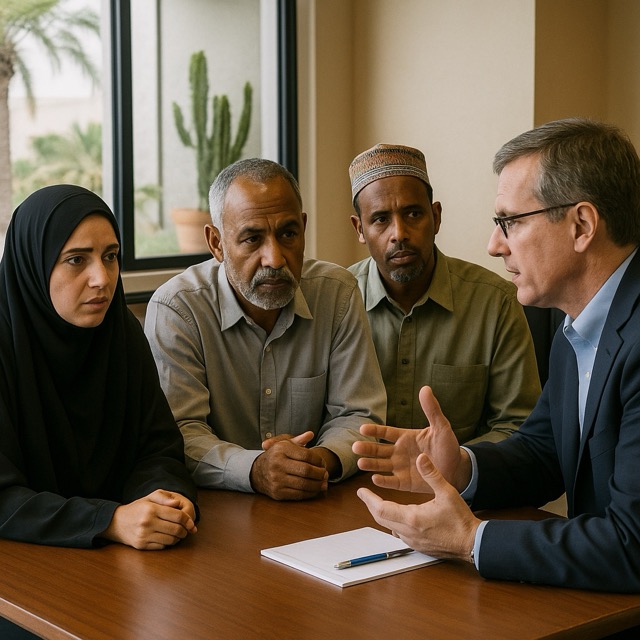
Documents and testimonies have emerged detailing how consultants from the Boston Consulting Group (BCG) modelled scenarios for relocating Gaza’s population to Somalia and Somaliland. The revelation, first reported in July, has ignited fierce debate over the ethics of using postwar humanitarian crises as fodder for corporate strategy exercises — and has forced BCG into a position of public retraction.
The project, commissioned by unnamed international stakeholders gauging postconflict stabilization, tasked BCG teams with assessing the feasibility of mass migration routes across the Red Sea. Analysts mapped demographic clusters in Gaza against available infrastructure in East African regions, considering variables such as port capacity, housing availability, and local governance structures. According to sources familiar with the work, the models assumed that up to 400,000 Palestinians could be relocated within a six-month window, contingent on phased air and sea transport.
BCG has since disavowed the modelling exercise. A firm spokesperson issued a brief statement denying any endorsement of the proposals, describing the work as “preliminary exploratory modeling” and distancing senior leadership from its conclusions. Critics argue that such language glosses over BCG’s central role in designing scenarios that treat human displacement as a logistical optimization problem.
Human rights organizations have reacted with alarm. Amnesty International’s Middle East adviser, speaking on condition of anonymity, called the plans “inherently dehumanizing,” warning that uprooting vulnerable populations to distant, unfamiliar territories could compound their suffering rather than alleviate it. Similarly, the Palestinian Authority has called for an investigation into whether the consultancy breached international law in conceiving forced migration blueprints.
Within BCG, the fallout has triggered internal reviews. Insiders report urgent meetings at the firm’s London and Dubai offices, where consultants have questioned the decision-making chain that greenlit the project. Some junior staffers, uncomfortable with the moral implications, have sought assurances that future engagements will adhere to strict ethical guidelines inspired by recent pushes for “responsible consulting.”
The broader consulting industry is also under scrutiny. Firms like McKinsey and Bain are facing renewed pressure to disclose the parameters of their geopolitical and crisis-simulation work. Observers note that while scenario planning is a common advisory tool, few consultancies publicly share the details of projects that intersect with sensitive humanitarian issues.
As BCG attempts to contain the reputational damage, experts emphasize the importance of transparency. “In an era where corporate influence shapes public policy,” says Dr. Elena Rossi, a professor of international ethics at the London School of Economics, “consultancies must balance analytical rigor with moral responsibility — especially when modelling human displacement.” The coming weeks will test whether BCG can rebuild trust or whether this episode becomes a cautionary tale for the business advisory world.



 The Tower Post