Beijing’s decision to remove Tibetan from Gaokao core subjects sparks fears for cultural survival
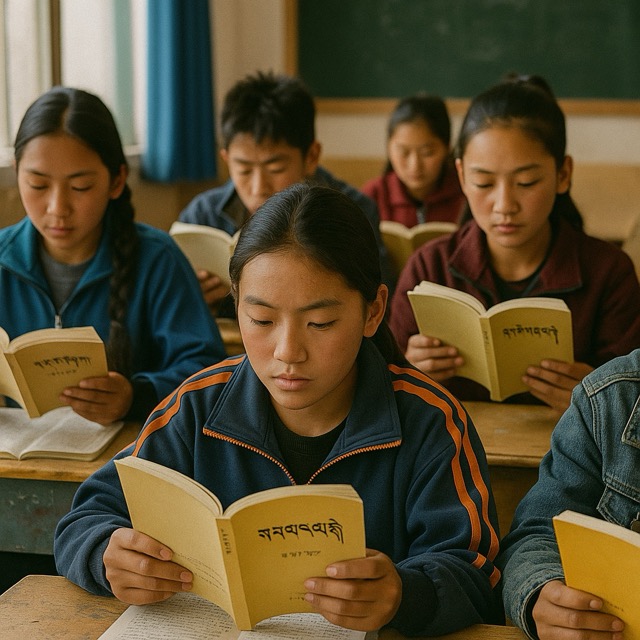
China unveiled plans to strip Tibetan language from the list of core subjects in the national college entrance examination, the Gaokao, for most students in the Tibet Autonomous Region. The controversial policy, announced quietly in Beijing, has stoked widespread anxiety among educators, parents, and cultural advocates who warn it heralds a further erosion of Tibetan heritage.
Traditionally, the Gaokao has allowed minority-region students to choose their native tongue as a mandatory exam subject, ensuring parity with Mandarin for university admissions. Under the new guidelines, only students enrolled in designated “bilingual excellence” programs—estimated at just 10% of the region’s candidates—will be able to sit the Tibetan-language test. The majority will face the Mandarin-only literature paper.
Educators on the ground report that the decision was driven by central authorities’ push to standardize academic assessment nationwide. Officials argue that a uniform testing framework simplifies administration and elevates Mandarin proficiency, deemed essential for economic integration. Yet critics see the move as a targeted blow to Tibetan identity, pointing out that fewer examination seats for Tibetan will reduce the incentive for schools to teach in the local language.
Local parents have expressed alarm. “Tibetan is not just a language but the soul of our culture,” said Tsering Dolma, a mother of two high-school students in Lhasa. “If children no longer study or value it, our traditions will fade with us.” Surveys conducted by independent researchers indicate that interest in Tibetan-language courses has already declined this academic year, as schools prioritize Mandarin preparation.
Human rights organizations have joined the outcry. The International Campaign for Tibet labeled the policy “cultural erasure,” urging Beijing to reverse course and safeguard linguistic rights enshrined in China’s constitution. Meanwhile, United Nations rapporteurs have flagged the change in their annual review of minority rights, calling for clearer guarantees that education policies respect cultural diversity.
In the Tibet Autonomous Region’s capital, Lhasa, university applicants now face a stark choice: these who wish to pursue fields like Tibetan studies or local history must navigate an arduous path through limited special programs, while others risk losing fluency altogether. Across rural counties, where resources are scarce, minority-language instructors report diminished enrollment and rising layoffs.
Beijing’s official statements maintain that the policy aims to broaden opportunities for Tibetan youth by emphasizing Mandarin—China’s lingua franca of commerce and academia. Yet many Tibetans see it as a strategic maneuver to accelerate assimilation. As the first cohort affected by the new Gaokao rules approaches exam season, the fate of Tibetan language education hangs in the balance.
The coming months will reveal whether grassroots resistance and international advocacy can influence the final implementation. For now, Tibetan communities brace for a future in which their mother tongue may no longer open doors to higher education, risking a generational disconnect that could rewrite the cultural landscape of the plateau.



 The Tower Post