Top AI staff departures spark concerns over Cupertino’s standing in the global AI race
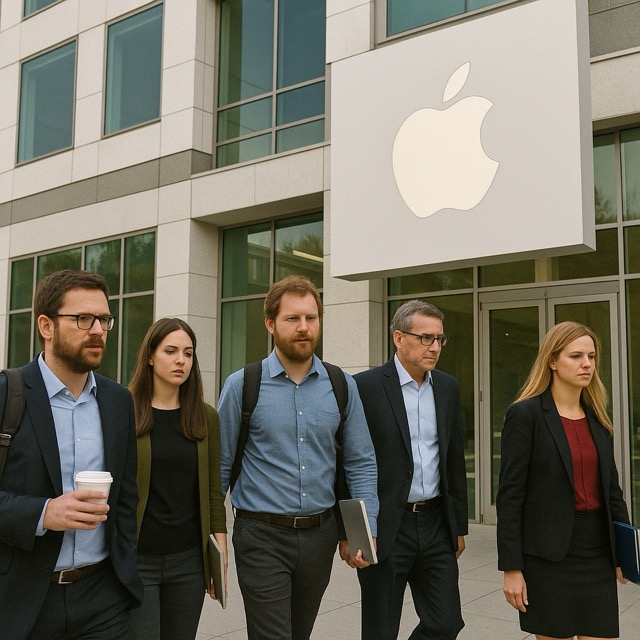
Apple Inc. faces a growing challenge in its pursuit of artificial intelligence innovation, as around a dozen of its AI specialists have departed the Cupertino campus in recent months. Among those leaving are senior researchers in machine learning and natural language processing, roles once seen as central to Apple’s long-term strategy for integrating advanced AI capabilities into its products. The exodus has reignited worries among analysts that the iPhone maker may be ceding ground to more aggressive competitors in the global AI arms race.
Sources familiar with the departures said that at least four high-profile AI scientists left Apple for Google’s DeepMind, drawn by the subsidiary’s expansive research freedom and high-profile collaborations. DeepMind, known for its breakthroughs in reinforcement learning and generative models, has ramped up recruiting efforts in Silicon Valley, leveraging its reputation and funding to poach talent. One former Apple researcher, who requested anonymity, described the move as “an opportunity to work on open-ended research projects without immediate product deadlines.”
Meanwhile, several machine learning engineers transitioned to OpenAI, the San Francisco-based lab that opened a new West Coast office in early 2025. OpenAI’s collaborative culture and public-facing model releases have appealed to developers eager for rapid prototyping and publication. “At Apple, we focused on polished, integrated experiences,” said another departing engineer. “Here, we can experiment with cutting-edge models and see them in the open.”
Amazon Web Services (AWS) has also emerged as a major beneficiary. Three AI architects joined AWS’s AI division, attracted by the cloud giant’s budget and scale. AWS’s emphasis on bringing AI tools directly to enterprise customers has meant big projects and large datasets, opportunities that some Apple talents found irresistible. “The move was about access to massive compute resources and real-world deployments,” said a third source.
Not all departures have left Cupertino hands empty, however. Meta’s AI Research (FAIR) has absorbed two of Apple’s AI ethics specialists, recruited to lead projects on responsible AI deployment. Meta’s well-funded ethics programs and partnerships with academic institutions were cited as key draws for those concerned with AI governance. One former Apple ethics lead noted that Meta’s “holistic approach” to policy and technology was a stark contrast to Apple’s historically secretive development pipelines.
Apple’s leadership acknowledges the turnover but stresses that its AI initiatives remain robust. In a statement, the company said, “We continue to invest heavily in artificial intelligence across all our platforms. Our teams are growing, and we remain committed to privacy-preserving machine learning.” The statement pointed to Apple’s recent introduction of on-device AI features for Siri and image processing, highlighting the company’s focus on integrating AI seamlessly while safeguarding user data.
Industry analysts, however, caution that Cupertino’s conservative approach to AI—prioritizing privacy and integration over open research—may hamper its ability to attract and retain top talent. “Apple’s mantra of ‘we’ll let you know when it’s ready’ works for consumers, but not for many researchers,” observed Dr. Elaine Turner, a technology analyst at Bernstein. “Researchers want to publish, present at conferences, and explore uncharted territories. That culture clash is evident.”
The recruitment efforts by rivals illustrate the competitive dynamics of the AI sector. DeepMind’s recent hiring blitz has included experts in generative adversarial networks and multi-modal learning, while OpenAI has continued to lure specialists with promises of co-authored papers and open-source model releases. AWS, with its broad customer base, offers real-world impact and scalability, and Meta emphasizes ethical frameworks and interdisciplinary projects.
Looking ahead, Apple faces the challenge of recalibrating its talent strategy. Some suggest that Cupertino could establish a dedicated AI research lab—separate from its hardware-centric teams—to foster a more open academic-style environment. Others propose expansion of partnerships with universities and think tanks to create pathways for joint research and paper publications.
For now, the departures serve as a reminder that the race for AI supremacy is not only about technology and data but also about people. As Apple continues to integrate AI into its ecosystem, it must find new ways to balance its hallmark secrecy and user-centric philosophy with the needs and expectations of leading AI researchers. The next wave of departures—or the emergence of new recruits—will signal whether Cupertino can retake the reins in the global AI chase.



 The Tower Post