Economic coercion doesn’t get the headlines of war — but its civilian toll can be just as deadly. A reported analysis inspired by arguments from Francisco Rodríguez, professor at the University of Denver.

WASHINGTON/GENEVA — A growing chorus of economists and aid officials warn that sanctions, the preferred tool of twenty‑first‑century statecraft, are inflicting civilian harm on a scale that rivals conventional conflict. Among the most outspoken is Francisco Rodríguez, a professor at the University of Denver, who argues that modern sanctions regimes — especially the broad financial and trade restrictions imposed on countries from Iran to Venezuela and Syria — have predictable, deadly side effects: collapsing incomes, medicine shortages and spikes in preventable deaths.
Sanctions are often sold as a humane alternative to bombs: pressure the leaders, spare the people. Yet in practice, sanctions now target the plumbing of whole economies — banking links, shipping insurance, access to dollars, technology imports. When those arteries are pinched, the pain radiates far beyond ruling elites. Pharmacies go bare not because drugs are explicitly banned but because suppliers cannot get paid, insurers will not cover cargo, or local currencies crater as export revenues vanish.
The evidence base has thickened. Humanitarian agencies report recurrent shortages of cancer drugs and dialysis materials under comprehensive programs; development economists have linked sweeping sanctions to higher infant and maternal mortality and sharp drops in calorie consumption. In Venezuela’s lost decade, import collapses and hyperinflation followed years of mismanagement — and were later compounded by oil and financial sanctions, a sequencing that fuels academic debate but leaves little doubt about the end point: a social implosion in which families ration food and emigrate en masse.
Rodríguez’s core claim is straightforward: if policymakers measured civilian harm from economic coercion with the same rigor applied to battlefield casualties, many contemporary sanctions packages would fail a proportionality test. He calls for mandatory humanitarian impact assessments before major sanctions are imposed, regular audits of mortality and malnutrition, and automatic adjustments when red lines are crossed.
Officials who design sanctions bristle at the charge that they are indifferent to suffering. The U.S. Treasury and its partners now attach humanitarian carve‑outs and general licenses to most programs; in recent years, Washington and European capitals have expanded authorizations for food, medicine and NGO work across multiple regimes. Still, aid groups say compliance officers, fearing penalties, often over‑correct — a ‘chilling effect’ that throttles even lawful trade. Bankers call it de‑risking; doctors call it a supply chain failure that can cost lives.
The paradox is most visible in health care. Sanctions rarely prohibit syringes or chemotherapy; they block dollar clearing for the distributor, void the ship’s insurance policy, snarl customs and, crucially, starve governments of foreign exchange. Hospitals then delay purchases, and families rely on informal markets where prices surge. ‘Exemptions on paper don’t re‑open a closed banking channel,’ one humanitarian logistics manager says.
The politics are no less complicated. Proponents insist sanctions deter aggression and punish abuses without committing troops. They point to cases where targeted measures helped bring belligerents to talks or constrained weapons acquisition. Skeptics counter that once sanctions are embedded — layered over years with designations, secondary penalties and export controls — they become hard to unwind even if objectives shift. Domestic constituencies harden around a tough line; foreign governments discover they can rally nationalist sentiment by blaming outsiders for economic pain. In this loop, civilians pay indefinitely for a policy that no longer changes behavior.
Rodríguez argues that measurement is the missing guardrail. Militaries brief casualty estimates and proportionality analyses; sanctions, by contrast, are often announced with a press release and left to compliance departments to interpret. He proposes three concrete checks: first, a pre‑implementation assessment projecting impacts on prices, imports of essentials and health‑system capacity; second, quarterly monitoring using real‑time indicators — port throughput, pharmacy stockouts, excess mortality where data exist; third, an automatic ‘humanitarian circuit breaker’ that forces policymakers to scale back measures when thresholds are breached.
There are precedents. The United Nations has carved out broad humanitarian exemptions and reporting requirements. Some national authorities have begun issuing standing general licenses for NGOs, and multilateral development banks are experimenting with escrow‑style mechanisms to channel funds toward food and medicine without funneling cash to sanctioned officials. These innovations, Rodríguez says, are the start of a shift from moral intent to measurable outcomes.
Case studies illustrate both the necessity and the limits of reform. In Iran, banking restrictions coincided with well‑documented shortages of oncology drugs and medical equipment. In Syria, sanctions layered atop a shattered economy deepened scarcity of fuel and fertilizer, with knock‑on effects for food security. Afghanistan’s post‑takeover financial isolation precipitated a liquidity crunch that paralyzed imports and salaries, even as donors mounted one of the largest humanitarian responses on record. In each instance, exemptions existed; the bottleneck was execution.
Sanctions architects reply that comprehensive relief is impossible while targeted governments weaponize suffering by hoarding aid or manipulating exchange rates. They also note that some of the worst downturns pre‑date sanctions — fueled by corruption, war and policy errors — and caution against attributing every hardship to foreign pressure. Rodríguez accepts the point but insists that responsibility is additive: if external measures foreseeably magnify a crisis, their designers share accountability for the result.
A growing policy community is searching for middle paths. One idea adapts the 1990s oil‑for‑food model minus its infamous flaws: use third‑party procurement and transparent ledgers so that a country can sell a capped volume of commodities and receive in‑kind deliveries of essentials, not cash. Another approach prioritizes ‘smart sanctions’ that target specific entities and luxury goods while insulating energy, food and medicine, paired with safe‑harbor protections for banks that process humanitarian transactions in good faith. A third option is time‑bounded sanctions that require affirmative renewal after independent review.
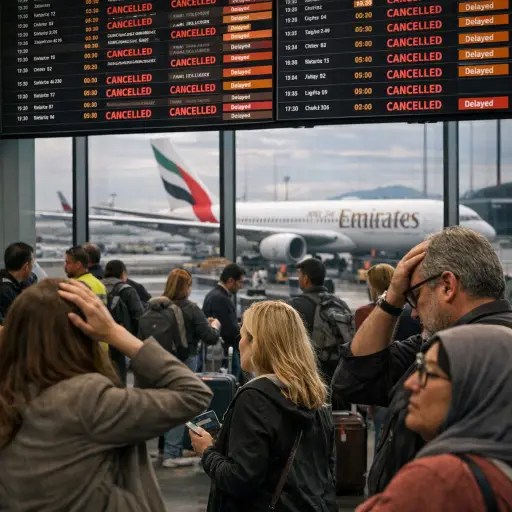
Watching all of this are governments and publics who increasingly live with sanctions as a chronic condition. An ever larger share of world trade now touches an entity or jurisdiction listed somewhere; corporate legal teams build whole careers around navigating rules that can change overnight. For ordinary people, the reality is simpler: when ATMs run dry and pharmacies tell cancer patients to ‘come back next month,’ the distinction between kinetic and economic warfare feels semantic.
Rodríguez’s provocation — that sanctions kill — is meant to force an uncomfortable tally. It does not deny the need for coercive tools. It asks whether democracies can wield them with the same transparency and concern for civilians that they demand in wartime. Until sanctions policy is anchored in measurable humanitarian outcomes, the debate will remain stuck between intent and impact — and too many lives will be measured in the gap.
Notes: Reported analysis reflecting debates and public research as of Aug. 8, 2025; no direct quotations used.


 The Tower Post