White House economic adviser poised to join rate-setting committee, potentially shifting Fed policy toward Trump’s pro-growth agenda
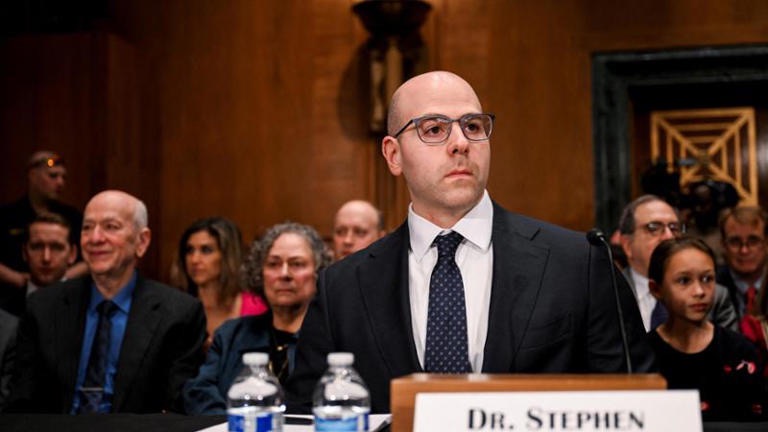
In a move that could reshape U.S. monetary policy in the coming years, President Donald Trump has nominated Stephen Miran, the chair of the White House’s Council of Economic Advisers, to fill an upcoming vacancy on the Federal Reserve’s powerful Board of Governors. The appointment, announced late Wednesday, would give Miran a direct vote on the Federal Open Market Committee (FOMC), the body responsible for setting U.S. interest rates.
Miran, a former Wall Street economist and senior Treasury Department official, is known for his strong advocacy of pro-growth economic policies and skepticism toward prolonged periods of high interest rates. If confirmed by the Senate, his presence on the Fed board is widely expected to bolster Trump’s calls for aggressive interest rate cuts—a stance that has sparked fierce debate among economists and market analysts.
“The Federal Reserve has kept rates too high for too long,” Trump said in a statement. “Stephen understands that to unlock America’s full economic potential, we need to support workers, businesses, and investment by lowering the cost of borrowing.”
The nomination comes at a pivotal time for the Fed, which is grappling with slowing global growth, a cooling labor market, and persistent inflationary pressures. While inflation has eased from its post-pandemic highs, it remains above the Fed’s 2 percent target, leading some policymakers to advocate caution in adjusting rates.
Critics argue that Miran’s appointment risks undermining the Fed’s independence, which is designed to shield monetary policy from short-term political pressures. “This is about more than just one seat—it’s about the credibility of the central bank,” said Laura Gonzalez, a former Fed economist. “Markets rely on the Fed to make decisions based on economic data, not political expediency.”
Supporters, however, counter that the Fed’s current policy stance has constrained growth unnecessarily and that fresh perspectives are needed to adapt to a rapidly changing economic environment. “Stephen is a brilliant economist with a deep understanding of financial markets,” said Treasury Secretary Robert Caldwell. “He will bring both expertise and pragmatism to the Fed.”
The vacancy on the Fed board will open in early September, when Governor Christopher Waller’s term expires. If confirmed promptly, Miran could participate in the FOMC’s next scheduled meeting in late September, a session that could set the tone for monetary policy heading into the 2026 presidential election year.
Financial markets reacted swiftly to the news, with U.S. Treasury yields falling and stock indexes climbing on expectations of a more dovish Fed stance. Analysts say Miran’s presence could tip the balance within the FOMC toward rate cuts, particularly if economic data in the coming months points to slowing growth.
The Senate confirmation process is expected to be contentious, with Democrats voicing concerns over Miran’s alignment with Trump’s economic agenda and Republicans largely rallying in support. Hearings are expected to begin within the next few weeks.
If confirmed, Miran’s term on the Board of Governors would extend for 14 years, giving him a long-term influence on U.S. monetary policy well beyond Trump’s current term. His decisions could help shape the trajectory of the U.S. economy for more than a decade—a prospect that has both supporters and critics bracing for a new era at the Fed.




 The Tower Post