Unexpected move by Trump administration disrupts trade flows, rattles Switzerland’s refining industry
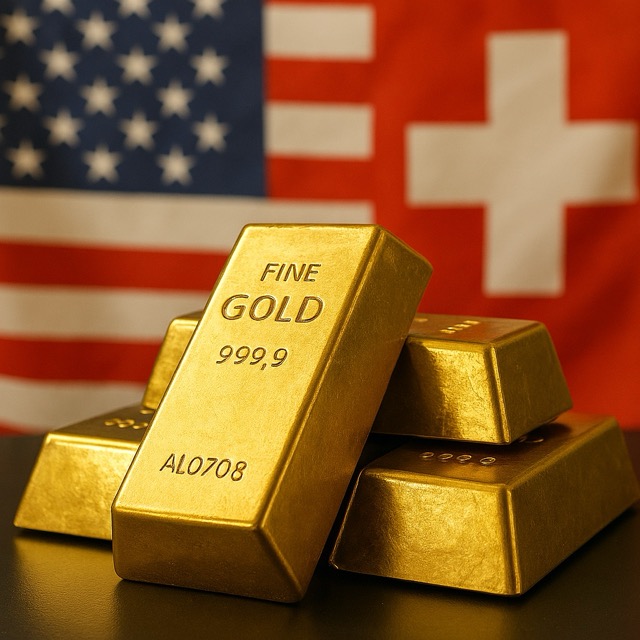
In a surprise move that has rattled the global bullion market, the United States has imposed tariffs on imports of gold bars, defying industry expectations of an exemption from President Donald Trump’s sweeping trade levies. The decision, announced this week by the U.S. Customs and Border Protection agency, marks a dramatic escalation in trade tensions and threatens to reshape a sector long considered insulated from protectionist measures.
Until now, gold had been widely expected to escape the crosshairs of Trump’s tariff strategy. Industry insiders had assumed the precious metal would be spared, given its strategic value as a reserve asset and the delicate balance of the global bullion trade. The sudden reversal has sent ripples through financial markets, with traders scrambling to adjust positions and refiners fearing a sharp drop in U.S. demand.
Switzerland, home to the world’s largest network of gold refineries, stands to be among the hardest hit. The Alpine nation processes roughly two-thirds of the world’s annual gold supply, much of which is exported to the U.S. for investment purposes. With the new tariffs in place, Swiss exporters face the prospect of higher costs and reduced competitiveness in their most lucrative market.
“This is an earthquake for the bullion trade,” said Martin Keller, chief economist at a leading Swiss refinery. “We are already seeing inquiries from clients in Asia and the Middle East, but the U.S. has historically been our anchor customer. This could force us to rethink our entire supply chain.”
Market analysts warn that the new policy could lead to unintended consequences, such as a rise in smuggling, increased volatility in gold prices, and strained diplomatic relations. The move also risks pushing U.S. investors toward alternative sources of gold, such as domestic recycling or imports from tariff-exempt countries, further fragmenting the global market.
Critics have accused the Trump administration of undermining the stability of a key financial asset in pursuit of short-term political gains. Supporters, however, argue that the tariffs are necessary to bolster domestic refining capacity and reduce reliance on foreign suppliers.
The timing of the announcement has raised eyebrows, coming just as global economic uncertainty is driving a surge in gold demand. Spot gold prices have already spiked 3% since the news broke, and analysts predict further upward pressure as supply chains adjust to the new reality.
For Switzerland’s gold industry, the next few months will be a test of resilience. Industry leaders are lobbying both Bern and Washington for relief, while exploring alternative markets in Europe and Asia. “We have weathered storms before,” Keller noted, “but this is unlike anything we’ve faced in decades.”
As the bullion market braces for impact, one thing is clear: the U.S. tariffs have turned a traditionally stable corner of the global economy into a fresh battleground in the trade wars.


 The Tower Post