Trust in a personal rapport with President Trump gave way to a 50% tariff shock tied to Russian oil — and a political reckoning in New Delhi
NEW DELHI / WASHINGTON
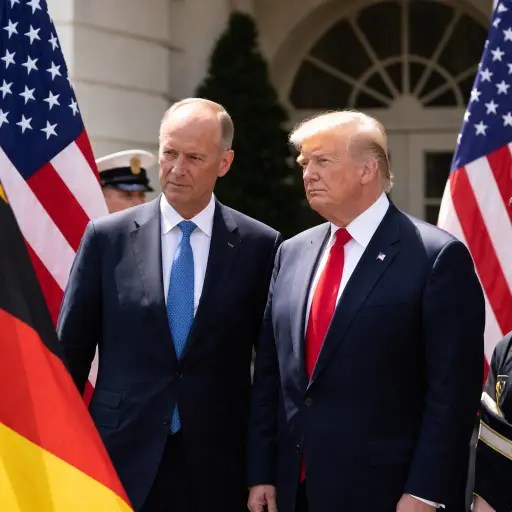
India thought it understood Washington. Through the early months of 2025, senior officials in New Delhi assured visiting executives that the United States would make room for the world’s most populous democracy. Prime Minister Narendra Modi’s February visit to the White House produced warm optics and talk of a fast‑tracked trade package alongside deeper technology and defense ties. The working assumption in Delhi was simple: India was in the U.S. president’s good graces, and difficult disputes could be managed while the two sides pursued bigger opportunities.
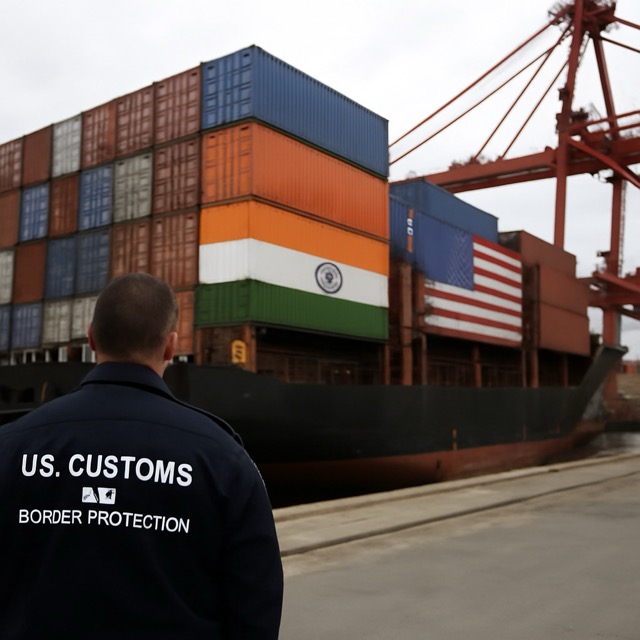
Then the hammer fell. On July 30, the White House said Indian exports would face a 25 percent tariff beginning August 1. Six days later, President Donald Trump signed an executive order adding another 25 percent, lifting the total to 50 percent and explicitly linking the escalation to India’s continued purchases of Russian oil and defense equipment. The about‑face jolted a relationship that had seemed on the verge of pragmatic compromise and left Indian officials fielding panicked calls from exporters over pricing and delivery terms.
The whiplash came with a rhetorical sting. In remarks amplified across television and social media, Trump described India’s economy as “dead,” a claim that ricocheted through the political class and business press. The insult hardened domestic positions at precisely the moment negotiators needed room for give‑and‑take. For a government that has invested considerable political capital in closer ties with Washington, the shift from bonhomie to browbeating was as humiliating as it was costly.
Inside South Block — home to India’s foreign and commerce ministries — the mood flipped from guarded optimism to crisis management. Negotiators believed they were inching toward a landing zone that combined modest openings for U.S. farm goods, limited data‑localization flexibility, and clearer rules for medical devices and e‑commerce. Business groups had been told to expect targeted relief, not a blanket tariff wall. When the second tranche arrived, one official summed up the shock: “We had movement, not mayhem. Now it’s mayhem.”
Washington’s logic is blunt. Since 2022, India has leaned on discounted Russian crude to tame inflation and shield consumers, even as New Delhi called publicly for an end to the war in Ukraine. Russian barrels have regularly supplied a large share of India’s import basket, and Russian systems still make up a significant portion of the military inventory. Trump’s advisers have reframed trade as leverage: if India wants preferential access to the U.S. market, they argue, it must curtail purchases that, in Washington’s view, help sustain Moscow’s war economy.
That reframing collides with India’s doctrine of strategic autonomy. For decades New Delhi has resisted formal alliances, diversified its arms suppliers, and kept energy options open. A blunt 50 percent tariff tests whether that balance can hold when the United States absorbs such a large portion of India’s high‑value exports. It also raises the stakes for a wider constellation of ties, from joint naval exercises in the Indian Ocean to supply‑chain plans for semiconductors and critical minerals.
Early signals from the energy market show the squeeze. State‑run refiners have slowed spot purchases of Russian crude while they await guidance from the government, and private refiners are widening their mix with cargoes from the Middle East, West Africa and North America. As discounts on Russian grades have narrowed, the commercial rationale for buying from Moscow has weakened; yet shifting away too quickly would raise India’s import bill and risk pass‑through inflation. The oil calculus that shielded consumers in 2023 and 2024 has turned into a political and diplomatic liability in 2025.
For exporters, the arithmetic has flipped overnight. Apparel and leather clusters in Tiruppur, Noida and Kolkata are already seeing orders repriced or deferred. Engineering‑goods and specialty‑steel makers fear losing hard‑won share to rivals in Mexico and Vietnam. Gems and jewelry exporters worry that higher duties will shift U.S. demand toward competitors in Thailand and Turkey. Even where carve‑outs might later emerge, uncertainty alone is chilling investment decisions. For small and medium‑sized firms that run on thin margins, the difference between a 10‑point squeeze and a 50 percent tariff wall is existential.
India’s macro picture offers some cushioning. Domestic demand has stayed resilient, underpinned by public capital spending and a nascent private‑investment cycle. Yet exports remain a critical jobs engine, and the United States is India’s single largest market. If the tariff shock persists into the festive season, policymakers will face unpalatable choices: absorb hits to margins with temporary rebates, extend credit‑guarantee lines to small exporters, or accept slower output in labor‑intensive sectors. Any of those choices will test a government that has prided itself on steady growth and fiscal discipline.
Politics has complicated the economics. Ministers labeled the hike “unfair” and insisted that no foreign government can dictate India’s energy choices. The opposition accused the Modi administration of misreading Trump’s transactional style and demanded a firmer line with Washington. Congress leaders branded the 50 percent levy “economic blackmail” and urged the government to “stand up to America,” rhetoric that blends nationalist pride with pocketbook anxiety. The more nuanced debate — what standing up should actually mean — is only beginning.
Retaliation is one option. India could raise duties on select U.S. farm or luxury goods, tighten procurement preferences, or apply closer scrutiny to Big Tech. But tit‑for‑tat carries collateral risks for Indian companies embedded in U.S. supply chains, from pharmaceuticals and auto components to IT and business‑process services. A second option combines law and diplomacy: challenge the measures at the World Trade Organization while pressing for narrow, time‑bound waivers that trade specific relief for steps that serve U.S. aims, such as phased access for agricultural produce or clearer medical‑device rules.
A third vector is diversification. Indian negotiators are accelerating talks with the European Union and United Kingdom and reviving conversations with ASEAN partners. Diversifying markets cannot replace the United States, but it can limit the damage from a single shock. In parallel, the government is pushing domestic reforms that were already on the agenda — faster customs processing, rationalized tariffs on inputs, and cheaper logistics — in the hope that competitiveness, not carve‑outs, becomes the first line of defense.
For Modi, the episode is a reminder that personal chemistry has limits. The prime minister invested heavily in a leader‑to‑leader channel with Trump, betting that face time and flattery would translate into flexibility on Russia and market access. Tariff diplomacy is proving to be the sharp end of a broader Trump doctrine that prizes immediate advantage over multilateral niceties. India is discovering — again — that admiration and alignment on some issues do not inoculate partners from hardball tactics on others.
Yet the relationship is far from broken. Officials on both sides say talks have intensified since the second tariff announcement. One obvious off‑ramp would trade specific relief for measurable steps: targeted openings for American farm produce, phased government procurement for medical devices, or time‑bound reductions in Russian crude purchases with transparent reporting. Another would be a side‑deal on critical minerals, clean‑tech components and defense co‑production that delivers friend‑shoring wins in Washington while giving India relief where it bites hardest.
Whatever the path, clarity is urgent. Executives can handle tough rules; they struggle with volatility. If the current tariff wall is primarily leverage, Washington will have to calibrate demands carefully to avoid driving India toward other partners or toward protectionism at home. If it signals a long‑term shift, New Delhi will need to accelerate the grinding work of competitiveness: lower logistics costs, simpler compliance, predictable tariffs and steady skilling so that firms can survive in a harsher trade climate.
There is also a longer game. In energy, India will try to turn the squeeze into speed — moving faster on domestic exploration and refinery upgrades while widening supplier options so that no single producer, Russia included, becomes pivotal. In trade, the focus will be on deeper agreements with Europe and the Gulf while nursing the possibility of a narrow, sector‑specific understanding with Washington. In security, shared concerns about the Indo‑Pacific will keep defense and maritime cooperation alive even as commercial ties wobble.
For now, though, Delhi’s mood is bruised. Officials who thought they had read the room are confronting a harsher script. The shock of being cast from “preferred partner” to tariff target within a week has few precedents in the modern history of the relationship. Whether this is a temporary spasm on the road to a limited deal — or the start of a more adversarial phase — will depend on how quickly both capitals can find the narrow path between pride and pragmatism.
What is certain is that India’s era of easy assumptions about Washington is over. The United States will remain an essential market and strategic counterpart; Russia will remain a stubborn fact of India’s energy equation. The task now is to prove that autonomy is not a slogan but a strategy — backed by arithmetic that works, even when the tariff winds shift overnight.

 The Tower Post