Hyperscale data centres are triggering a scramble for firm electricity and water—reviving gas projects and old power sites—even as regulators push 24/7 clean power, heat reuse and tighter rules. Can AI ever truly be green?
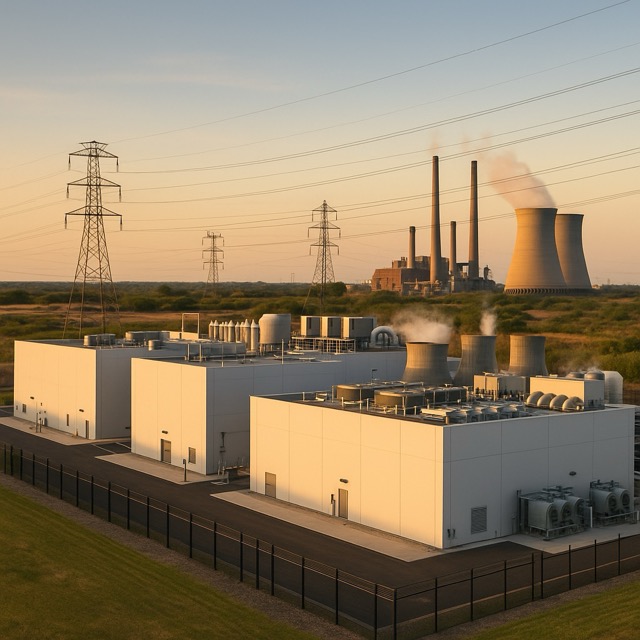
DUBAI / DUBLIN — The artificial intelligence boom has a physical address. It is stamped into the desert edges of the United Arab Emirates, where new glass-and-steel campuses are rising beside substations and gas-fired turbines; and it is visible on the outskirts of Dublin, where grid bottlenecks and public scrutiny mean every new data-centre connection is a political decision. From Abu Dhabi to Ireland’s east coast, the story is the same: AI’s appetite for power is pulling billions of dollars toward firm electricity, much of it still fossil, complicating national plans to cut greenhouse gases.
Industry forecasts now treat data as a heavy industry. The International Energy Agency estimates that global electricity use by data centres was on the order of the mid‑hundreds of terawatt-hours last year and could approach a terawatt-hour tally close to a trillion by 2030 if current build‑outs continue. AI is the main culprit. Training state‑of‑the‑art models requires weeks of nonstop power to feed tens of thousands of accelerators; inference—answering user queries and running AI features inside apps—keeps the meters spinning after the training run ends.
That load does not arrive politely. It is lumpy, steady and inelastic, the kind of demand that grid planners used to associate with aluminum smelters or refineries. Developers want gigawatts of capacity, low-latency fiber and abundant cooling water, all delivered on a tight schedule. When the grid cannot keep up, the temptation is to reach for the fastest firm option: natural gas. Utilities from the United States to Europe report a rush of requests for new peaker plants or the revival of mothballed units; in parallel, tech companies are paying premiums for firm power and grid connections, sometimes by co‑locating on former power-station sites where permits and water access already exist.
Nowhere is this dynamic more visible than in the Gulf. The UAE has set out to be a regional AI capital, coupling sovereign AI players with Western cloud providers. Abu Dhabi’s Khazna Data Centers is adding capacity at Masdar City and in the industrial belt at Mafraq, while a wider ecosystem of cloud, chip and telecom firms scales up around them. The country’s grid is backed by large gas generation, rapidly expanding solar parks and the Barakah nuclear plant. But even with those assets, bringing AI campuses online quickly often means securing dedicated feeds and long‑term contracts for firm supply while waiting for new renewables, storage and transmission to catch up.
In Ireland, the contours are different but the tension is sharper. Data centres already account for more than a fifth of the nation’s metered electricity consumption, concentrated around Dublin, where constraints on the transmission network have forced regulators to ration new connections. Some projects have been told to bring their own backup and demand‑response capability, and to prove that their net impact will not destabilize the grid. At the same time, Ireland’s first operational district heating scheme in Tallaght now pipes waste heat from a cloud facility into public buildings and planned homes—an emblem of how computing’s by‑products could decarbonise other sectors if planners design for it.
The contradiction is not lost on policymakers. Governments that trumpet climate targets also court the investment, jobs and tax receipts that hyperscale campuses bring. The result is a patchwork: connection moratoriums on one side of a city, fast‑tracked permits on the other; glossy corporate pledges of “100% renewable” running up against the blunt physics of an hourly power system still dominated by fossil generation.
Why AI makes the problem harder
AI’s power profile differs from the early cloud. First, the chips are hungrier: a single rack of AI accelerators can draw as much electricity as dozens of typical homes. Second, the most power‑intensive tasks are time‑critical. When a model is in training, operators are loath to pause it for hours if wind drops or clouds roll in. Third, the economics reward scale. That concentrates load in a handful of sites near fiber backbones and big substations, creating local hotspots where carbon intensity and grid congestion can both spike.
Those realities are pushing some investors back to fossil fuel. Gas turbines promise dispatchable power and quick interconnection, especially at retired coal sites with transmission capacity. Across Europe, utilities and tech companies are negotiating conversions and long‑term power deals that stitch together on‑site data halls, nearby peakers, and pipelines to future wind and solar. In North America, merchant generators say industrial electricity demand is rising at a pace not seen since the 1990s, with hyperscalers and AI leading the queue. The bet is that demand will be sticky and that regulators will accept higher near‑term emissions in exchange for digital infrastructure and economic development.
Can data centres be truly green?
Three tests tell the story: additionality, deliverability and time‑matching.
• Additionality: Does a project add new clean power to the grid rather than claiming credit for existing plants? The old model—buy annual renewable energy certificates to offset consumption—does little to change the supply mix. The emerging benchmark is long‑term procurement that finances new wind, solar, geothermal or small hydro, ideally connected in the same region as the data centre.
• Deliverability: Can clean electricity actually reach the campus when needed? Co‑locating with new renewables, funding grid reinforcements and building large battery systems can relieve bottlenecks, but the scale of AI loads means multiple technologies will be needed. Some providers are exploring direct wires from renewable “energy parks” and pairing them with batteries or flexible load‑shifting for non‑critical computing jobs.
• Time‑matching: Hourly or even sub‑hourly accounting—often called 24/7 carbon‑free energy—forces buyers to match consumption with clean supply in real time on the same grid. Several hyperscalers have adopted this standard in pilot markets. It exposes shortages during calm nights or winter spells and nudges buyers toward a more diverse portfolio, including geothermal, hydro, nuclear or long‑duration storage.
There are credible pathways. In places like the UAE, abundant sun combined with nuclear baseload offers a foundation if transmission and storage are expanded and if new campuses commit to time‑matched, regional procurement. In Ireland, better interconnectors, offshore wind in the Irish Sea and mandatory waste‑heat recovery could lower the footprint of the next wave of builds. Across markets, stricter rules on diesel backup, higher minimum efficiency standards, liquid cooling and circular‑water systems would cut local pollution and water stress.
The harder truth is that getting to “truly green” requires choices that slow projects and raise costs in the near term. Developers can pre‑build renewables and storage before plugging in the first server; they can pledge to flex training workloads when the grid is dirty; they can accept sites outside the most congested urban nodes. Regulators can demand hourly carbon accounting, set caps where grids are weak, and reward projects that deliver system benefits—grid services, heat recovery, storage and demand response—rather than just megawatts.
What to watch next
• The shape of power contracts: Multi‑gigawatt, 10‑ to 20‑year deals that blend firm low‑carbon sources with new renewables are fast becoming the norm. Whether nuclear, geothermal or long‑duration storage scales into these portfolios will determine if emissions actually fall.
• Heat as a resource: Northern cities are beginning to count data‑centre waste heat as a decarbonisation tool. If Dublin’s early projects prove reliable and replicable, expect heat networks to become a planning condition for new sites.
• Planning triage: Expect more governments to designate data centres as “strategic” while simultaneously limiting where and how they connect. That paradox—priority access paired with tougher standards—will define the sector’s next phase.
The AI economy is here, and with it an energy reckoning. Data centres can get much cleaner, and some will. But absent a rapid build‑out of new, firm, low‑carbon supply—and tougher rules that align procurement with physics—the boom will lean on fossil fuels just when the world needs the opposite. That makes the question urgent rather than rhetorical: AI’s data centres can be greener, but truly green will take more than clever marketing and glossy sustainability reports—it will take time, money and hard grid choices.



 The Tower Post