Stanford Researchers Develop System to Translate Inner Speech into Spoken Words

Stanford University researchers have made a groundbreaking discovery in brain-computer interface technology, unveiling a system capable of translating imagined words directly from neural activity into speech. This innovation marks a significant milestone in neurotechnology, allowing individuals with severe paralysis to communicate more easily and naturally.
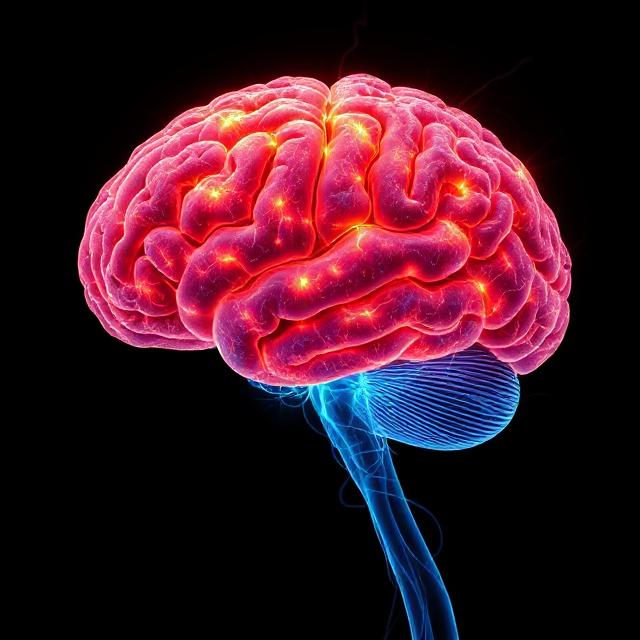
The team, led by neuroscientist Erin Kunz, used microscopic electrode arrays implanted in the motor cortex of four participants living with paralysis to record brain activity while they attempted to speak aloud and silently imagined specific words. The motor cortex is the brain region responsible for controlling voluntary movements, including speech. The electrode arrays, which were implanted in the participants’ brains during a surgical procedure, recorded the neural activity associated with speech production.
Machine learning models were then trained to detect and classify distinct patterns of brain activity linked to phonemes, the smallest individual sound units in spoken language. The models were trained on a dataset of brain activity and corresponding speech sounds, allowing them to learn the relationships between neural activity and speech production.
The results were impressive, with the decoding system reaching accuracy rates of up to 74 percent. Furthermore, the researchers discovered that imagined speech produced a weaker but still distinct neural signature compared to attempted speech. This finding has significant implications for individuals with profound speech and motor impairments, as it could make communicating easier and more natural.
For individuals with partial paralysis, attempting speech can be physically draining and may produce unwanted vocalizations or breathing difficulties. In contrast, the brain-computer interface system developed by the Stanford researchers eliminates these drawbacks by decoding silent speech directly from the brain.
However, the team also identified a crucial privacy concern. In some cases, the system detected words that participants had not been asked to think about, such as counting numbers during a visual task. To address this issue, the researchers developed a form of mental lock, which remains inactive unless triggered by an imagined password. In testing, the phrase “chitty chitty bang bang” successfully blocked unintended decoding 98 percent of the time.
The breakthrough comes amid growing interest in brain-computer interface technology from both academic and commercial sectors. Investment in the field is expected to intensify following the launch of Merge, a new company backed by OpenAI chief executive Sam Altman, intended to compete with Elon Musk’s Neuralink.
According to senior member of the team, Frank Willett, the results demonstrate how far the field has progressed toward restoring conversational communication to people who cannot speak. “This work gives real hope,” Willett said, “that speech BCIs can one day restore communication that is as fluent, natural and comfortable as conversational speech.”
The Stanford researchers’ breakthrough has significant implications for the development of brain-computer interface technology. While the system is still experimental, it provides proof-of-principle that future devices could let users speak fluently using thought alone. The technology has the potential to revolutionize the lives of individuals with severe paralysis, allowing them to communicate more easily and naturally.
The study was published in the journal Cell, and the researchers are continuing to refine the system and improve its accuracy. As the field of brain-computer interface technology continues to advance, it is likely that we will see significant breakthroughs in the coming years, leading to new and innovative applications in fields such as medicine, education, and entertainment.