As U.S. wildlife-aid programmes are frozen or wound down, Chinese triads and Mexican cartels are rushing to fill the void in endangered-species trafficking from Latin America to Asia.
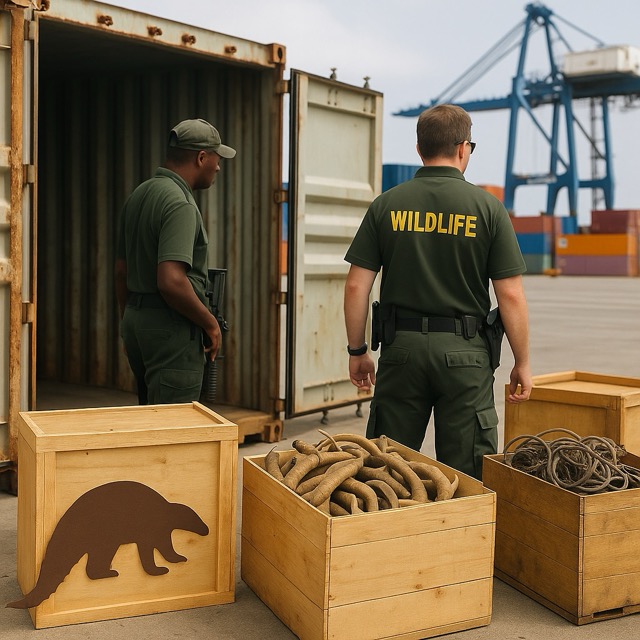
NAIROBI / MEXICO CITY — Wildlife crime networks are moving faster than the money that once contained them. Following months of funding freezes and cutbacks to U.S.-backed conservation programmes, transnational groups — from Chinese triads to Mexican cartels — are exploiting the gap to expand trafficking of endangered animals and parts, according to researchers, law-enforcement officials and aid groups operating on the front lines.
The trend has been building since the spring, when Washington’s international conservation spending — including USAID biodiversity grants and the U.S. Fish and Wildlife Service’s (USFWS) international programmes — was paused or pared back. Field partners say the ripple effects are immediate: ranger patrols skipped, intelligence networks disbanded, informants left unpaid and border-control trainings cancelled. In places where criminal syndicates already tap the same logistics used for drugs and timber, the loss of steady funding has tilted the risk–reward calculus in favour of poachers and brokers.
What we know
Analyses published this year describe a widening enforcement gap. Conservation organisations and donor records show that several U.S.-funded anti-trafficking projects have been frozen or shut, with no obvious short‑term replacement from other donors. The United Nations’ latest wildlife crime report estimates the illicit trade at roughly $23 billion a year, noting that organised crime groups remain embedded across supply chains from source regions to retail markets. Independent investigations this year have also documented growing Chinese criminal involvement in jaguar and sea-cucumber trafficking in South America and the Caribbean, and a persistent China–Mexico pipeline for totoaba fish bladders that imperils the last vaquitas in the Gulf of California.
The triad–cartel junction
The criminal handoff is not hypothetical. U.S. narcotics assessments and NGO probes have detailed collaboration between Sinaloa‑linked brokers in north‑west Mexico and Chinese syndicates that purchase, finance and ship high‑value wildlife products. The same routes used to move precursor chemicals and methamphetamine run in reverse for marine species and big‑cat parts. For intermediaries, margins are rich and penalties — especially compared with drug trafficking — remain relatively light.
Why the cuts matter
The U.S. has been the anchor donor for ranger training, cross‑border investigations and judicial support in dozens of countries where wildlife crime intersects with corruption and armed groups. When those dollars stop, the practical effects are prosaic but decisive: no fuel for patrol trucks, fewer aerial surveys, slower forensics and a loss of continuity in informant handling. NGOs say that even brief pauses can unwind years of trust‑building with communities and law‑enforcement units. Several governments in trafficking‑prone regions, especially in Southeast Asia and parts of Africa, have depended on U.S.-supported capacity rather than building their own.
On the ground: four flashpoints to watch
• **Gulf of California, Mexico:** Cartel‑protected crews target totoaba for their dried swim bladders, which fetch high prices in China. Conservationists warn that any lull in joint patrols and financial‑crime probes risks another surge in netting that also drowns the critically endangered vaquita porpoise.
• **Amazon and Guianas:** Investigations have traced networks buying jaguar parts for export to Asia. With fewer resources for long‑term undercover work, cases that require patient financial tracking grow harder to bring.
• **Horn of Africa and East Africa:** Cuts to intelligence‑sharing and border‑unit mentoring weaken the ability to interdict rhino horn and pangolin shipments that move through regional hubs via air cargo.
• **Indo‑Pacific:** Sea‑cucumber and shark‑fin smuggling is rising in archipelagic states strained by fuel costs and stretched maritime patrols. Conservation funding often underwrites the very boats and maintenance that keep community rangers on the water.
How traffickers adapt
Syndicates respond to enforcement signals with the agility of any multinational. When interdictions fall, they expand collection in known hotspots rather than risk new routes. Brokers hedge by paying in cash and goods, spreading buys across small suppliers to keep any one arrest from exposing the network. They also exploit the paperwork gaps left by staff turnover: expired CITES permits, dormant task forces, stalled memoranda of understanding between agencies. Several investigators report that bribe rates for routine passage through ports have dropped — a market signal that risk has eased.
Who fills the gap
European development banks and a handful of private foundations have stepped in to preserve core patrols and park operations in some landscapes. But those stopgaps rarely fund the most sensitive work: criminal‑intelligence development, undercover buys, or financial investigations that follow money into shell companies. Without sustained public funding, the highest‑value nodes — the brokers and exporters — tend to remain insulated.
Policy options on the table
If Washington wants to blunt the damage while broader budget fights continue, practitioners propose low‑cost steps that do not require rebuilding whole programmes. First, ring‑fence support for vetted transnational crime units that have proven track records on wildlife cases, including access to financial‑intelligence tools. Second, protect small grants for informant handling and controlled deliveries that let agencies climb the chain beyond poachers. Third, keep grants flowing to judicial training so that cases do not stall once arrests are made. Finally, lean on recovered assets and fines to backfill at least part of the funding gap for frontline work.
The stakes beyond biodiversity
Wildlife trafficking rarely travels alone. The same networks launder money through real estate, move people and counterfeit goods, and corrupt border officials. Conservationists argue the current pullback risks losses far beyond species counts: it weakens governance in fragile regions and hands organised crime a fresh revenue stream. Investors, too, have exposure: fisheries collapses and park insecurity undermine local economies and insurance assumptions.
What to watch next
Over the next two quarters, practitioners will be watching seizure volumes at key airports and maritime ports, the resumption (or not) of suspended USAID and USFWS grants, and whether China–Mexico trafficking indicators — particularly totoaba pricing — spike. Just as telling will be whether European donors expand emergency support into multi‑year commitments, and whether recipient governments use the moment to budget for their own enforcement capacity rather than assuming aid will return.
Bottom line
Criminal markets abhor a vacuum. With U.S. conservation dollars on ice, syndicates with global reach are moving to occupy the space. Reversing that momentum will require money, yes, but also precision: targeting the brokers and bankers who make wildlife crime profitable — before the next season’s poaching tells the tale in numbers.



 The Tower Post