Fading global risks and repeated delays to new U.S. tariffs have lured investors back to Mexico’s high‑yielding assets. The peso is up about 4% in three months, the best performer among the most‑traded currencies.
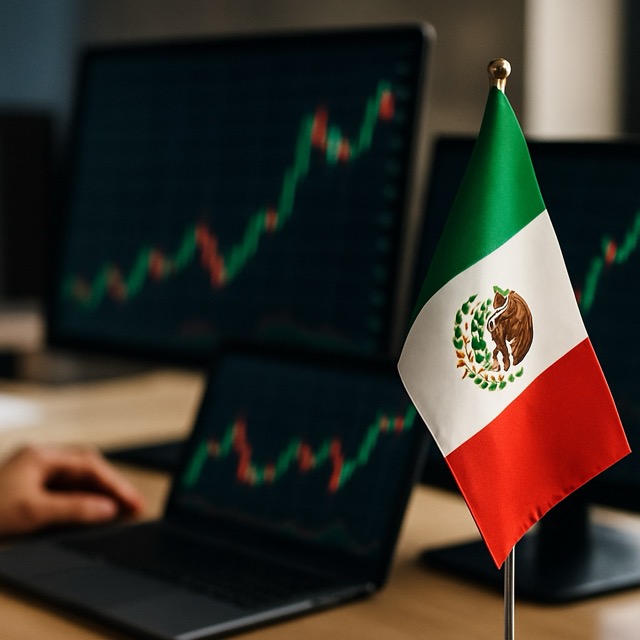
MEXICO CITY – An unlikely beneficiary has emerged from Washington’s stop‑start tariff brinkmanship with China: the Mexican peso. After a choppy spring in global markets, the currency has climbed roughly 4 per cent over the past three months, outpacing a basket of heavily traded peers and frustrating traders who expected rising protectionism to punish Mexico’s export‑reliant economy.
Instead, the peso’s mix of high carry, steady macro management and a drip of tariff reprieves from the White House has pulled investors back in. With policy rates still lofty and inflation cooling, Mexico offers one of the fattest risk‑adjusted yields in emerging markets. And every time Washington delays the next step in its trade war — the latest 90‑day extension came just before a deadline this week — a layer of tail risk peels off, allowing carry strategies to re‑engage.
The move is part arithmetic, part narrative. The arithmetic is straightforward: Banco de México’s benchmark rate remains in double‑digits, while headline inflation continues to drift lower. That combination keeps real rates positive, a lure for international funds that borrow in low‑yielding currencies and park money in Mexico’s government bonds. The narrative is more subtle: investors have decided that the tariff theatre is slowing rather than stopping North American integration, and that nearshoring flows — factories, warehouses and supplier networks moving closer to the U.S. consumer — still have legs.
Bond desks have a nickname for the trade: ‘carry with a safety net.’ Mexico’s fiscal stance is unflashy, its central bank is boringly orthodox, and the exchange rate floats. None of that eliminates risk — a stronger dollar or a growth scare can still blow holes in positions — but it does mean the peso often weakens less than feared when the tide turns, and strengthens quickly when stress recedes. The latest rally began in late May as volatility measures retreated and was reinforced by July’s softer‑than‑expected U.S. inflation print.
At street level in Mexico City, the macro story is playing out in concrete and steel. Industrial parks near the northern border report waiting lists as Asian suppliers set up plants to serve U.S. customers tariff‑free under the USMCA trade pact. Railroads are adding cross‑border capacity, truckers can’t hire quickly enough, and customs brokers talk about a ‘new normal’ of higher, steadier volumes. None of this immunises Mexico from a demand shock north of the border, but it does broaden the base of export earnings in a way that currency traders can model.
Politics could have derailed the rally, and still might. Mexico’s new administration has pledged continuity on monetary policy and a pragmatic line on energy and security cooperation with Washington, even as it pursues flagship social programmes at home. In the U.S., the White House has brandished tariffs as leverage against Beijing while signalling that North American supply chains remain sacrosanct. For markets, those two messages rhyme: whatever happens with China this autumn, factories in Monterrey and Querétaro look busy.
The peso’s outperformance has a mechanical dimension, too. Unlike smaller emerging currencies, the MXN trades around the clock and offers deep futures and options markets in Chicago and New York. That liquidity makes it the go‑to hedge for EM risk — investors sell pesos when nerves spike and buy them back when fear fades. The resulting ‘rubber‑band’ effect can accelerate a rebound once volatility falls, as it did in June and July.
Skeptics caution that carry is a fair‑weather friend. Mexico’s rate cuts will gather pace if inflation stays on trend, eroding the yield advantage that has underpinned the rally. A re‑acceleration in U.S. inflation, or a messy turn in the tariff saga, could reignite dollar strength and flip risk appetite. The peso’s history is punctuated by sudden air pockets when global conditions turn: 2016’s election shock, 2020’s pandemic panic, 2022’s energy‑price spike. No one mistakes a three‑month gain for a guarantee.
Still, there are reasons to believe the floor under Mexico has risen. The country’s current‑account position has improved with manufacturing exports and services such as aviation and tourism. Remittances from the U.S., a stabiliser during downturns, hit fresh records this year. And while fiscal pressures are building — particularly around Pemex — debt levels remain manageable by emerging‑market standards, giving the finance ministry some room to absorb shocks.
Traders also point to an under‑appreciated driver: corporate hedging. As more manufacturers move to Mexico, they bring with them sophisticated treasury operations that routinely hedge peso exposures and smooth cash flows. Those programs can damp day‑to‑day swings and, at the margin, support the currency during bouts of uncertainty. Banks say demand for long‑dated peso swaps has risen sharply over the past year, a sign of deeper balance‑sheet planning by multinationals.
The geopolitical backdrop matters as well. While Washington’s tariff campaign against China has stirred global supply chains, it has also pushed some investment toward the Americas. Mexico has positioned itself as the natural bridge: inside the U.S. orbit but cost‑competitive and increasingly skilled. The repeated decision to delay fresh U.S. tariff hikes this summer has reinforced the view that North American integration will be shielded from the fiercest cross‑Pacific blows.
For households and small businesses, the currency story shows up in prices and credit. A stronger peso eases the cost of imported goods — from machinery to medicines — and gives the central bank a little more room to consider rate cuts. Banks say small‑business lending has ticked up as confidence improves and order books fill. The flip side is that exporters whose costs are in pesos and revenues in dollars see margins squeezed when the currency rallies, a perennial tension in an open economy.
Market technicians talk of milestones. The first was the swift recovery after April’s wobble, when the peso shrugged off a broad sell‑off within weeks. The second came in July when the currency broke back through levels that had capped it repeatedly in past cycles, drawing in momentum funds. A third would be sustaining gains through September’s policy meetings in Mexico City and Washington — a test of whether this summer’s calm can outlast the calendar’s potholes.
For policy makers, success is measured less in headlines than in durability. Officials at Banco de México have been careful not to ‘talk the peso up,’ reminding investors that the exchange rate is a shock absorber, not a scorecard. The finance ministry has kept its focus on predictable issuance and liquidity in local debt markets. If the currency is winning the beauty contest of the moment, they would rather it keep the crown quietly.
The bigger question is whether Mexico can convert a cyclical currency pop into structural gains. That means clearing bottlenecks in energy, water and transport so that nearshoring factories can plug in; investing in training to narrow skills gaps; and shoring up public security to reduce the friction and tragedy of crime. It also means discipline when the cycle turns: keeping buffers in place so that the next global shock doesn’t force pro‑cyclical cuts just when the real economy needs support.
For now, the peso’s twist in the trade‑war plot is a reminder that markets do not parse politics the way pundits do. A headline about tariffs can mask a deeper shift in supply chains; a threat can be as supportive as a promise if it never quite arrives. Investors will watch the same dashboard as summer turns to autumn: tariff deadlines, U.S. inflation, Mexico’s rate path and the pace of factory announcements. The currency has earned its three‑month ribbon. The longer race is still being run.


 The Tower Post