After nearly a year on the sidelines, the conglomerate sold roughly $4 billion of Apple stock in Q2 2025—extending an 11‑quarter retreat from public equities and swelling its cash war chest.
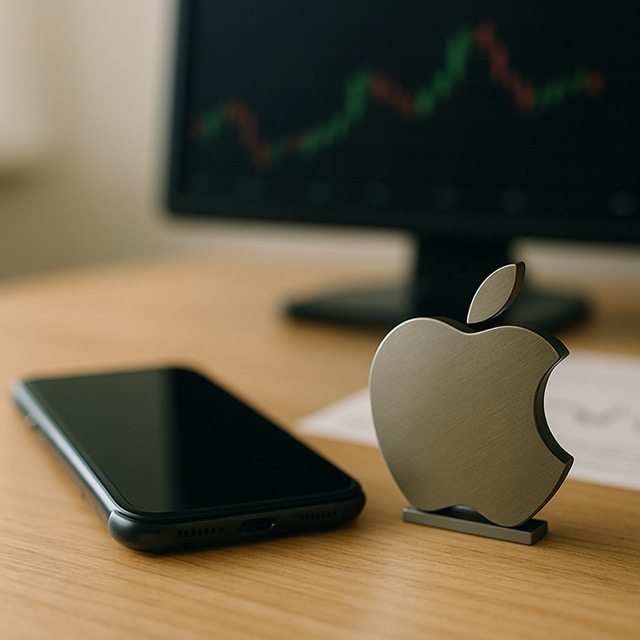
Warren Buffett’s Berkshire Hathaway has restarted its pruning of Apple, disclosing in its second‑quarter 13F filing that it sold 20 million shares—worth about $4 billion at prevailing prices—after nearly a year without trimming its largest position. The move, which reduces Berkshire’s holding to roughly 280 million shares, adds another chapter to a gradual recalibration that has seen the Omaha conglomerate pare exposure to publicly traded stocks for nearly three years.
The latest sale does little to change Apple’s status inside Berkshire’s portfolio: the iPhone maker remains the single biggest equity holding by market value. But it does signal that Buffett and his lieutenants, Todd Combs and Ted Weschler, are still intent on easing concentration risk and keeping dry powder in a market that has been alternately buoyant and brittle in 2025. Berkshire was a net seller of stocks again in the quarter—its 11th consecutive period of net selling—and finished June with a towering cash and short‑term Treasuries balance north of $340 billion, underscoring a cautious stance even as U.S. equities hover near records.
Why lighten Apple now? Valuation and portfolio balance top the list. Apple’s shares have rebounded from a rocky first half, yet growth is slower and competitive pressures are rising, from hardware cycles to an arms race in artificial intelligence that is reshaping investor expectations across Big Tech. For Berkshire, Apple’s dominance in the portfolio has long been a double‑edged sword: it has been the company’s most lucrative investment this century, but also an outsized driver of mark‑to‑market swings. Trimming around the edges lets Berkshire lock in gains, manage tax positions, and reduce reliance on a single stock without making a broader call against the Cupertino giant. Indeed, the sale is best read as position sizing—not an exit.
The quarter’s 13F also reveals a redeployment of capital into franchises that look more classically Buffett: cash‑rich, resilient, and priced with a margin of safety. Berkshire initiated a stake of a little over five million shares in UnitedHealth Group, a battered blue‑chip insurer facing higher costs, investigative scrutiny and headline risk—precisely the kind of quality‑through‑controversy setup that has occasionally tempted Buffett in the past. The firm also added to or unveiled positions in industrials and homebuilders, including Nucor, Lennar and D.R. Horton, and boosted select consumer and energy holdings such as Constellation Brands, Domino’s Pizza and Chevron. Offsetting these purchases, Berkshire trimmed other large financials—most notably Bank of America—and closed out its stake in T‑Mobile US.
The bigger picture is one of shrinking equity exposure and swelling liquidity. Across the past eleven quarters, Berkshire has sold more stock than it bought, even as operating subsidiaries—from rail to utilities to retail—continued to throw off cash. The consequence is a near‑record cash pile that has become a feature, not a bug, of Berkshire’s strategy in a world of higher nominal rates. Short‑dated Treasuries now offer mid‑single‑digit yields with essentially no credit risk, giving the conglomerate an easy way to earn billions annually while it waits for what Buffett has long called ‘elephants’—rare, attractively priced acquisitions big enough to move the needle.
For Apple, Berkshire’s calculus sends a mixed but manageable message. On one hand, a marquee shareholder that once owned more than 900 million split‑adjusted shares is still reducing exposure; on the other, the trim leaves a very large stake intact and removes the risk that Berkshire would be forced to sell into weakness. Apple’s own fundamentals remain formidable—an installed base measured in the hundreds of millions, a services business with rich margins, and new on‑device AI features designed to extend engagement and pricing power. The question is less about resilience than about the rate of compounding: can Apple grow fast enough, at a valuation that already discounts much of its quality, to justify being a quarter of Berkshire’s listed stock book? For now, Berkshire’s answer appears to be ‘yes—but with guardrails.’
There is another, more prosaic, reason to keep trimming: succession and simplicity. Buffett turns 95 this month and is set to hand the CEO role to Greg Abel on January 1, 2026, while remaining chairman. A cleaner, less volatile equity portfolio—anchored by a handful of durable champions and a mountain of cash—gives Abel maximum flexibility to execute in year one. It also makes Berkshire’s financials less hostage to the fickle tides of market marks, a consideration that has become more salient as the company’s quarterly results draw intensified scrutiny.
Critics will argue that a sustained retreat from equities risks leaving returns on the table. That is especially true when multiples compress in parts of the market that Berkshire knows well, from consumer staples to energy and housing‑adjacent plays. But Buffett has rarely been paid for speed. He has been paid for patience, for underwriting risk at sensible prices, and for allowing superior businesses to do the heavy lifting over time. Against that backdrop, the Apple trim reads like part of a methodical de‑risking, not a market call. When the spread between safe yields and expected equity returns narrows, cash becomes an asset rather than an embarrassment.
Investors trying to game the next move should focus less on Apple’s share count and more on the opportunity set that Berkshire is creating. UnitedHealth—an unloved Dow component when Berkshire bought—could be a multiyear compounder if cost inflation normalizes and regulatory overhangs clear. Homebuilders and building‑products names offer leverage to a housing market that has stubbornly refused to roll over despite higher mortgage rates and supply frictions. Energy positions, particularly Chevron, provide inflation‑hedge characteristics and cash returns that fit Berkshire’s temperament. None of these are guarantees. But each reflects a familiar Buffett playbook: favor resilient cash flows, avoid exuberance, and let time do its work.
What should Apple shareholders read into all this? Probably not much beyond prudent housekeeping by a famously disciplined capital allocator. Berkshire’s thesis has long been that Apple is less a hardware company than a consumer‑brand ecosystem with unusually sticky customers. That story remains intact. If the past few quarters have taught anything, it is that Berkshire will happily let a great business remain great in the portfolio—just not at any price or at any size.
The bottom line: Berkshire’s latest quarter says more about process than prediction. Sell a little of what’s become too big. Buy selectively where fear has created price. Build cash when opportunities are scarce. And be ready when the arithmetic flips. In that sense, the Apple trim is not a retreat at all. It is a reset—one that keeps Berkshire light on its feet as the market’s next act begins.


 The Tower Post