A 0.6% rise in a £2bn portfolio—including towers occupied by Morgan Stanley and Citigroup—signals a fragile turn for east London’s finance hub as leasing and footfall gather pace.
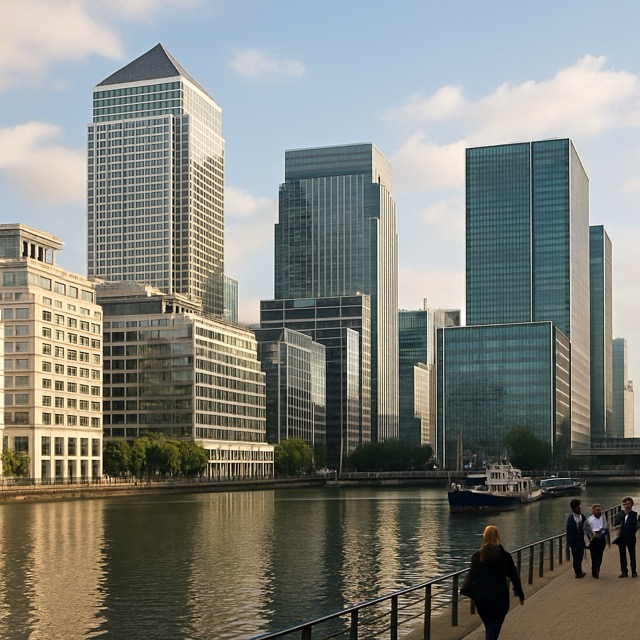
LONDON – After three bruising years in which rising interest rates, hybrid working and a drumbeat of tenant departures pressed values lower, Canary Wharf has recorded its first uptick in prime office valuations. The value of a £2bn portfolio managed by Canary Wharf Group (CWG) rose 0.6 per cent between March and June, ending an 11‑quarter stretch of flat or falling appraisals and offering a modest, but symbolically important, vote of confidence in the district.
On the face of it, a fractional gain hardly amounts to a rally. But in the context of a market that has been repriced repeatedly since 2022, the move matters. The portfolio includes landmark assets with blue‑chip occupiers, among them towers leased to Morgan Stanley and Citigroup. For investors, the turn in values suggests that the sharpest phase of yield expansion may be behind the Wharf’s best‑in‑class buildings, even as secondary stock continues to struggle with obsolescence and costly sustainability upgrades.
Canary Wharf’s rebound has lagged that of the City and West End, where tight supply of new, energy‑efficient space and a return of big‑ticket deals pushed headline rents higher this year. Yet the Wharf’s micro‑fundamentals have quietly improved. CWG says it expects to sign more than 700,000 square feet of leases in 2025—on course for its strongest year in over a decade—while retail footfall on the estate surpassed 72 million visits in 2024, up from 67 million in 2023 and 54 million in 2022. The Elizabeth line’s seamless connection to the West End and Heathrow has also widened the catchment for staff and visitors, softening one of the historic objections levelled at Docklands: that it felt more isolated than rival districts.
Demand is not uniform. The bifurcation that now defines global office markets—where the greenest, best‑located, amenities‑rich buildings win, and the rest are left behind—remains evident. Leasing has skewed strongly toward prime floors in towers with impressive operational carbon credentials and wellness features. Landlords report that fit‑out cost inflation and the complexity of labelling buildings as compliant with tightening environmental rules are elongating deal cycles. But when transactions clear, they do so at levels that would have seemed ambitious 18 months ago.
HSBC’s decision this month to take 210,000 square feet on a long lease at 40 Bank Street, even as it relocates its headquarters to the City by St Paul’s later this decade, has become a talking point among leasing agents. The bank, facing a space squeeze at its future HQ, will keep a meaningful operational presence in E14. Spanish lender BBVA and payments giant Visa have also expanded or committed to the Wharf in recent quarters, part of a cohort of financial and technology tenants using the market reset to upgrade space.
Valuation mechanics help explain the 0.6 per cent rise. Appraisers report stabilising prime yields and firmer rental tone for top assets, particularly where landlords can demonstrate strong leasing pipelines or rent reversion as older, below‑market leases expire. A reduction in UK gilt yields from last year’s highs has eased some pressure on discount rates, while the weight of capital dedicated to high‑quality, sustainable offices remains significant even after a bruising two years for listed real estate.
Even so, few in the Wharf are declaring victory. Vacancy across the cluster remains elevated by historic standards, and refinancing risks linger for debt‑laden assets that are not obviously competitive in a net‑zero, experience‑led market. The ripple effects of major moves—Clifford Chance’s decision to decamp to the City, for instance—continue to wash through neighbouring buildings. And the Wharf’s ownership structure, backed by Qatar’s sovereign wealth fund and Brookfield, affords time and capital that many leveraged owners elsewhere lack; the recovery story may therefore be unevenly distributed.
One area of clear momentum is diversification. CWG has spent the downturn accelerating a push beyond offices into homes, hospitality and health sciences. Construction is advancing on One North Quay, a 23‑storey, purpose‑built laboratory tower billed as Europe’s largest commercial life‑sciences building when it completes in 2027. The bet is that a dense cluster of research, biotech and med‑tech firms—plugged into nearby academic institutions—will anchor a new ecosystem of occupiers, enliven the estate beyond trading hours and create daytime demand for retailers and restaurants.
For tenants, the Wharf’s proposition has evolved. Where once the sales pitch centred on big, efficient floorplates at sharp rents, today it is as likely to emphasise the waterfront public realm, new residential neighbourhoods, a livelier food‑and‑leisure offer and fast links to Bond Street and Heathrow. Hybrid working is not going away, but a steady tightening of in‑office expectations—especially among banks—has lifted midweek occupancy and given teams more reason to invest in high‑quality, collaborative office space.
Investors, meanwhile, are weighing whether this quarter marks an inflection or a blip. The consensus view is cautious: more quarters of data will be needed to confirm a trend, and the Wharf’s weaker, older stock will continue to drag on averages. But for the prime end of the market, there is a plausible path to gradual rental growth and stable yields as supply of net‑zero‑ready floors remains constrained. If debt markets continue to thaw and the Bank of England remains on a gentle easing path, valuation support could broaden.
The broader London office narrative also matters. In the City core, landlords have pushed rents for the very best space to triple digits per square foot this year, underscoring how scarcity of top‑spec product is dictating outcomes. For Canary Wharf, the task is to translate improving leasing metrics into sustained pricing power—without sacrificing the relative value that has traditionally drawn cost‑sensitive occupiers east.
For now, the message from appraisers is that the worst may be over for the Wharf’s flagship towers. A 0.6 per cent rise will not change balance sheets overnight. But in a market obsessed with direction of travel, it is the first green shoot in years. If leasing momentum holds through the autumn, and the life‑sciences pivot gathers pace, the summer of 2025 could mark the moment Canary Wharf’s long, post‑pandemic rehabilitation moved from hope to evidence.




 The Tower Post