Largest EU deployment ever as Pedro Sánchez warns of climate-driven crisis.
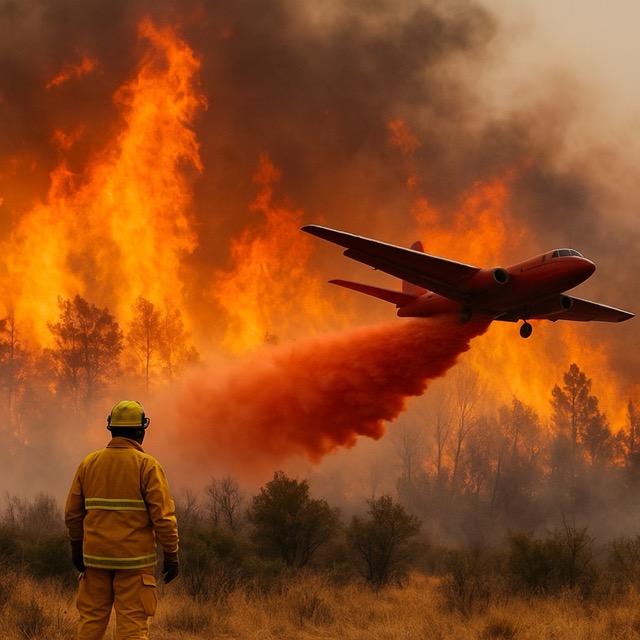
MADRID — Spain is facing one of the most devastating wildfire seasons in its modern history, prompting the largest-ever activation of the European Union’s firefighting force. Prime Minister Pedro Sánchez confirmed on Monday that reinforcements from across the continent have been deployed to help contain blazes tearing through vast swaths of the country.
The unprecedented mobilization comes after weeks of extreme heat, with much of Southern Europe trapped in successive heatwaves. Meteorologists say temperatures topping 45°C in some areas, coupled with prolonged drought conditions, have created a perfect storm for the rapid spread of flames.
“This is not only a Spanish emergency, but a European one,” Sánchez said during a press briefing in Madrid. “We are confronting the consequences of climate change in real time. Solidarity and collective action are the only way forward.”
### Fires Across Multiple Regions
Wildfires have been reported in at least seven Spanish regions, including Andalusia, Castilla-La Mancha, Valencia, and Catalonia. In some rural areas, entire villages have been evacuated. Farmers have reported the loss of crops and livestock, adding economic pain to the environmental devastation.
In Andalusia, helicopters have been circling day and night, dropping water over mountainous terrain where ground access is limited. In Valencia, flames have swept dangerously close to residential neighborhoods, forcing thousands to flee their homes. Local authorities estimate that more than 35,000 hectares have already been destroyed nationwide since late July.
Emergency services said at least six people have died in fire-related incidents this summer, and dozens more have been injured. Hospitals are also treating individuals for smoke inhalation, many of them elderly residents unable to evacuate quickly.
### Europe Responds
The European Union’s Civil Protection Mechanism has sent more than 20 firefighting planes and helicopters, alongside over 400 specialized personnel, to Spain. Crews from France, Italy, Greece, and Poland are already on the ground. “We have never before coordinated such a large-scale intervention,” said EU Commissioner for Crisis Management Janez Lenarčič. “It demonstrates the seriousness of the situation — and the urgency of stepping up Europe’s climate resilience.”
The EU’s firefighting reserve, established in 2019, was designed to respond to crises just like this. However, experts warn that the frequency and scale of climate disasters now risk outpacing even the most ambitious emergency planning. “Southern Europe is becoming the frontline of climate change,” noted Dr. Helena Márquez, a climate scientist at the University of Barcelona. “Without dramatic emissions cuts, summers like this will no longer be exceptional — they will be the new normal.”
### Climate Debate Intensifies
The disaster has reignited political debate in Spain and across Europe over climate adaptation and the need for stronger long-term strategies. Environmental groups are calling for urgent investment in forest management, early detection systems, and greener urban planning.
Meanwhile, the Spanish government has pledged to increase funding for regional firefighting brigades and accelerate renewable energy development. “This crisis underlines why we cannot delay climate action,” Sánchez told parliament. “It is about protecting lives, communities, and the very landscapes that define our country.”
Yet critics argue that successive administrations have failed to implement effective forest policies. Decades of rural depopulation have left vast tracts of woodland unmanaged, creating tinderboxes that ignite with ease in soaring temperatures.
### A Summer of Ashes
For those directly in the path of the flames, the political debates feel distant. “We’ve lost everything,” said Juan García, a farmer in Castilla-La Mancha who watched his olive groves burn. “The fire came so fast, there was no time to save anything.”
Satellite images show a thick plume of smoke stretching across the Iberian Peninsula, visible from space. Experts fear the fires will worsen air quality not only in Spain but also in neighboring countries, with fine particles drifting as far north as France.
As emergency crews continue their battle, attention is also turning to the long recovery that will follow. Reforestation programs, compensation for displaced families, and psychological support for traumatized communities will be essential. But with more heatwaves forecast for September, the season is far from over.
The message from Spain’s leaders is clear: this summer’s wildfires are not just a national tragedy, but a warning of the dangerous path ahead if climate change continues unchecked.

 The Tower Post