On the eve of a December vote, the battlefield still decides the ballot — and civilians pay the price.
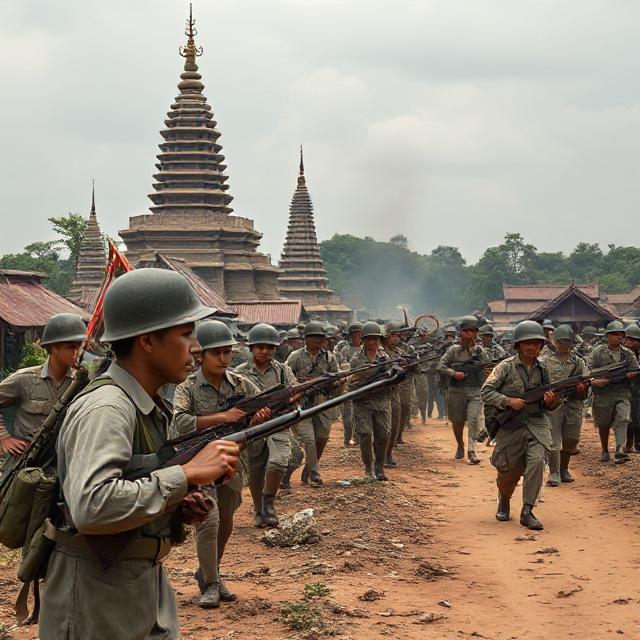
Elections under fire
The election timetable arrives amid attempts by the military to project control after dissolving its State Administration Council and appointing a caretaker cabinet on August 1. Officials insist that nationwide polling can proceed in phases, even as large swaths of Myanmar remain outside firm military control. Opposition groups have dismissed the vote as a bid for legitimacy rather than a route out of crisis. In practical terms, the feasibility of holding credible polls hinges on whether authorities can secure towns, roads, and telecommunications long enough to open stations—and whether communities trust any process run under martial conditions.
The shifting map of control
No single front explains the conflict’s trajectory, but the balance of power has shifted. Anti-junta alliances hold or contest key corridors across the north and west, while ethnic armies in the southeast batter garrisons and border gates. Independent assessments suggest the military governs a minority of the country’s territory, with resistance forces administering pockets of local services—from policing to tax collection—in areas where the state has retreated. The army still wields decisive airpower and artillery, allowing it to harry supply lines and punish communities suspected of aiding the resistance.
Rakhine’s rise
In western Rakhine State, the Arakan Army (AA) has emerged as a kingmaker. Having seized most of the state’s townships over the past year, AA units now push eastward and southward, probing into parts of the Ayeyarwady delta while consolidating control along the Bay of Bengal. AA success has redrawn trade and taxation, shifting revenues from coastal checkpoints and river routes, even as fierce battles continue along contested frontiers. But the offensive has also deepened risks for civilians, particularly Rohingya communities caught between AA restrictions, forced recruitment by various actors, and the military’s collective punishments.
Aerial war, ground attrition
The military’s reliance on airpower remains the single most lethal feature of the conflict. Airstrikes on markets, schools, and mining towns have become tragically familiar, sending families underground or across borders. Resistance formations have adapted with trench networks, camouflage, and an expanding drone corps that drops improvised munitions on exposed outposts. But the technological arms race cuts both ways: the junta has fielded counter-drone jammers and hardened bases, while shortages of parts and funding have begun to blunt the insurgents’ drone advantage in some theaters.
The southeastern front
Along the Thai border, Karen and allied forces have repeatedly severed the Asian Highway, disrupting cross-border trade at Myawaddy and pressing junta units into costly counteroffensives. Farther north in Kayah (Karenni) State, resistance brigades and the army trade ground around Loikaw and Bawlakhe. The front lines oscillate with the seasons: monsoon mud favors defense; dry-season skies favor aircraft. Across the heartland in Sagaing and Magway, local People’s Defense Forces continue to ambush convoys and target airbases with long-range drones.
Humanitarian emergency within an emergency
The war’s most durable reality is humanitarian. Nearly one in three people inside Myanmar needs assistance, and internal displacement has surged to the highest levels on record. Aid operations face a triad of obstacles: formal restrictions and blockades, insecurity on the roads, and a deepening funding crunch that has forced food agencies to cut rations to hundreds of thousands. March’s 7.7-magnitude earthquake compounded the misery across six regions, damaging hospitals and homes and pushing more families under tarps as monsoon rains set in.
Conscription, morale, and the battle for manpower
The junta’s activation of a dormant conscription law in 2024 reverberates into 2025. Draft notices and sweeping detention campaigns have spurred a new wave of flight—across borders, into forests, or into the ranks of the resistance. Young men and women weigh stark choices: bribe their way out, disappear, or fight. Even as basic training camps fill, anecdotal reports point to high attrition and low morale, with conscripts deployed quickly to plug front-line gaps.
Regional diplomacy, limited leverage
International responses remain fragmented. ASEAN capitals, led this month by Malaysia, have floated a peace and humanitarian mission, focused in part on Rakhine and the Rohingya crisis. China has brokered ceasefires on its frontier when fighting threatened trade and pipelines, easing pressure in northern Shan State without addressing the war’s core drivers. Western capitals have tightened some sanctions while easing others; the net effect on the battlefield remains marginal compared with local dynamics and cross-border patronage.
The Rohingya at renewed risk
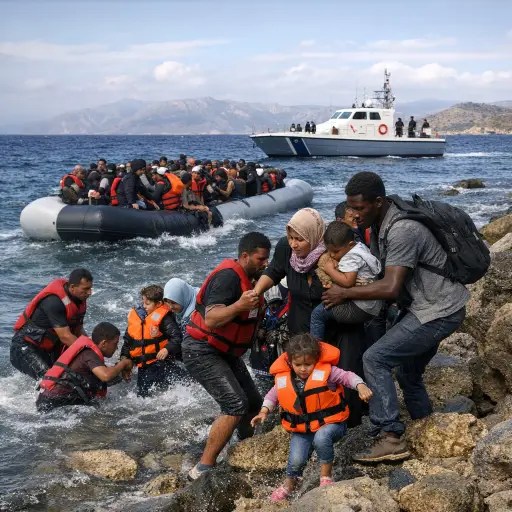
For the Rohingya, who suffered mass atrocities in 2017 and years of apartheid-like restrictions since, the current phase is perilous. Military blockades and new displacement have deepened hunger in central Rakhine’s camps, while both the army and non-state actors stand accused of abuses and forced recruitment. With international funding stagnating, more families attempt dangerous sea crossings from Myanmar and Bangladesh, and more vanish.
What December can’t decide
If the junta keeps to its December timetable, the vote will unfold in phases under emergency laws and without many of the country’s most popular leaders free to campaign. Ballots cast under bombardment will not solve the core questions of authority and accountability. In multiple townships, the only workable governance today is de facto and local—committees that repair roads, medics who rotate clandestinely, volunteer teachers holding classes in monastery halls. The political future will ultimately reflect the military one: unless airstrikes abate and humanitarian access expands, any election risks becoming another front rather than a bridge out of war.
Outlook
Through the rest of 2025, watch three indicators. First, whether resistance coalitions can translate territorial gains into stable administration and logistics, especially across the Ayeyarwady corridor. Second, whether the junta can sustain air operations amid aircraft losses, sanctions on fuel and parts, and intensifying counter-drone tactics. Third, whether humanitarian corridors—formal or de facto—open long enough to reverse spiraling food insecurity and displacement. On all three, the margin of error is thin. For civilians, the stakes could not be higher.

 The Tower Post