A U.S.-brokered framework, a controversial corridor, and the hard work still ahead in the South Caucasus (August 2025)
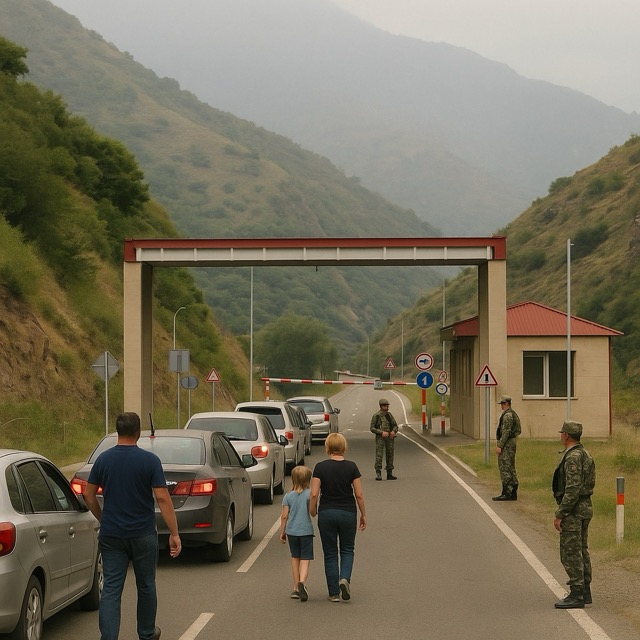
WASHINGTON/YEREVAN/BAKU — On August 8, 2025, the leaders of Armenia and Azerbaijan stood beside U.S. President Donald Trump in the Oval Office and initialed a framework they say can end nearly four decades of hostilities. The text, published days later, commits both countries to respect each other’s territorial integrity, renounce future claims, and refrain from the use or threat of force. It is not yet a final peace treaty, but it is the closest the South Caucasus has come to a comprehensive settlement since the Soviet collapse.
At the heart of the breakthrough is a proposal to turn a long‑contentious transport link across southern Armenia into an international infrastructure project managed by U.S. firms. The route—rebranded by Washington as the Trump Route for International Peace and Prosperity (TRIPP)—would connect mainland Azerbaijan to its Nakhchivan exclave while remaining under Armenian sovereignty and Armenian law. In exchange, Yerevan expects reciprocal access for Armenian trade through Azerbaijani territory, plus Western investment to upgrade roads, rail, and energy interconnections. The result could redraw the region’s economic map, knitting together markets from Türkiye to the Caspian.
Caveats abound. Baku insists that Armenia first amend constitutional language that, in Azerbaijan’s reading, implies claims on Azerbaijani territory. Prime Minister Nikol Pashinyan has signaled his readiness to pursue a new constitution via referendum, a politically fraught step in a society still processing the trauma of recent wars. Only when the constitutional issue is resolved, Azerbaijani President Ilham Aliyev says, can a full treaty be signed and ratified.
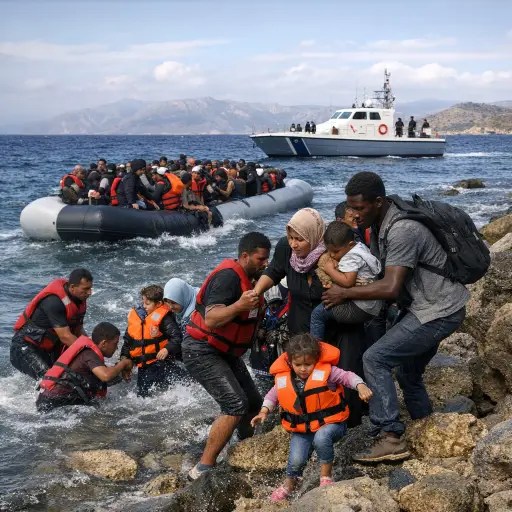
The present moment is inseparable from the 2023 collapse of Armenian authority in Nagorno‑Karabakh, which followed a months‑long blockade and a short, decisive Azerbaijani offensive. Within two weeks, more than 100,000 ethnic Armenians fled to Armenia; the self‑proclaimed separatist administration dissolved by the year’s end. Since then, Yerevan has struggled to absorb the displaced and to stabilize border communities facing new security realities.
What the framework does—and does not—do matters. It formalizes mutual recognition within the republican borders of 1991 and explicitly rules out foreign troops along the bilateral frontier, a clause read as a signal to Moscow that outside security arrangements are off the table. It also envisages the end of the OSCE Minsk Group’s mediation role, an architecture that had withered since 2020. But the framework leaves open critical implementation questions: how exactly TRIPP will operate day to day; what ‘unimpeded’ transit will mean in practice; and who will police disputes when they inevitably arise.
Reactions from regional powers were swift. Russia, the traditional arbiter in the Caucasus and Armenia’s treaty ally, offered cautious approval while warning against Western “meddling.” Iran was sharper, vowing to oppose any corridor arrangement that it views as threatening its security or diminishing its leverage along its northern border. Türkiye, by contrast, welcomed momentum toward normalization and hinted that reopening the long‑sealed Armenia–Türkiye frontier could follow real progress between Yerevan and Baku.
On the ground, the security picture is mixed. In 2024 and 2025, Armenia and Azerbaijan took steps toward border delimitation in sections of the frontier, including the return of several uninhabited villages—moves that reduced friction in some hotspots even as sporadic incidents persisted. The EU’s unarmed monitoring mission in Armenia continues to patrol and report, a confidence‑building measure that Yerevan prizes and Baku distrusts.
Domestic politics may yet decide the fate of the deal. Pashinyan faces intense criticism from opposition parties and parts of civil society that see the framework as rewarding aggression and legitimizing the loss of Karabakh. Aliyev, for his part, wants guarantees that Armenia will truly abandon irredentism and ensure safe, efficient east‑west transit. Both leaders must also navigate the sensitive issues of detainees, missing persons, and the protection (and documentation) of cultural heritage sites now under Azerbaijani control.
Economically, the stakes are large. If TRIPP advances, it could anchor new investment in rail, fiber‑optic cables, pipelines, and renewable energy projects. For Armenia, landlocked and resource‑poor, even incremental connectivity could be transformative—lowering transport costs, diversifying trade routes, and reducing reliance on Russian infrastructure. For Azerbaijan, already an energy exporter, the corridor promises redundancy and reach, linking the Caspian more tightly to Anatolia and European markets.
Diplomatically, Washington’s high‑profile intervention underscores a wider strategic shift. As Russia’s war in Ukraine drags on, Kremlin bandwidth and credibility as a Caucasus security guarantor have eroded. The United States and the European Union have stepped into the vacuum, even coordinating on sanctions and development money that could sweeten a final settlement. Talk in Washington of tying Azerbaijan’s potential participation in the Abraham Accords to a durable peace with Armenia highlights how the South Caucasus is now entangled with Middle Eastern diplomacy.
Yet the durability of any ‘Pax Americana’ is far from assured. The TRIPP concept rests on long‑term private investment and the consent of multiple governments over decades; both are cyclical and contingent. If politics in Yerevan or Baku turn inward, or if Russia and Iran decide to actively spoil, the window could narrow quickly. Even in the best case, implementation will be ragged—bureaucratic bottlenecks, local land disputes, and border‑crossing hiccups are all but guaranteed.
Three tests loom. First, constitutional reform in Armenia: the government must explain why changes are necessary and secure public buy‑in without deepening polarization. Second, security guarantees: if third‑party troops are barred, how will ceasefire incidents be deterred and investigated, and what mechanisms will reassure border villagers who feel exposed? Third, justice for people: progress on detainee exchanges, missing persons, and credible safeguards for religious and cultural sites will shape whether communities see peace as tangible and fair.
The promise of August 2025 is real: a pathway out of a grinding conflict that has cost lives, livelihoods, and futures on both sides of the border. But peace by press conference is not peace by practice. The next year will determine whether the White House handshake becomes a turning point—or another photo op in a region that has seen too many. For now, Armenia and Azerbaijan have an opening, and a responsibility, to transform an initialed text into lived normalcy.
 The Tower Post