A historic slump in listings forces City banks to rethink their strategies
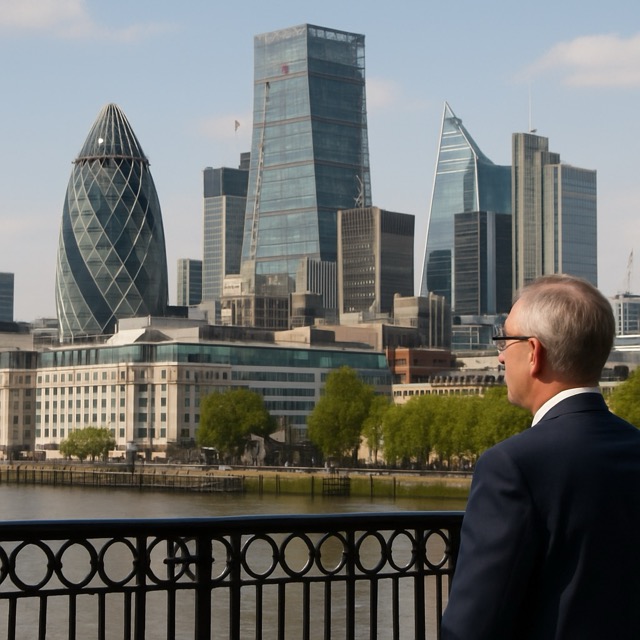
London – The Square Mile, long regarded as the beating heart of global finance, is facing an identity crisis. The once-bustling pipeline of stock market debuts has slowed to a trickle, leaving London’s investment banks scrambling for new business. In the first half of this year, only £8.8 billion was raised through initial public offerings (IPOs) and follow-on issuance. Adjusted for inflation, it marks the lowest fundraising volume in three decades.
This stark downturn underscores broader shifts reshaping global capital markets. London, traditionally one of the world’s premier hubs for public listings, is grappling with competition from New York, Dubai, and Hong Kong. Meanwhile, private equity firms, flush with capital, continue to draw ambitious companies away from the glare of public markets.
A drought of deals
For bankers who built their careers on equity issuance, the numbers are sobering. In 1995, when the financial world was still digesting the impact of Big Bang reforms, IPOs flowed with regularity. Fast forward to 2025, and the Square Mile is witnessing a fundraising drought that would have seemed unimaginable a decade ago.
Analysts point to multiple headwinds: stricter regulatory burdens, the volatility of global markets, and the rise of private financing avenues that allow companies to raise significant sums without facing the quarterly scrutiny of shareholders. The UK’s departure from the European Union has only deepened London’s competitive disadvantage, with some corporates opting to list in continental exchanges that promise greater liquidity.
Broadening horizons
Investment banks, ever adaptive, are now diversifying their services. Many are pivoting towards advisory roles in mergers and acquisitions, where deal flow remains steady. Others are pouring resources into private capital advisory, helping clients tap into the swelling coffers of sovereign wealth funds and family offices. Asset management arms, too, are being bolstered, as institutions seek recurring revenue streams to counterbalance shrinking IPO fees.
“Equity issuance will return,” said one senior banker at a leading City firm. “But in the meantime, we have to broaden our horizons. The old playbook won’t suffice anymore.”
That recalibration is already reshaping the character of the Square Mile. Where once trading floors buzzed with talk of listings, today the conversations revolve around cross-border deals, infrastructure investments, and climate finance initiatives. The City is positioning itself less as a stock market hub and more as a global consultancy for capital deployment.
Global competition
The challenge for London is formidable. New York remains dominant in attracting mega-listings, especially in technology. Hong Kong is riding a wave of Chinese companies seeking dual listings. Meanwhile, Dubai has emerged as a rising star, luring energy and logistics firms eager to tap Middle Eastern liquidity.
To reclaim its stature, London is considering regulatory reforms designed to make its markets more attractive. Proposals include easing dual-class share structures and streamlining disclosure requirements. But critics warn that such changes could erode governance standards, long seen as one of London’s key selling points.
Looking ahead
As the first half of 2025 draws a bleak picture, the question looming over the Square Mile is whether this downturn marks a cyclical lull or a structural shift. For the moment, investment banks are betting on the latter, reinventing themselves to survive in a world where IPOs are no longer the lifeblood of the City.
What is certain is that London’s financial ecosystem is at a crossroads. The next decade will determine whether the Square Mile can adapt to this new era—or whether its glory days of public listings are destined to remain in the past.




 The Tower Post