Ukraine’s Independence Day Rekindles Europe’s Troop Debate—and Italy’s Red Lines
As Kyiv marked 34 years of independence on August 24, 2025, President Volodymyr Zelensky said a foreign ‘boots on the ground’ presence would be ‘important’ under a peace deal. Rome immediately drew a line—no Italian troops—while floating a post‑war plan to help clear land and sea mines, as Foreign Minister Antonio Tajani cooled tensions with Paris and rebuked Matteo Salvini’s harsh rhetoric.
On a day of parades, air‑raid sirens and hard politics, Ukraine used its 34th Independence Day to sharpen the terms of an eventual peace. Standing in Kyiv alongside Canada’s Prime Minister Mark Carney, President Volodymyr Zelensky said that the on‑the‑ground “presence—boots on the ground, as they say—is important to us,” framing foreign troops not as combatants now, but as part of security guarantees meant to hold after the guns fall silent. The line, delivered on August 24, rippled instantly through European capitals already testing the outer limits of what ‘guarantees’ could mean in practice.
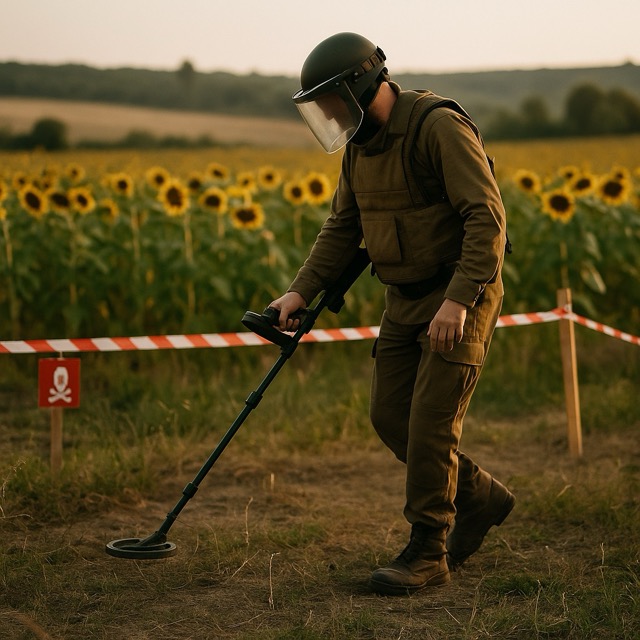
Nowhere were the vibrations felt more keenly than in Rome. Italy’s position was swift and unambiguous: no Italian troops will deploy to Ukraine. Yet the government of Giorgia Meloni paired that refusal with a detailed account of what Italy would do if a settlement takes shape—lead and fund mine‑clearance on land and at sea. Foreign Minister Antonio Tajani sketched the contours of a practical, post‑war contribution: Italian expertise and assets to clear anti‑personnel and anti‑vehicle mines from fields, roads and towns, and to help Black Sea partners sweep drifting naval mines that have stalked merchant shipping since 2022.
The stance reflects Italy’s two‑track Ukraine policy in 2025. Track one is immediate: continued military aid and training, strict sanctions on Moscow, and a categorical ‘no’ to any Italian boots on the ground while the war continues. Track two looks beyond a ceasefire: lock in security guarantees for Kyiv—ideally a mutual‑assistance mechanism backed by EU and transatlantic partners—while channeling Italian industry and know‑how into the reconstruction and demining that must follow. Rome’s diplomats have spent months selling that balance around Europe.
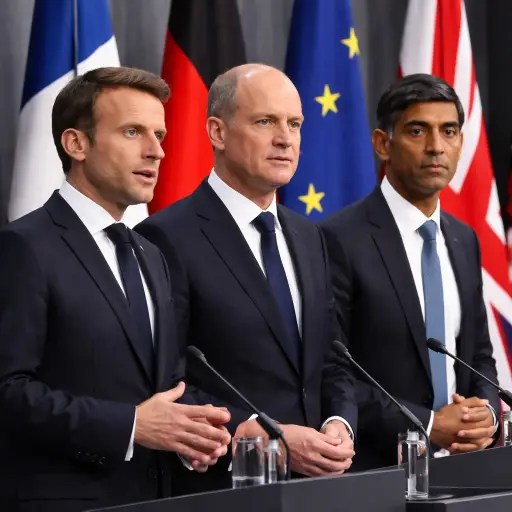
The politics around the message are as delicate as the policy. In Paris, President Emmanuel Macron has argued since early 2024 that Europe must not rule out sending troops in certain scenarios. In Italy, that idea has become a domestic flashpoint. This weekend, after Deputy Prime Minister Matteo Salvini publicly mocked Macron’s suggestion—telling him, in Milanese slang, to take the rifle and go himself—France summoned the Italian ambassador. Tajani moved to douse the flames, insisting there is “no diplomatic crisis” between Rome and Paris and reminding reporters that, in Italy’s system, foreign policy is set by the prime minister and the foreign minister. Then came the sting: “You win with the strength of ideas, not the violence of words,” he said—a thinly veiled rebuke of Salvini’s rhetoric even as he reaffirmed the government’s substance: no troops now.
Zelensky’s remark was not a demand for immediate foreign soldiers to join the fighting. Rather, it widened a door that several allies—Canada among them—have already cracked open: if a peace framework is reached, an international presence could help guarantee its terms, deter renewed Russian aggression and support stabilization tasks inside Ukraine. Ottawa, for its part, said it “couldn’t rule out” joining such a peacekeeping force under a deal; Washington reiterated it will not put American boots on Ukrainian soil, even while it backs strong guarantees. Across the EU, the very notion of troops—even post‑war—still spooks parts of the public; Germany’s debate has been especially raw.
In practice, Rome’s counter‑offer—mines, not marines—answers a real and rising need. Ukraine is now one of the most heavily mined countries on Earth. Each square kilometre reclaimed from Russian forces reveals a lethal latticework of tripwires, boobytraps and anti‑tank lines; every harvest risks setting off buried ordnance. At sea, hundreds of naval mines—some moored, some adrift—continue to menace grain routes from Odesa. Italy has already bankrolled humanitarian demining programmes and trained specialists through EU and UN channels. Scaling that up after a settlement—deploying Italian clearance teams, ships and remotely operated vehicles—would save lives immediately and speed Ukraine’s economic restart without crossing Italy’s political red line on troops.
There is also a coalition logic. A European‑led mine‑action surge would dovetail with the Black Sea effort by Romania, Bulgaria and Turkey to detect and neutralize floating mines, while freeing other allies to shoulder different slices of a post‑war security architecture—monitoring lines of separation, safeguarding critical infrastructure, training police and border guards. If, as Zelensky insists, guarantees must be as close as possible to NATO’s Article 5, then Europe will need a menu of credible, quickly deployable tools. For Italy, mine‑action is both a niche and a statement: protection by presence, without occupation; capability without provocation.
Domestically, the choreography is fragile. Salvini’s broadsides play well with segments of the electorate skeptical of Brussels and Paris; Tajani’s cooler register reassures business and diplomatic constituencies that worry about a rupture with France just as Europe seeks unity on Ukraine and industrial policy. Meloni’s balancing act—hawkish on Russia, cautious on troops, pragmatic on reconstruction—remains intact for now. But as the debate shifts from battlefield attrition to the plumbing of a peace, every word from Kyiv reverberates in Rome’s coalition talks.
Meanwhile, the war grinds on. Independence Day brought fresh reports of drone and missile strikes, prisoner exchanges and incremental gains and losses along the eastern front. In Kyiv, Zelensky sought to fuse resilience with realism—pressing for direct talks with Vladimir Putin even as Moscow publicly balked. His “boots on the ground” line did what Independence Day messages often do in wartime: it tested allies’ nerves, clarified priorities and forced capitals to say out loud what they will and won’t do when the guns finally fall silent.
Italy has chosen its words—and its lane. No tricolore patches on peacekeepers’ shoulders; no deployments under an EU or NATO flag. But Rome wants a hand on the plough the day after: sonar sweeping for stray mines off Odesa, EOD teams combing sunflower fields in Kherson, engineering units re‑opening roads and rail lines in Mykolaiv, and Italian yards building the kit to make it all stick. In a contest too often dominated by volume, Tajani’s coda from Rimini doubles as a lesson for Europe’s next phase in Ukraine: let ideas do the heavy lifting—and let the boots, if they come at all, be those that clear the way.
 The Tower Post