How new UK tax reliefs and a decade of price corrections are pulling UAE wealth back to prime London
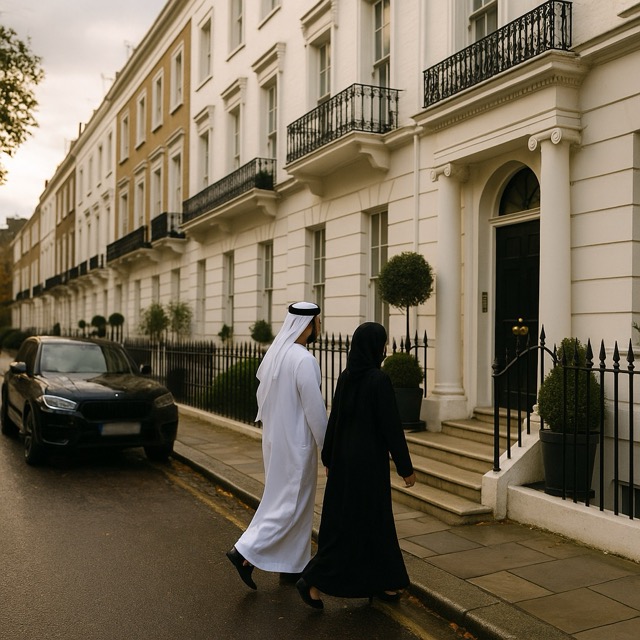
London’s prime property market is finding an unlikely tailwind from Dubai to Abu Dhabi. With the UK introducing a residence‑based tax regime that shelters foreign income and gains for the first four years of new or returning residents, and with prices in the capital’s best postcodes still well below their 2014 peak, wealthy United Arab Emirates residents and Dubai‑based British expats are quietly re‑entering the market. The result is a measured but noticeable revival of demand for trophy flats and family townhouses in areas like Mayfair, Belgravia, Knightsbridge and St John’s Wood.
The policy shift is pivotal. From 6 April 2025, the government replaced the old domicile‑based ‘non‑dom’ system with a new residence‑based model. Under the Foreign Income and Gains (FIG) rules, individuals who have not been UK tax resident for the previous ten consecutive years can elect to pay no UK tax on their foreign income and gains for their first four tax years of UK residence. For globally mobile families with businesses, portfolios and property outside Britain—precisely the profile of many Gulf high‑net‑worth individuals—this sharply reduces the upfront tax friction of relocating or spending more time in London. Reforms to Overseas Workday Relief further sweeten the package for internationally employed executives who split their time between the UK and the Gulf.
Tax is only half of the story. Values have reset. Research houses report that prime central London (PCL) prices remain markedly below their 2014 high‑water mark, creating the strongest value proposition in a decade. Across the first half of 2025, sellers in PCL continued to trim asking prices and accept realistic offers, with average values registering small year‑on‑year declines into late spring. For cash‑rich buyers arriving from the UAE—where the dirham is pegged to the US dollar, muting exchange‑rate volatility—the combination of discounted sterling assets and soft vendor expectations is compelling.
The demand arriving from the Gulf is varied. First are Emirati families seeking a long‑term European base tied to elite schooling, medical access and a familiar luxury ecosystem. Second are Dubai‑based British professionals who accumulated wealth during the emirate’s bull run and are now reassessing their global footprint; the FIG regime makes a phased return far easier than under the old non‑dom rules. Third are Middle Eastern family offices hunting income and capital preservation in freehold bricks and mortar—often preferring lateral flats in portered blocks or turnkey new‑builds with concierge services, underground parking and tight security.
On the ground, the flavour of deals has shifted. Developers are again negotiating, not just on price but on extras: furniture packs, duty contributions and service‑charge holidays are back on the table for serious buyers. At the very top end, vendors of £15 million‑plus homes are meeting the market after a quieter 2024: more listings are sensibly priced and trades are happening where quality is indisputable—be that a first‑tier stucco townhouse overlooking the garden squares of Belgravia or a lateral penthouse with river views and hotel‑style amenities.
Yet the obstacles remain real. The UK’s stamp duty land tax still bites hard—especially for non‑residents, who face a 2% surcharge on top of standard rates—and annual charges such as ATED apply to certain corporate‑owned properties. Compliance is tighter too. The register of overseas entities has removed anonymity around corporate ownership, and banks are conducting exhaustive source‑of‑wealth checks. None of this is a deal‑breaker for sophisticated Gulf buyers, but it elongates timetables and places a premium on experienced legal and tax advice.
An intriguing subplot is the rise of ‘try‑before‑you‑buy’. With tax reform bedding in and prices still searching for a floor in some micro‑markets, a portion of ultra‑high‑net‑worth families are choosing to rent super‑prime homes for six to twelve months while they watch the data. This has tightened the luxury lettings market in districts like Mayfair and Marylebone, pushing headline monthly rents for exceptional houses into jaw‑dropping territory, but it also seeds a pipeline of committed future purchasers once the macro picture clarifies.
Neighbourhood preferences tell their own story. Knightsbridge and Belgravia continue to command a premium among Gulf buyers for their classic architecture, privacy and proximity to Harrods and Hyde Park; Mayfair is resurging around Grosvenor Square and Mount Street as new‑build schemes deliver the level of specification expected in Dubai or Abu Dhabi; Holland Park and Notting Hill attract families who prize leafy streets and top‑tier prep schools; and St John’s Wood remains a favourite for detached period houses and synagogue access. Budget bands cluster around £3–8 million for ‘best‑in‑class’ three‑bed flats, £8–15 million for substantial townhouses, and well north of £20 million for unique lateral penthouses or ambassadorial homes.
Currency dynamics cut both ways. The AED’s peg to the dollar simplifies planning and hedging, and episodic sterling weakness can turbo‑charge affordability. But the more important driver in 2025 has been the price correction itself—together with the recognisable, rule‑of‑law environment that London offers. For families thinking in decades rather than quarters, the ability to diversify domicile risk, education pathways and healthcare within a single, liquid market outweighs short‑term FX squiggles.
Where does the market go next? Forecasts remain mixed. Some consultancies expect values to be broadly flat across 2025 as higher borrowing costs work through the system; others see modest single‑digit gains returning into 2026–27 as mortgage rates ease and election uncertainty fades. Either way, the downgrade in pricing since 2014 has rebuilt London’s value case, and the new FIG window has added a powerful ‘on‑ramp’ for internationally wealthy households who want to spend more time in the UK without punitive tax leakage on their offshore wealth.
For would‑be buyers from the UAE, the playbook is straightforward. Focus on ‘irreplaceable’ attributes—unobstructed park frontage, lateral space above 250 square metres, private outdoor areas, secure parking and best‑in‑class services. Be realistic about service charges and retrofit costs; older stock often needs serious investment to meet modern comfort and efficiency standards. Engage tax counsel early to map FIG eligibility, inheritance‑tax exposure under the emerging residence‑based regime, and structuring that avoids accidental pitfalls. And maintain optionality: in today’s market, a carefully negotiated off‑plan contract or a rent‑then‑buy strategy can be as effective as a straight cash purchase.
The headline is clear. Between a four‑year foreign‑income holiday for qualifying new residents and the deepest relative discounts in a decade, prime London once again sits firmly on the radar of wealthy Emirati families and Dubai‑based Britons. The capital’s most coveted bricks—Georgian terraces, stucco crescents and river‑view penthouses—are unlikely to stay this ‘cheap’ indefinitely. For Gulf investors seeking a secure European foothold with global connectivity and cultural depth, 2025 may mark the moment London stopped being a watch‑list city and became a buy.




 The Tower Post