Finance minister says recent sell‑offs strike the “right balance” as elections loom and protests swell
Norway’s finance minister defended the world’s largest sovereign wealth vehicle on Monday, arguing that a rapid sell‑down of Israeli shares in recent weeks shows the Government Pension Fund Global (GPFG) can respond to public concern without becoming a blunt foreign‑policy instrument. “We have found the right balance,” he said, framing the decision to sell out of a large portion of the fund’s Israeli holdings as a targeted, rules‑based response rather than a political gesture.
The statement lands at a volatile moment for the $2 trillion oil‑backed fund. What is normally one of Europe’s most technocratic institutions is now at the center of an intensely moral – and electoral – argument over how Norway’s savings should be invested while Israel’s war in Gaza grinds on and settlement expansion in the West Bank draws international censure. The controversy has spilled from street protests in Oslo to committee rooms in Stortinget, Norway’s parliament, and onto the campaign trail ahead of the September 8 national vote.
At the heart of the row are the GPFG’s stakes in Israeli companies. After media revelations this summer about exposure to firms linked to Israel’s military supply chain, the fund began an urgent review. In the space of days, it terminated contracts with external managers handling Israeli portfolios and announced a full exit from a first batch of local companies. A week later, it moved to exclude several more. Since June 30, the fund has either sold or begun the process of selling down positions in dozens of Israeli firms. Senior officials say further changes are likely as the ethics and risk teams complete due‑diligence sweeps.
The fund’s chief executive, Nicolai Tangen, has called the uproar his “worst ever crisis,” noting that public trust – more than short‑term performance – is the GPFG’s core asset. Tangen stressed that the manager is “invested in a country at war,” and that conditions in Gaza and the West Bank have deteriorated such that tighter screening is warranted. The finance minister’s endorsement gives political cover to the moves while reaffirming a long‑standing principle: investment decisions are set by ethical guidelines and executed by an independent manager, not dictated case by case by the cabinet.
The practical impact is significant. Over the summer the number of Israeli companies in the portfolio has fallen sharply, and remaining holdings are under closer scrutiny. The ministry and the fund’s Council on Ethics have also tightened information‑sharing so red flags can be caught faster. That, officials contend, is the correct path for a universal owner that still holds about 1.5% of the world’s listed equities and invests in nearly 9,000 companies globally. The minister insists that using the GPFG as an instrument of day‑to‑day diplomacy would undermine its legitimacy both at home and abroad.
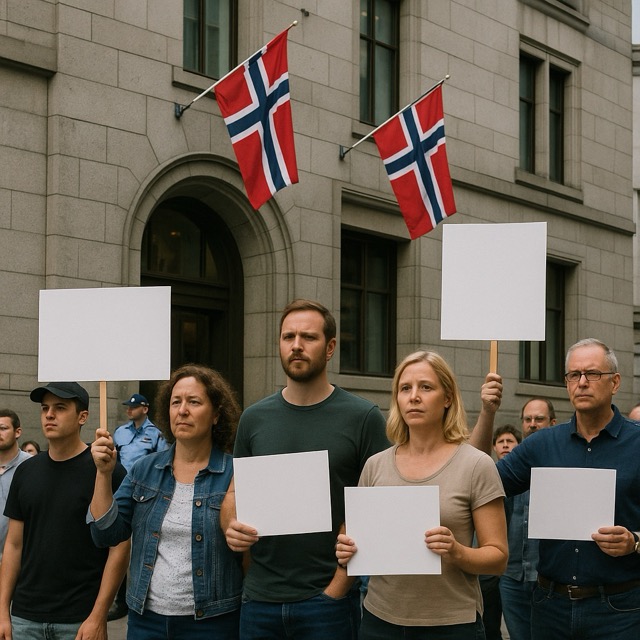
Critics counter that the fund is still too exposed. A coalition of human‑rights groups, church organizations and student unions argues that any stake in firms operating in or supplying Israeli settlements risks complicity in violations of international law. They point to Norway’s recognition of a Palestinian state last year and say the investment policy should reflect that stance. On the left, several parties have demanded a blanket exit from Israeli shares; one has made support for a future government contingent on full divestment. Activists who blocked the doors of the central bank’s headquarters – where the fund is housed – over the weekend promised to escalate if more sales don’t follow.
Pressure is also coming from inside the system. The Storting’s powerful scrutiny committee has hauled the finance minister over the coals for what it deemed evasive answers about the fund’s exposure and oversight. The episode was remarkable in a country where cross‑party consensus has long shielded the GPFG from day‑to‑day politics. Some former officials warn that if Norway starts singling out countries for special treatment, the ethics regime could be read abroad as a proxy for state sanctions – precisely the interpretation successive governments have tried to avoid.
Even so, the fund’s rulebook gives it scope to act. Ethical guidelines, first adopted in 2004, prohibit investments in companies responsible for “serious violations of individuals’ rights in situations of war or conflict,” among other criteria. Those rules have led the Council on Ethics over the years to recommend excluding firms tied to cluster munitions, coal, severe environmental damage and abuses in supply chains. Israel‑related cases have historically been handled on a company‑by‑company basis. People involved in the current review say the speed and scale reflect both the gravity of the situation and the reputational stakes for a fund whose operations are closely watched worldwide.
Markets are paying attention. Israeli mid‑caps with foreign ownership have seen sharp swings as the GPFG’s moves were digested, and traders in Tel Aviv say volumes spiked when the fund’s initial exits settled. In Oslo, meanwhile, asset‑management peers have been asked by clients whether they will follow suit; some already have, others say they will wait for the GPFG’s written rationale. Analysts caution that beyond the immediate headlines, the bigger story is how large, diversified investors incorporate conflict‑risk into portfolio construction – a challenge unlikely to fade in an era of geopolitical fragmentation.
For the government, the balancing act is delicate. The prime minister’s office has been adamant that the GPFG is not a tool to prosecute foreign policy, but neither can it ignore the electorate’s moral red lines. By blessing the first wave of divestments yet rejecting a wholesale exit, the finance minister is betting that voters will accept a calibrated approach: one that addresses the most problematic positions while preserving the independence and global mandate that have made the fund a model for other resource‑rich nations.
That independence is not merely procedural. It underpins the fiscal rule that caps how much oil revenue the government can spend each year at the GPFG’s expected long‑term real return. In plain language: the fund protects the economy from overheating in good times and cushions it in downturns, while its managers try to harvest global growth for future generations. Politicize the portfolio, say defenders, and the discipline that keeps Norway’s social contract intact may fray.
Yet the moral pressure is real, and not confined to Israel. Over the past decade, war, sanctions and human‑rights controversies from Russia to Myanmar to Xinjiang have forced institutional investors to grapple with where to draw lines. The GPFG’s size amplifies each decision. Exiting a company can move prices; staying invested can signal tolerance. Either way, the “Norway model” is a benchmark others cite when they craft their own exclusion lists and engagement policies.
What happens next will hinge on process. The Council on Ethics is expected to deliver updated assessments in the coming weeks, including for non‑Israeli multinationals with operations in the occupied territories. The fund’s manager has promised strengthened due diligence, more frequent risk reviews and clearer public explanations when it sells or places companies under observation. If those steps are followed by additional exits – a real possibility, according to people familiar with the review – pressure on the government could ebb ahead of the vote. If not, calls for a full Israeli pull‑out will grow louder.
For many Norwegians, the unease is personal. Citizens learn early that the GPFG is the nation’s nest egg, built on oil and gas but bound by ethics. That a portion of it found its way into companies implicated by rights groups in wartime abuses feels, to some, like a breach of trust. Others worry that demanding purity is a luxury: in a global index fund, risk is everywhere, and exposure to conflict zones cannot be eliminated without undermining diversification and returns. The debate is, at bottom, about what the public will accept as consistent with Norwegian values.
As the minister put it, there are no clean choices when investing at such scale. His insistence that the latest moves strike the “right balance” may resonate with a majority who want to see the fund respond to events but not swing to extremes. The phrase will be tested in the weeks ahead. If the GPFG can convincingly show that it is pruning its holdings based on evidence and rules – not political expediency – it may yet emerge with its reputation for prudence intact.
Either way, the stakes extend beyond Oslo. The fund’s approach will be read in capitals from Jerusalem to Brussels to Washington as a signal of how democratic societies expect universal owners to behave in wartime. In boardrooms, it will shape the incentives for companies operating in or near conflict to document their impacts and remediate harms. And on trading floors, it will influence how analysts price governance risk when the headlines turn violent.
For now, the GPFG remains what it has been for three decades: a giant and a bellwether. It is also, in this moment, a mirror. In it, Norwegians see their anxieties about war and wealth, principle and pragmatism. The second‑order effects of the summer’s sell‑offs – on politics, on policy and on the practice of investment – will take time to play out. But the question underpinning the minister’s defense is already clear: can a rules‑based investor satisfy a values‑based public? The answer will define not only this election season, but the next chapter of the Norway model itself.
 The Tower Post