After decades of decline in famine deaths, conflict tactics and aid shortfalls are driving a deadly resurgence.
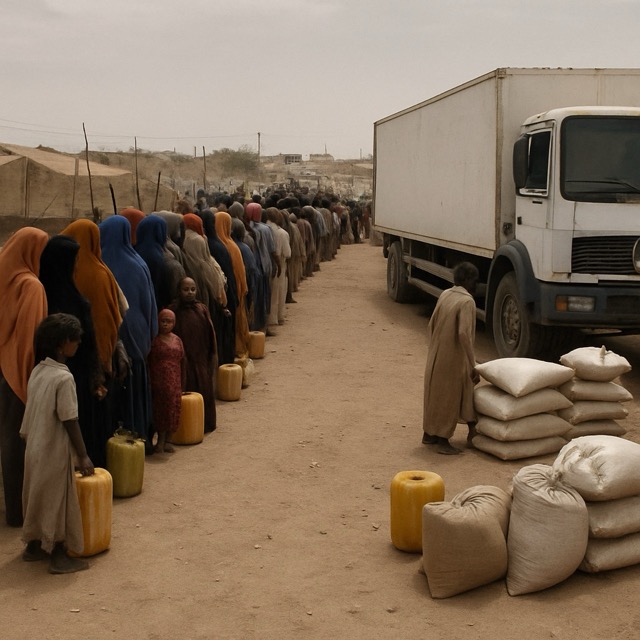
For a generation, the world appeared to have bent the curve of mass starvation. From the late twentieth century through the 2010s, better early‑warning systems, faster humanitarian mobilization, expanded immunization and water services, and the spread of cash assistance dramatically reduced famine mortality. That trajectory has now snapped. In August 2025, a UN‑backed analysis confirmed that famine is occurring in Gaza — the first formally recognized famine in the modern Middle East — even as parts of Sudan remain in famine a year after it was first identified in North Darfur. The return of starvation on this scale is neither accidental nor inevitable: it reflects the systematic use of hunger as leverage in war, compounded by global funding shortfalls.
The Integrated Food Security Phase Classification (IPC), the global standard for assessing food crises, reports that more than half a million people in Gaza are already in Famine (IPC Phase 5) and warns the crisis could spread south within weeks without an immediate ceasefire and sustained, unhindered access for aid. In Sudan, a civil war between the Sudanese Armed Forces and the Rapid Support Forces has driven roughly half of the population into acute food insecurity, with pockets of Catastrophe (IPC Phase 5) persisting in displacement camps such as Zamzam and areas cut off by fighting around El Fasher. Humanitarian agencies say that even when assistance is pre‑positioned, insecurity and access denials prevent them from reaching people at the scale required.
These are not isolated failures. The 2025 Global Report on Food Crises estimates that 295 million people experienced acute food insecurity in 2024 — the sixth consecutive annual increase. Separate UN estimates suggest a modest dip in the broader number of people facing hunger last year, but the extreme tail is worsening: more people are tipping into catastrophic deprivation in conflict zones. Analysts now estimate that annual famine‑related deaths, after decades of decline, have risen again since 2020, with most fatalities occurring in places where combatants obstruct aid or destroy food systems. The numbers are disputed and hard to verify precisely in live war zones, but the direction of travel is unmistakable.
How starvation is weaponised
International humanitarian law is explicit: starvation of civilians as a method of warfare is prohibited. The rule — rooted in the Geneva Conventions and codified in the Rome Statute of the International Criminal Court — bars depriving civilians of objects indispensable to survival and the wilful impediment of relief. Yet in practice, the ways wars produce hunger today are varied and often bureaucratic. They include:
• Siege and access denial. Armies restrict entry to besieged towns, hold up convoys at checkpoints, or require permits and escorts that rarely materialize. In El Fasher, North Darfur, roads have been cut for months, isolating civilians as fighting intensifies. In Gaza, aid convoys cross “almost daily,” but volumes remain far below need and deliveries are frequently disrupted by bombardment, looting, or complex inspection regimes.
• Targeting of food systems. Markets, mills, bakeries, agricultural stores and water networks are hit — sometimes deliberately, sometimes through repeated “incidental” strikes that cumulatively dismantle the civilian food economy. Fields go unplanted, warehouses empty, and cold chains collapse for lack of power and fuel.
• Manipulation of aid. Parties starve rivals by diverting rations, taxing or extorting convoys, or controlling beneficiary lists. Administrative rules can become a weapon; so can the sudden closure of crossings.
• Information warfare. By contesting famine measurements and blocking independent assessments, belligerents sow doubt about severity and delay the triggers for a scaled response. Even as northern Gaza slid toward famine, data collection was choked by insecurity and restrictions, masking the true toll for months.
These tactics are not unique to the current wars. They echo patterns seen in Syria, Yemen and Ethiopia’s Tigray, where sieges and blockades produced lethal spikes in malnutrition. What has changed is the “convergence” of constraints — kinetic fighting, access denial and global headwinds — that amplify the harm.
Gaza: the first formally declared famine in the Middle East
The IPC’s Famine Review Committee has confirmed that famine conditions are occurring in Gaza Governorate, with projections of rapid spread to Deir al‑Balah and Khan Younis without a ceasefire and full humanitarian access. Child wasting has surged; therapeutic foods and fortified milk are critically short. Medical staff report children arriving with severe complications that cannot be treated reliably amid power cuts and bombardment. Israeli authorities dispute the famine classification and cite the tonnage of aid allowed in; UN agencies counter that volumes, regularity and last‑mile security are far below what is needed to stabilize the situation. The point is almost clinical: when households average well below 2,100 kilocalories per person per day for weeks and disease spreads in crowded shelters, mortality rises quickly.
Sudan: famine persists in the shadows of a splintered state
In Sudan, famine was confirmed in Zamzam camp in August 2024 and has since “persisted and expanded” in parts of North Darfur. Front lines around El Fasher have cut civilians off from markets and aid. Looting, forced displacement and the destruction of harvests have gutted local food availability. FEWS NET assessments warn that pockets of Famine (IPC Phase 5) are likely to continue into the post‑harvest period unless access and security improve dramatically. For families trapped by the fighting, the calendar has narrowed to a brutal choice: flee through cross‑fire, or stay and barter the last household assets for a few days of sorghum.
Global headwinds make wars deadlier
Conflict is the primary driver of today’s famines, but global shocks magnify their severity. Shipping disruptions in the Red Sea and the fragility of Black Sea grain routes have periodically raised transport costs and stretched delivery times for staples. Food price indices remain lower than their 2022 peaks but above pre‑pandemic levels in many import‑dependent countries. Meanwhile, climate extremes, from multi‑year droughts to floods, are eroding coping capacity. When these pressures collide with siege warfare and access denials, the result is catastrophic.
Funding falls as needs rise
Compounding the crisis, “humanitarian funding is contracting”. Donor contributions have fallen sharply since 2023; the World Food Programme reports a steep shortfall in 2025 that has forced ration cuts, suspended programmes and even staff reductions across multiple operations. The UN’s global humanitarian appeal is tens of billions of dollars short of what is required to reach targeted populations. Evidence shows that when rations are cut in places at IPC Phase 3 (Crisis) or Phase 4 (Emergency), households slide into Phase 5 faster — a preventable deterioration with lifelong consequences for children’s growth and cognition.
Accountability and the cost of doubt
The politics of measurement matter. Famine declaration is a high bar requiring evidence across food consumption, acute malnutrition and mortality. When conflict blocks surveys or threatens enumerators, the absence of proof can be miscast as proof of absence. Yet famine biology is unforgiving: once wasting spirals, mortality follows. International law provides tools — from UN Security Council Resolution 2417 to the war‑crime of starvation under the Rome Statute — and prosecutors have begun to test them. But law is not logistics. Without guaranteed access and adequate funding, investigations alone will not fill empty bowls.
What would turning the tide look like?
First, “ceasefires and access guarantees” that allow sustained, large‑scale delivery by road. Airdrops and maritime corridors can be useful, but they are no substitute for secure land routes. Second, “deconfliction that actually works”: reliable notification systems; protected warehouses; armed‑to‑aid separation at distribution points; and the reopening of major crossings. Third, “funding now”, front‑loaded to surge high‑impact interventions — ready‑to‑use therapeutic foods for children, fortified staples for households, and cash where markets function. Fourth, “accountability”: independent monitoring, public reporting of access denials, and the pursuit of those who intentionally starve civilians. Humanitarian agencies have the tools. What they lack is permission and protection.
A last word
The resurgence of famine is a test of international order as much as a humanitarian emergency. Starvation in Gaza and Sudan is not a side effect of conflict; it is a tactic within it. The law is clear and the logistics are feasible. What is missing is political will — to insist on access at scale and to hold to account those who turn food into a weapon. Until that changes, the curve that once bent away from mass death will keep bending back.
—
Sources (selected):
• FAO/UNICEF/WFP/WHO joint release & IPC analysis confirming famine in Gaza (22 Aug 2025).
• World Food Programme News Releases (Aug 2025) on Gaza famine and Sudan access constraints; WFP Global Hunger Crisis briefings.
• FEWS NET Sudan country updates (Aug 2025) indicating continued pockets of Famine (IPC Phase 5).
• Global Report on Food Crises 2025 (FSIN/FAO/WFP): 295 million acutely food insecure in 2024.
• UN Security Council Resolution 2417 (2018) on conflict and hunger; Rome Statute Article 8(2)(b)(xxv) criminalizing starvation of civilians.
• Reuters/AP reporting (Aug 2025) on child malnutrition trends in Gaza; 2024–2025 analyses on famine‑related mortality trends.

 The Tower Post