Despite record exports of nickel, palm oil, and coal, South-east Asia’s largest economy is sliding into deindustrialisation, raising questions about the sustainability of its growth model.
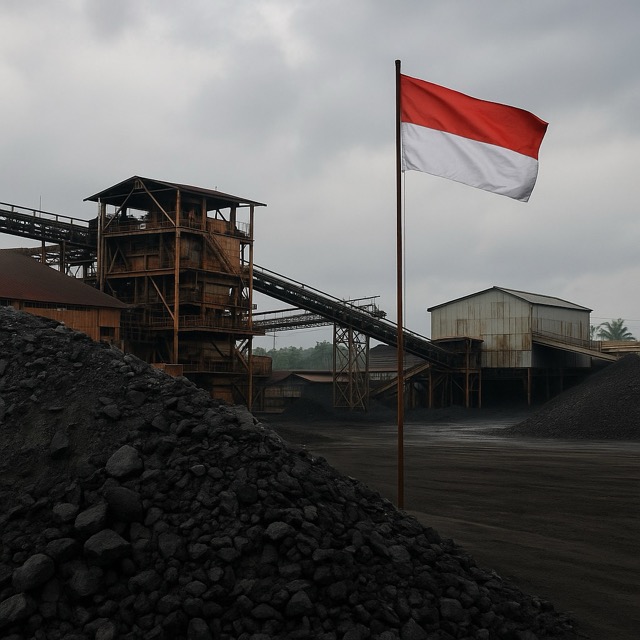
August 2025 — Indonesia is riding a global commodities wave. Its mines churn out nickel for electric vehicle batteries, its plantations supply palm oil for everything from biscuits to biofuels, and its coal exports power much of Asia. With soaring demand and billions in foreign investment, Jakarta should be celebrating an economic golden age.
Yet beneath the surface, the country faces a troubling contradiction: while resource exports break records, Indonesia’s once-promising manufacturing industry is stagnating. Instead of climbing the value chain, South-east Asia’s largest economy appears trapped in a cycle of resource dependence — a process economists call deindustrialisation.
A Commodities Superpower
Indonesia has become indispensable to global supply chains. The country accounts for more than 40% of the world’s nickel supply, much of it destined for Chinese and Western battery makers. Palm oil remains its most valuable agricultural export, while coal shipments surged after the Ukraine war disrupted energy markets.
Foreign investors, led by Chinese conglomerates, have poured billions into nickel processing plants and smelters. The government of President Joko Widodo has hailed this as proof of “downstreaming” — the long-promised shift from exporting raw materials to producing higher-value products.
But critics argue that the strategy has mostly created enclaves of foreign-owned facilities with limited linkages to the broader domestic economy. “Indonesia is exporting resources and importing dependence,” says Diah Pramesti, an economist at Gadjah Mada University. “It looks like industrialisation, but the benefits are narrowly captured.”
Manufacturing in Retreat
While commodities thrive, Indonesia’s manufacturing sector tells a different story. Once a hub for textiles, footwear, and electronics assembly, factories have been losing ground to competitors like Vietnam and Bangladesh. Rising labor costs, red tape, and inconsistent infrastructure have eroded the country’s competitiveness.
Official data show manufacturing’s share of GDP has fallen from 28% in 2002 to just 18% today — the lowest in two decades. Exports of manufactured goods have stagnated even as commodity revenues soar.
“Indonesia is deindustrialising before it has fully industrialised,” warns Pramesti. “This is the middle-income trap in real time.”
The Resource Curse Returns
The paradox echoes the classic “resource curse” that has haunted many developing nations. High commodity earnings strengthen the currency, making manufactured exports less competitive. Easy revenues from mining and plantations reduce pressure to reform regulations or improve productivity.
“Commodities create windfalls but not resilience,” says Arif Nugroho, a Jakarta-based policy analyst. “When prices fall — and they always do — the economy risks collapse.”
This dynamic has played out before. In the 1980s, oil exports financed Indonesia’s growth until a price crash triggered a debt crisis. Today, officials insist things are different, pointing to infrastructure investment and downstream projects. But sceptics note that much of the nickel boom is controlled by foreign firms, limiting domestic spillovers.
Missed Opportunities
Observers argue that Indonesia has failed to use its resource wealth to nurture competitive industries. Education and skills training lag behind regional peers, leaving factories short of qualified workers. Bureaucratic hurdles and policy uncertainty deter investment in manufacturing.
Meanwhile, small and medium-sized enterprises — the backbone of industrial development — struggle to access credit. Instead of building a diversified industrial base, Indonesia risks becoming locked into a commodities-export model vulnerable to global swings.
“Vietnam used trade deals and reforms to become an export powerhouse,” says Nugroho. “Indonesia had the resources, but it lacked the political will to create the same momentum.”
A Fork in the Road
With elections looming in 2029, the question for Indonesia’s leaders is whether they can reverse the deindustrialisation trend. Some propose using resource revenues to finance a green industrial strategy, investing in renewable energy, semiconductors, and advanced manufacturing. Others warn that entrenched interests — from mining tycoons to palm oil barons — will resist change.
For now, the country’s fortunes remain tied to global commodity markets. As long as nickel, coal, and palm oil prices stay high, Indonesia will appear prosperous. But the structural weaknesses are clear.
“Commodities are a sugar high,” says Pramesti. “Without real industrialisation, Indonesia risks becoming rich in resources but poor in opportunity.”
The Road Ahead
Indonesia’s commodities boom has bought it time and visibility on the world stage. But time is running short. To escape the middle-income trap, the country must convert today’s windfalls into long-term industrial capabilities.
Whether it can do so will determine if Indonesia becomes a true economic powerhouse — or another cautionary tale of the resource curse.



 The Tower Post