From the Amazon to the Middle East, criminal networks are embedding themselves into legitimate industries, exploiting weak governance, and threatening global stability.
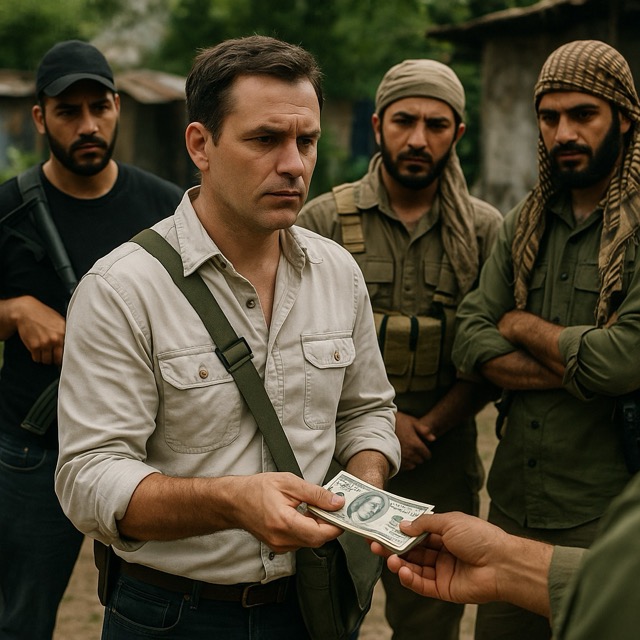
August 2025 — In the dense Amazonian rainforest, once known mainly for biodiversity and climate battles, bulldozers now carve out illegal gold mines controlled not by local adventurers but by sprawling criminal syndicates. Thousands of miles away, in the borderlands of Syria and Iraq, similar networks are trafficking fuel, smuggling weapons, and dictating the terms of trade in war-torn regions. These examples illustrate a stark reality: organised crime is no longer confined to drug trafficking or protection rackets. It has evolved into a global business empire.
Today’s organised crime groups are multinational, diversified, and deeply entrenched in both illicit and legitimate economies. Analysts estimate that transnational criminal networks now generate revenues equivalent to nearly 7% of global GDP — rivaling some of the world’s largest corporations.
Beyond Narcos: The Corporate Turn of Crime
For decades, the stereotypical image of organised crime revolved around drug cartels or mafia-style families. But in 2025, the reality is far more complex. These groups have embraced diversification, running operations that range from mining and logging to logistics and real estate.
In Brazil, syndicates linked to drug cartels are investing in soy plantations and cattle ranches, laundering billions through agribusiness exports. In Africa’s Sahel, armed groups control gold mines, selling raw materials to international markets via intermediaries. In Eastern Europe, mafia-linked firms dominate segments of construction and energy supply, infiltrating public procurement processes.
“These are not street gangs,” explains Dr. Lena Hoffmann, a criminologist at the University of London. “They are vertically integrated conglomerates with accountants, lawyers, and IT specialists. They understand markets, exploit loopholes, and operate with brutal efficiency.”
The Price of Weak States
Criminal expansion thrives in fragile or conflict-affected regions. Where governments fail to enforce rule of law, criminal actors fill the vacuum — often providing employment, security, and even basic services to local populations.
In Venezuela, armed syndicates known as pranes control entire mining regions, setting up schools and clinics while taxing residents. Along the Syrian-Turkish border, networks smuggle food and fuel, ensuring survival for communities abandoned by authorities. Yet the services come at a price: long-term dependency and the erosion of legitimate governance.
The result is a paradox: criminal groups that destabilise states while simultaneously posing as providers of order. “They are both parasites and substitutes for the state,” notes UN Special Rapporteur Ahmed Karim. “And this duality makes them incredibly difficult to dislodge.”
A Security Challenge Without Borders
Governments have struggled to keep pace with this evolution. Traditional law enforcement measures — raids, arrests, seizures — often deal with symptoms rather than root causes. Globalisation has given organised crime an edge: networks exploit digital finance, encrypted communications, and transnational supply chains.
Interpol recently described the rise of “criminal multinational corporations,” warning that their influence could soon rival that of political actors. The porousness of borders and the slowness of international legal cooperation make prosecution difficult. Criminal groups adapt faster than authorities can legislate.
Moreover, corruption remains a critical enabler. From police officers turning a blind eye at checkpoints to ministers cutting deals over mining concessions, criminal networks thrive where officials profit from complicity.
The Economic Shockwaves
The infiltration of organised crime into legitimate markets carries far-reaching consequences. Beyond distorting competition, it fuels inflation, undermines tax collection, and diverts investment. Legitimate businesses find themselves outcompeted by rivals backed with illicit capital.
According to the World Bank, countries heavily infiltrated by organised crime suffer up to 20% slower economic growth compared to peers. “It’s not just about drugs or guns,” explains economist Javier Salazar. “It’s about billions siphoned off from public coffers, stolen opportunities, and trust in institutions being hollowed out.”
Fighting Back: Fragmented Responses
Despite the bleak outlook, some governments and NGOs are pushing innovative approaches. Colombia has launched a “Green Guard” initiative, combining environmental protection forces with anti-crime units to reclaim parts of the Amazon. In West Africa, regional alliances are sharing intelligence on illicit gold flows. Meanwhile, financial watchdogs are tightening scrutiny of offshore banking havens that facilitate laundering.
But experts warn that piecemeal solutions are insufficient. “This is not just a policing problem,” says Hoffmann. “It’s a governance problem. Unless states strengthen institutions, provide livelihoods, and cut corruption, organised crime will continue to flourish.”
The Road Ahead
As criminal networks expand their global footprint, the stakes for governments, businesses, and ordinary citizens grow ever higher. The challenge is not only dismantling existing empires but preventing the rise of new ones.
For now, “Organised Crime Inc.” is winning the race against regulation. Its executives may not wear ties or sit in skyscrapers, but their influence reaches into markets, parliaments, and households worldwide. The line between the legal and illegal economies is increasingly blurred.
The question confronting policymakers in 2025 is stark: can states reclaim control before organised crime cements itself as a permanent pillar of the global economy?
“History shows that when criminal power becomes entrenched, reversing it is a generational battle,” warns Karim. “The time to act is now — or it may soon be too late.”
 The Tower Post