The new Syrian government confronts an entrenched drug empire that financed the Assad regime for years. But as Latin America has shown, fighting cartels is a long and perilous battle.
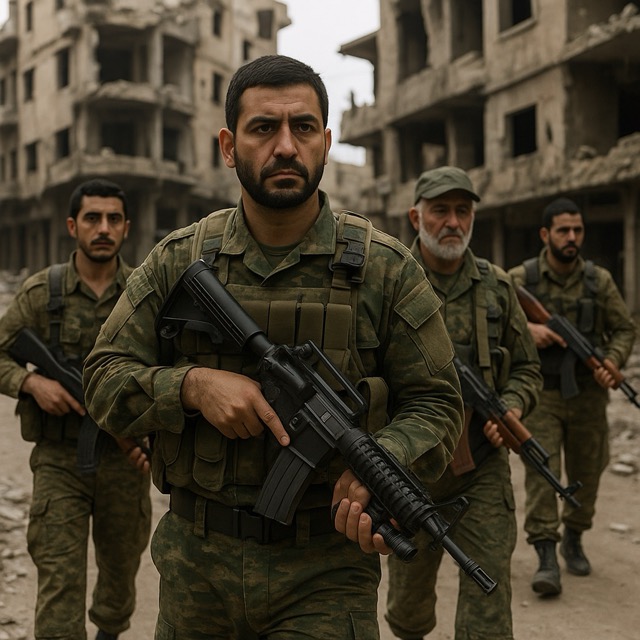
August 2025 — In Damascus, President Ahmed al-Sharaa stands before parliament, vowing to end the criminal legacy of his predecessor, Bashar al-Assad. His target is not only political corruption or authoritarian repression, but the billion-dollar drug empire that turned Syria into the world’s largest producer of Captagon, the amphetamine pill that fueled both regional conflicts and Assad’s coffers.
Since the fall of Assad’s regime last year, dismantling this narco-state has become one of al-Sharaa’s defining promises. Yet as reformist governments from Colombia to Mexico to Bolivia have learned, declaring war on drugs is far easier than winning one.
The Narco-State Assad Built
During Syria’s decade-long civil war, Assad’s inner circle turned to Captagon production and smuggling to keep the regime afloat. Factories sprouted across government-held territory, often protected by elite military units and intelligence services. By 2022, the United Nations estimated that Syria accounted for nearly 80% of the world’s Captagon supply.
Shipments moved through Lebanon’s ports, Jordan’s deserts, and the Persian Gulf, generating billions annually. The trade created a new class of war profiteers and ensured the loyalty of militia commanders who enriched themselves by protecting smuggling routes.
“Assad’s regime was less a government than a cartel,” says Lina Khoury, a Syrian analyst now based in Paris. “Captagon became its lifeline. Entire communities depended on it, not unlike how coca or opium sustains parts of Latin America and Afghanistan.”
Al-Sharaa’s Crackdown
Since taking power, al-Sharaa has launched a sweeping campaign to seize drug labs, arrest traffickers, and reassert control over porous borders. In June, the government announced the destruction of more than a dozen Captagon factories in Homs and Latakia. The army has deployed elite brigades to intercept shipments heading toward Jordan and Saudi Arabia.
International partners have applauded the effort. The European Union has pledged $500 million in aid to support counter-narcotics operations, while the United States has offered satellite intelligence to track smuggling networks. Jordan, long a victim of cross-border trafficking, has launched joint patrols with Syrian units for the first time in decades.
But the campaign faces immense obstacles. Many of Assad’s former lieutenants, now rebranded as local powerbrokers, still control parts of the trade. Corruption runs deep in security services. And with Syria’s economy in ruins, the lure of narco-profits remains strong.
Lessons from Latin America
The challenges echo those faced in Latin America, where governments have waged drug wars for decades with mixed results. In Mexico, cartels proved resilient, fragmenting into smaller groups even as kingpins were captured. In Colombia, U.S.-backed efforts to eradicate coca fields often displaced production rather than eliminating it.
“Syria risks repeating these patterns,” warns Javier Ortega, a Latin American security expert. “Without economic alternatives for farmers, smugglers, and militias, repression alone will not work. You can destroy labs, but the networks adapt.”
Indeed, reports suggest that while some Captagon production has been halted, operations are shifting deeper into Syria’s lawless eastern provinces, where government control remains tenuous.
The Human Toll
For ordinary Syrians, the narco-economy has been both a curse and a lifeline. Captagon addiction has surged among youth, creating a public health crisis. Yet for unemployed families, trafficking has provided rare income in a shattered economy. Al-Sharaa’s crackdown thus threatens to disrupt fragile livelihoods even as it seeks to restore law and order.
Civil society groups have urged the government to pair repression with rehabilitation and development. “We cannot simply burn down the fields and leave communities to starve,” says Amal Hamdan, head of a Damascus-based NGO working on addiction recovery. “We need schools, clinics, and jobs, or the cycle will repeat.”
A Battle for Syria’s Future
The fight against Assad’s narco-state is more than a law enforcement campaign. It is a battle for the very character of Syria’s post-Assad future. Success would signal the country’s emergence from the shadows of criminal rule and offer hope of reintegration into the global economy. Failure could entrench warlords, prolong instability, and condemn another generation to dependency on illicit trade.
For now, al-Sharaa faces a sobering reality: dismantling a narco-state is not a matter of months or even years. It is a generational struggle, requiring not just raids and arrests, but systemic reforms and international solidarity.
“The Captagon empire took a decade to build,” says Khoury. “It may take a decade or more to dismantle. What matters is whether Syria stays the course.”

 The Tower Post