Inflation divides the US and Europe, but three common challenges still loom large
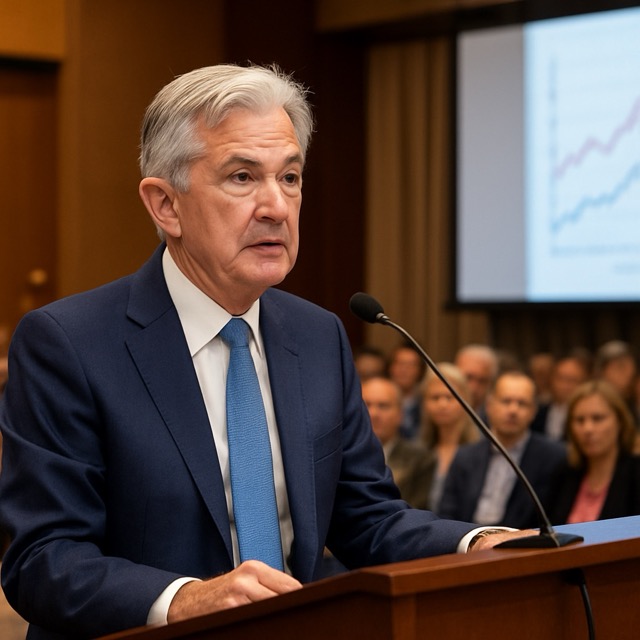
When Federal Reserve Chair Jay Powell stepped onto the stage in Jackson Hole this past Friday, the setting may have been familiar, but the backdrop was strikingly different from a year ago. Instead of a chorus of central bankers converging on the same strategy, the global monetary landscape now resembles a crossroads. Inflation, once a near-universal concern, has fragmented into distinct national challenges. The United States has witnessed a gradual return to price stability, while Europe continues to wrestle with uneven, and in some cases resurgent, inflation.
The result: the Federal Reserve and the European Central Bank (ECB) are moving along divergent paths. Washington appears poised to cautiously lower rates after nearly two years of tightening, betting that inflation is sufficiently under control. Frankfurt, meanwhile, faces the uncomfortable reality of sticky price growth in southern Europe even as parts of the continent struggle with stagnation. Powell’s words at Jackson Hole reflected the unusual tension: optimism about U.S. resilience tempered by concern about the fragility of the global economy.
A Tale of Two Central Banks
The contrast between the Fed and the ECB could hardly be sharper. In the U.S., core inflation has eased closer to the Fed’s 2% target, thanks in part to moderating energy costs, cooling housing markets, and a more balanced labor market. Growth, while slowing, remains steady enough to reassure policymakers that a “soft landing” is achievable.
Across the Atlantic, however, the picture is uneven. Germany, long the engine of European growth, faces declining industrial output. Spain and Italy, by contrast, are contending with stubbornly high service-sector inflation. The ECB is thus caught in a difficult bind: cutting rates risks stoking inflationary pressures, while maintaining a restrictive stance risks deepening recession in the continent’s industrial core.
This divergence, Powell noted, creates ripple effects across global markets. Exchange rates have grown more volatile as investors weigh the dollar’s strength against a faltering euro. Bond markets, too, reflect the new reality, with spreads widening across Europe and U.S. Treasury yields signaling cautious confidence.
Three Shared Challenges
Despite their divergent paths, central banks on both sides of the Atlantic face three common challenges that Powell was quick to underline.
1. Navigating Political Pressure
As elections loom in both the U.S. and Europe, monetary policy is under heightened scrutiny. Political leaders eager to secure growth are pressing central banks to ease policy sooner rather than later. Powell, echoing the Fed’s long tradition of independence, stressed that decisions will remain “guided by data, not politics.” Still, the risk of policy interference is real, and markets are keenly attuned to any sign of wavering resolve.
2. Managing Financial Stability
The rapid tightening cycle of the past two years has left scars. Commercial real estate in the U.S. remains under stress, with vacancy rates in major cities still high. In Europe, regional banks are vulnerable to credit losses as borrowing costs remain elevated. Both the Fed and the ECB must ensure that financial institutions weather the transition without triggering broader instability. Liquidity backstops and targeted lending programs are likely to remain part of the toolkit.
3. Preparing for Structural Shifts
Beyond the immediate inflation debate, central banks must adapt to profound structural changes. The global energy transition continues to reshape investment flows, while supply chain realignments—spurred by geopolitical tensions—are altering the dynamics of trade and prices. Artificial intelligence, too, is beginning to reshape productivity and labor markets in ways that policymakers are only beginning to understand. For Powell, the message was clear: central banks must prepare for an era where shocks are not exceptions but the norm.
Markets React with Caution
Financial markets greeted Powell’s speech with restrained optimism. U.S. equities rallied modestly, interpreting his remarks as a signal that rate cuts could begin before year’s end. European markets were more muted, reflecting skepticism about the ECB’s ability to navigate its dual challenge of high inflation and weak growth.
Currency traders, however, showed no such restraint. The euro slipped further against the dollar, extending a months-long slide that underscores investor unease about Europe’s economic trajectory. Meanwhile, bond investors signaled faith in Powell’s balancing act, with yields falling slightly on long-term Treasuries.
Looking Ahead
The mood in Jackson Hole underscored that monetary policy, once a relatively uniform enterprise among advanced economies, has become fragmented. Yet fragmentation does not mean isolation. Powell’s careful acknowledgment of Europe’s struggles, and ECB President Christine Lagarde’s emphasis on global coordination, reflected an understanding that no central bank can operate in a vacuum.
As Powell concluded, “Our challenges may differ, but the imperative is shared: to secure stability in an unstable world.” It was a sober reminder that, even as inflation paths diverge, the underlying vulnerabilities of the global economy remain intertwined.
For central bankers, policymakers, and investors alike, the message was unmistakable: the road ahead is uncertain, and unity in addressing systemic risks may prove just as important as the interest rate decisions themselves.




 The Tower Post