A Growing Trend Sees Young Americans Turning to African Fashion Designers for Custom-Made Gowns
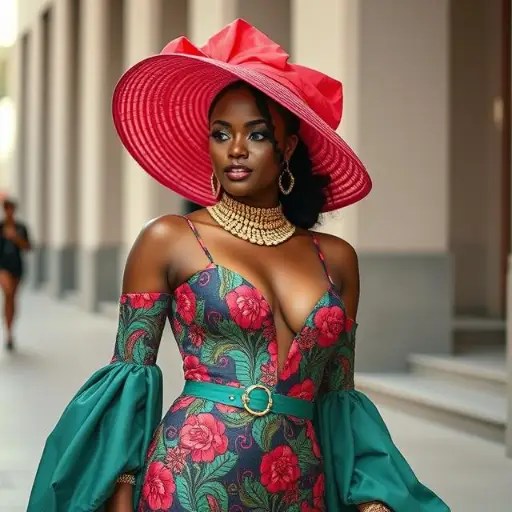
In a phenomenon that has taken the US by storm, African prom dresses have become a staple of high school fashion. What began as a social media trend has evolved into a booming business, with young Americans flocking to African fashion designers for custom-made gowns that reflect their cultural heritage.
For 18-year-old Brianna LeDoux, wearing an African prom dress was more than just a fashion statement – it was a way to connect with her roots. “I wanted my dress to stop people in their tracks,” she says, recalling her decision to commission a black sequined and beaded gown from a Nigerian designer. “I felt like a princess,” she adds, reflecting on the experience. LeDoux, who has Haitian and Dominican roots, wanted a dress that would not only make her stand out but also tell a story about her cultural identity.
The trend has been fueled by social media platforms like TikTok and Instagram, where young Americans have discovered the work of African fashion designers. Designer Shakirat Arigbabu, based in Nigeria, has seen her business boom, with over 2,800 orders fulfilled during the 2025 season, most of them bound for the US. “We were working in shifts, just to meet deadlines,” she says, reflecting on the demand. Arigbabu’s team, Keerah’s Fashion Cave, employs 60 full-time staff and at least 130 contract staff during peak periods.
The prices for these custom-made gowns may seem steep, ranging from $600 to $1,500, but they are significantly cheaper than having a garment custom-made in the US, where prices start at around $3,500. For many young Americans, the cost is worth it, as they seek to make a statement about their identity and cultural heritage. “I didn’t just want a dress,” LeDoux says. “I wanted a story I could wear – something that said: ‘This is who I am, and this is where my roots run.’”
For designers like Victoria Ani, based in Nigeria, the trend has been a game-changer. She has shipped over 200 gowns to the US, and believes that choosing an African designer is a cultural statement. “They say there is this pride when they can say: ‘My dress came from Nigeria,’” she says, reflecting on the impact of her designs. Ani’s designs are inspired by traditional Yoruba designs, with intricate beading and sequining that reflect the rich cultural heritage of Nigeria.
However, the trend has also brought its own set of challenges. Designers have reported issues with customs, courier backlogs, and overwhelmed workloads. “There are days we are working 20 hours fixing one gown while packaging another,” says Efua Mensah, a designer based in Ghana. Despite these challenges, the trend shows no signs of slowing down. With designers like Arigbabu and Ani at the forefront, the African prom dress industry is poised for continued growth.
As the market evolves, designers are adapting, exploring new payment options and transitioning to a ready-to-wear system to meet the demands of their clients. “We’re looking at ways to make our designs more accessible and affordable,” says Arigbabu. “We want to make sure that everyone can experience the beauty of African fashion, not just those who can afford it.”
For young Americans like LeDoux, the trend is about more than just fashion – it’s about connection, identity, and self-expression. “I reminisce about prom a lot – it’s something girls dream about since childhood,” she says, reflecting on the experience. “Honestly, if my nails were ugly, my make-up was disgusting, and my hair wasn’t cute, as long as I was in that dress, I was fine.”
The trend has also sparked a sense of pride and ownership among young Americans of African descent. “It’s amazing to see how African fashion is being celebrated and appreciated in the US,” says Ani. “It’s a testament to the power of cultural exchange and the beauty of African heritage.”
As the African prom dress trend continues to grow, it’s clear that it’s more than just a fashion fad – it’s a cultural movement that’s bringing people together and celebrating the beauty of African heritage.




 The Tower Post