A historic dream resurfaces, but scepticism and lawsuits loom over Giorgia Meloni’s €13.5bn mega-plan

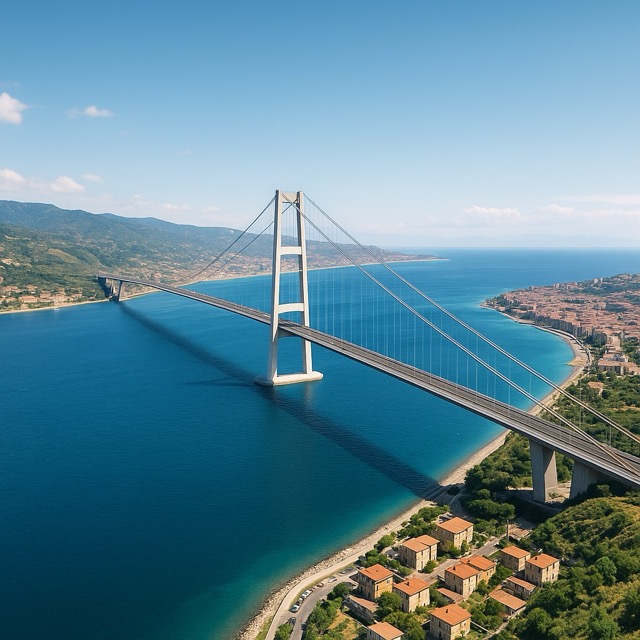
Rome, August 2025 – The idea of uniting Sicily with the Italian mainland through a monumental bridge has lingered in the national imagination for more than 160 years. Now, Prime Minister Giorgia Meloni has revived this grand vision, pledging to build a 3.7-kilometre suspension bridge across the Strait of Messina at a projected cost of €13.5 billion. The project, hailed by the government as a symbol of modernisation and unity, is set to become one of Europe’s most ambitious infrastructure ventures of the 21st century.
But as the blueprint advances, opposition on the island is mounting. While Rome portrays the bridge as a catalyst for growth, connectivity, and tourism, many Sicilians remain sceptical, questioning whether the colossal undertaking will truly benefit the region’s struggling economy—or merely burden taxpayers with yet another costly promise.
A century-old ambition
The dream of linking Sicily with Calabria dates back to Italy’s unification in 1861. Politicians, engineers, and visionaries across generations have floated proposals for the crossing. Over time, several governments have dusted off the idea, only for it to collapse under financial, political, or technical strain. In 2005, a similar project was cancelled amid fierce debate, leaving many Sicilians doubtful that the plan would ever leave the drawing board.
Today, Meloni insists that the moment has finally arrived. Her government claims that new advances in engineering and a stronger European infrastructure agenda make the plan both feasible and urgent. The bridge, designed to withstand earthquakes and fierce winds that characterise the Strait, would carry both high-speed rail and motor traffic, promising to slash travel times and integrate Sicily more tightly into Italy’s economic network.
Promises of progress
Supporters argue the project could transform Sicily’s prospects. By cutting journey times between Palermo, Catania, and Rome, the bridge could spur tourism, reduce freight costs, and attract investors. The government estimates that more than 100,000 jobs could be created during construction, with long-term boosts for logistics, shipping, and real estate.
“The bridge will not only connect Sicily physically but also economically,” declared Infrastructure Minister Matteo Salvini at a press conference earlier this month. “It is a project of national pride, one that signals Italy’s commitment to building for the future.”
The European Commission, though cautious, has expressed interest in classifying the bridge as a strategic transport corridor, potentially unlocking additional funding and political support in Brussels.
A chorus of scepticism
Yet on the streets of Messina and across Sicily, enthusiasm is far from unanimous. Critics question whether a single mega-project can address the region’s deeper structural problems, from unemployment to organised crime. Many argue that the billions earmarked for the bridge could be better spent upgrading Sicily’s crumbling railways, ports, and water systems.
“People here need functioning trains, not grandiose monuments,” said Giulia Russo, a local activist from Catania. “We are not against progress. But we fear this bridge will enrich a few construction giants while ordinary Sicilians see little change in their daily lives.”
Environmental groups, meanwhile, warn of severe ecological risks. The Strait of Messina, home to rare marine life and a critical migratory corridor for birds, could face lasting damage from construction and increased traffic. Several NGOs are already preparing legal challenges in both Italian and European courts.
Legal battles on the horizon
Opposition is not merely rhetorical. A coalition of local mayors, environmental organisations, and citizens’ committees has announced its intent to file lawsuits aimed at halting or reshaping the project. They argue that the environmental impact assessments conducted by the government are incomplete and rushed, potentially violating EU environmental directives.
“The fight will be long and complicated,” said lawyer Antonino Caruso, representing one coalition. “We will challenge this project in every court available, from Palermo to Brussels. Sicily deserves sustainable development, not empty promises dressed up as nation-building.”
Between vision and reality
For Meloni, the bridge represents both political risk and opportunity. Delivering on a project that has eluded predecessors could cement her legacy as a nation-builder. But failure—or a protracted legal quagmire—could reinforce scepticism about Rome’s ability to deliver for Sicily.
As bulldozers remain idle and courtroom filings pile up, Sicilians are left divided. To some, the bridge is a symbol of long-overdue integration. To others, it is a mirage that distracts from urgent, everyday needs.
The Strait of Messina has long been a physical and metaphorical frontier. Whether Meloni’s bridge becomes a unifying triumph or another unfulfilled dream will depend not just on steel and concrete, but on trust, transparency, and the willingness of Italy’s leaders to listen to the island they seek to bind more closely to the mainland.