How a national security pivot, surging federal contracts, and a shifting tech paradigm turned Palantir into one of America’s most valuable companies — but questions loom over its sky-high valuation
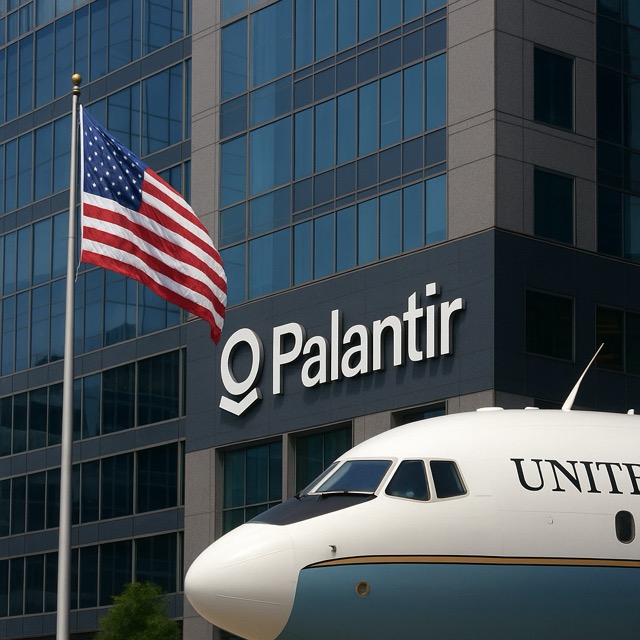
Palantir Technologies, the Denver-based data analytics company once seen as a niche intelligence contractor, has emerged as one of the most valuable listed tech groups in the United States this year. Its shares have more than doubled since January, propelling its market capitalization into the top tier of Silicon Valley giants. In a year dominated by debates over artificial intelligence, national security, and the role of technology in geopolitics, Palantir has positioned itself as the poster child of a new Silicon Valley era.
A Silicon Valley Paradigm Shift
For decades, the epicenter of American technology was defined by consumer platforms, social media, and e-commerce behemoths. But in 2025, investor sentiment has shifted. The gravitational pull is no longer toward companies that monetize attention but toward those that help governments and enterprises navigate complexity, security, and risk.
“We are witnessing the rise of a security-first Silicon Valley,” notes Clara Jensen, a venture analyst at Redwood Capital. “Palantir is the purest expression of that pivot — it has become the preferred operating system for governments facing unprecedented uncertainty, from border security to space missions.”
At the heart of Palantir’s appeal is its unique positioning between the public and private sectors. Its Gotham platform, designed originally for counterterrorism analysis, has become indispensable for agencies dealing with immigration, law enforcement, and military operations. Meanwhile, Foundry, its commercial suite, has expanded into energy, pharmaceuticals, and supply-chain optimization. And more recently, its Artificial Intelligence Platform (AIP) has attracted headlines for seamlessly embedding AI into mission-critical workflows.
Federal Spending Winds at Its Back
Washington has been a decisive driver of Palantir’s success. Over the past year, the Biden administration and Congress approved sweeping increases in national security and defense budgets, with explicit allocations for AI-enabled platforms. Palantir secured major contracts with the Department of Defense, NASA, and Homeland Security, giving investors confidence that its pipeline is set for years of growth.
Space exploration, once the domain of contractors like Lockheed Martin and Boeing, is now an arena where Palantir’s data capabilities are in demand. NASA missions rely on Palantir’s software for analyzing massive volumes of telemetry data. Similarly, the company’s tools are used by immigration agencies to streamline casework and border monitoring — a practice that has won praise for efficiency but also renewed criticism over privacy and civil liberties.
“The reality is, Palantir sits at the intersection of technology and state power,” says Miguel Aranda, a former Department of Homeland Security official. “That makes it both strategically valuable and politically controversial.”
Critics Question the Valuation
Despite Palantir’s surge, skeptics warn of overexuberance. Its valuation now eclipses that of several established aerospace and defense contractors, raising the question: is Palantir a sustainable juggernaut, or a beneficiary of a speculative bubble?
Critics highlight its heavy reliance on government contracts, which can be vulnerable to shifts in political priorities. Others point to limited profitability relative to its valuation multiples. Still, bullish investors counter that Palantir is in the early stages of monetizing its AI platform globally, and that its sticky contracts provide unmatched revenue visibility.
“This is not a social media company; it’s infrastructure,” argues analyst Kevin Liu at Morgan & Co. “You don’t rip out Palantir once it’s embedded in mission-critical operations. That’s why its valuation premium makes sense.”
The New Face of Tech Power
Palantir’s ascent reflects more than just investor appetite; it marks a redefinition of Silicon Valley’s role in American society. The era of growth-at-all-costs consumer platforms is giving way to an age where government partnerships, national defense, and AI-driven logistics take center stage.
Yet, the tension remains: Palantir’s tools raise profound questions about surveillance, ethics, and accountability. Its rise may be a harbinger of how the next generation of tech power is exercised — not through viral apps, but through quiet influence on the levers of state and security.
For now, markets seem convinced that Palantir is among the biggest winners of Washington’s spending spree. But whether it can sustain that promise without succumbing to political, ethical, or valuation risks remains the billion-dollar question.




 The Tower Post