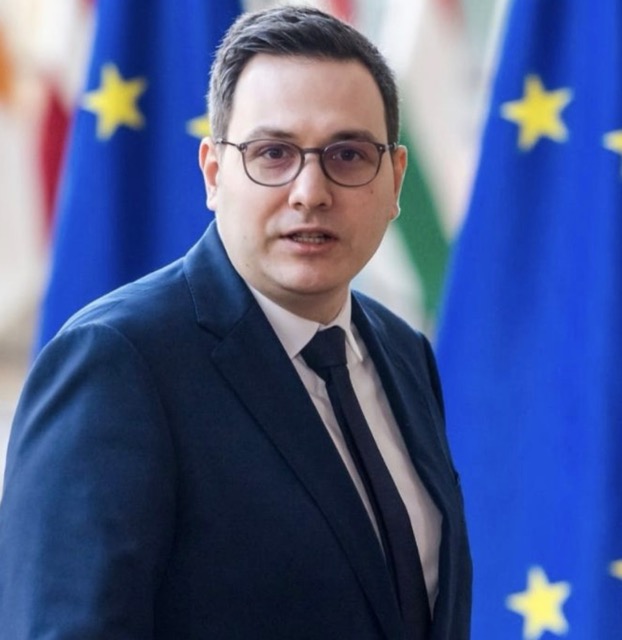
Foreign Minister Jan Lipavský calls for stricter sanctions as Europe weighs 19th package against Moscow

Prague/Brussels – Czech Foreign Minister Jan Lipavský has announced his intention to propose a new restriction targeting Russian diplomats across the European Union’s Schengen area. The proposal, which will form part of the EU’s forthcoming 19th sanctions package against Russia, aims to put an end to what Lipavský calls “an unnecessary advantage” enjoyed by Moscow’s envoys.
In an interview with Politico, Lipavský stressed that the current rules, which allow Russian diplomatic staff to move freely across most of the continent without border checks, have created a vulnerability. “I will keep proposing to end the free movement of Russian diplomats in Schengen,” he said, arguing that the system is being misused. He added that the privilege is being “abused to facilitate sabotage operations” — an accusation that reflects growing concerns across European capitals about espionage and hybrid threats emanating from the Kremlin.
The Schengen Loophole
The Schengen Agreement, a cornerstone of European integration, allows citizens and accredited diplomats of member states to travel across borders without routine passport checks. While the system has facilitated commerce, tourism, and political cooperation, critics now suggest that it is also providing Moscow with opportunities to deploy intelligence officers under diplomatic cover.
European security services have long suspected that Russian embassies and consulates host operatives who engage in espionage and disinformation campaigns. The Czech Republic, which in 2021 expelled dozens of Russian diplomats following revelations about their alleged involvement in the deadly 2014 ammunition depot explosions in Vrbětice, has consistently advocated for a tougher line.
A Divided European Response
Lipavský’s proposal comes as EU member states prepare to unveil their 19th sanctions package since Russia launched its full-scale invasion of Ukraine in February 2022. Previous measures have targeted banks, energy exports, technology transfers, and individuals linked to the Kremlin. Yet the idea of curbing the mobility of diplomats touches a sensitive nerve: diplomatic immunity and freedom of movement are seen by some as essential for international relations.
Several Central and Eastern European states, including Poland and the Baltic countries, are expected to support the Czech initiative, citing their own security concerns. However, Western European nations may hesitate, worried that Moscow could retaliate by imposing severe restrictions on European diplomats in Russia. Such a tit-for-tat escalation could complicate already strained channels of communication.
Balancing Security and Diplomacy
The debate highlights a fundamental dilemma facing the European Union: how to confront Russia’s alleged covert activities without undermining the principles of diplomacy. Critics warn that restricting the free movement of Russian diplomats could erode established norms, while supporters insist that the unique circumstances of Russia’s aggression demand extraordinary measures.
“The issue is not diplomacy as such, but abuse of diplomatic privileges for hostile purposes,” said one senior EU security official, speaking on condition of anonymity. “If we know these freedoms are being used to plan sabotage or undermine our security, then we must act.”
Looking Ahead
The European Commission is expected to unveil the full 19th sanctions package in mid-September. Negotiations are likely to be contentious, with governments weighing the security benefits of tighter restrictions against the potential diplomatic fallout.
For Prague, however, the choice is clear. Lipavský has positioned the Czech Republic as a vocal advocate of a hardline stance toward Russia, framing his latest proposal as a necessary step in protecting European security.
“We should not hand Russia tools it can use against us,” Lipavský said. “Ending this loophole is not about undermining diplomacy — it is about ensuring it cannot be exploited to threaten our societies.”
As the war in Ukraine grinds on into its fourth year, the EU’s sanctions policy remains one of the most visible tools of pressure on Moscow. Whether Lipavský’s plan gains traction may serve as a test of Europe’s unity in its long-term struggle to contain Russian influence.