Copenhagen summons U.S. envoy amid suspicions of covert campaigns tied to Trump allies, reviving Arctic tensions
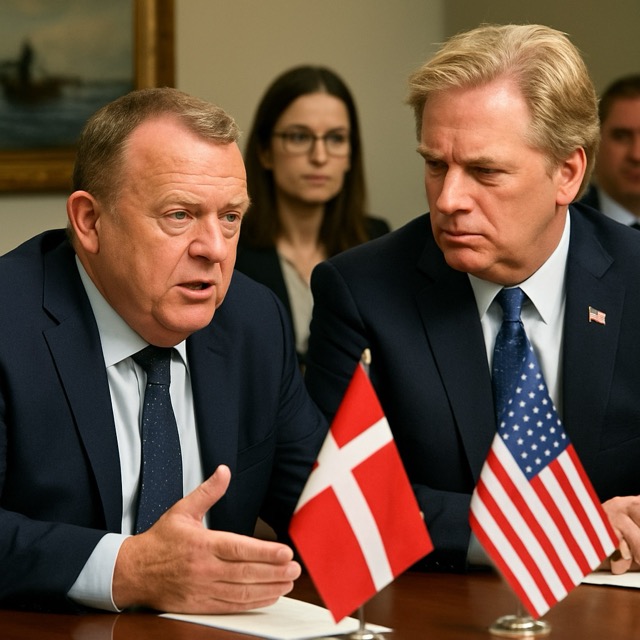
Copenhagen – A new diplomatic rift has opened between Denmark and the United States after Copenhagen summoned the top U.S. diplomat in the country to explain reports that American citizens with alleged ties to former President Donald Trump have been conducting covert influence campaigns in Greenland.
The allegations, which surfaced in Danish media earlier this week, claim that a network of U.S. operatives sought to shape political debate on the island, amplifying calls for greater autonomy and fostering skepticism toward Copenhagen’s policies. According to intelligence briefings cited by Danish officials, these activities appear aimed at advancing U.S. strategic interests in the Arctic.
Foreign Minister Lars Løkke Rasmussen accused unnamed “foreign actors” of attempting to sway Greenland’s future. “We take seriously any attempt to manipulate the democratic process of our realm,” Rasmussen told reporters. “Greenland is part of the Kingdom of Denmark, and its future will be decided by its people, not by covert campaigns orchestrated abroad.”
White House Responds with Frustration
The White House swiftly reacted to Denmark’s démarche, downplaying the severity of the claims. A senior spokesperson said Washington considered the summons “an overreaction,” adding pointedly: “Denmark needs to calm down.”
Administration officials insisted that any individuals involved were acting privately and not on behalf of the U.S. government. Nevertheless, the tone struck by the White House appeared to widen the gap between the two allies, leaving diplomats scrambling to contain the fallout.
Behind the scenes, several European security analysts suggest the controversy underscores the continuing shadow of Trump’s political legacy abroad. During his presidency, Trump made headlines with his proposal to purchase Greenland from Denmark—a suggestion dismissed at the time as fanciful, but one that spotlighted the island’s strategic and resource value.
Strategic Stakes in the Arctic
Greenland, an autonomous territory within the Kingdom of Denmark, has long been central to U.S. defense strategy in the Arctic. The Thule Air Base, a vital U.S. military installation, serves as part of the North American early warning system. With Arctic sea ice receding and global competition for resources intensifying, the island’s geopolitical significance has only grown.
“Greenland is not just a dot on the map,” explained Søren Riis, a Danish security analyst. “It sits at the intersection of climate change, great-power rivalry, and indigenous self-determination. Any suggestion of foreign meddling triggers alarm bells in Copenhagen.”
Greenlandic Leaders React Cautiously
Greenland’s government, based in Nuuk, has so far avoided escalating rhetoric. Prime Minister Múte Bourup Egede issued a brief statement emphasizing that Greenland’s democratic institutions remain “robust and resilient” but called for transparency.
“We welcome international cooperation, but Greenland’s future must not be influenced by external agendas,” Egede said.
Some Greenlandic lawmakers privately acknowledged that pro-independence sentiment has gained traction in recent years, fueled partly by frustrations over Denmark’s oversight of resource management. Whether U.S. operatives sought to exploit these tensions remains under investigation.
NATO and European Repercussions
The episode has also raised concerns among NATO partners, who fear the spat could complicate transatlantic unity at a time when the alliance is focused on Russia’s activities in the High North.
“This is not just a bilateral quarrel,” said a European diplomat based in Brussels. “It speaks to the fragility of trust when allies suspect each other of meddling.”
While Danish officials stopped short of accusing the U.S. government directly, Rasmussen stressed that “all allies must refrain from actions that undermine democratic sovereignty.”
Looking Ahead
For now, the dispute highlights how Greenland—once perceived as a remote outpost—has become a focal point of global politics. Both Washington and Copenhagen insist they remain committed to their long-standing partnership, but the sharp rhetoric suggests a period of turbulence lies ahead.
Whether this episode fades as a diplomatic skirmish or escalates into a broader debate about Arctic governance may depend on the findings of Danish intelligence and the willingness of both governments to restore trust.
As one Danish commentator put it: “The Greenland question has always been about ice and sovereignty. Now it is also about influence and interference.”



 The Tower Post