At the 2025 Meeting of Communion and Liberation, Italy’s Prime Minister outlines sweeping domestic reforms, issues a sharp critique of the EU, and pleads for proportionality and press protections amid the Gaza conflict.

Giorgia Meloni Stages a Strategic Return at the Rimini Meeting
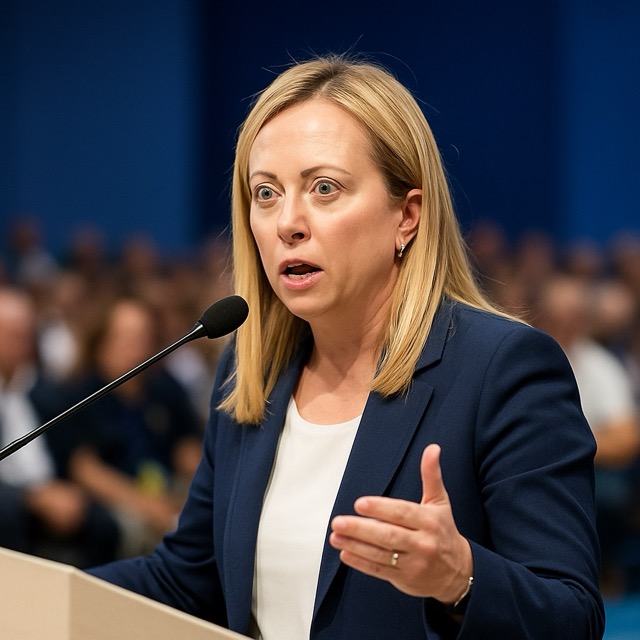
At the 46th annual “Meeting for Friendship Among Peoples” — the famed Communion and Liberation gathering in Rimini — Prime Minister Giorgia Meloni delivered a decisive speech, honing in on Italy’s internal reform agenda while projecting influence on pivotal international issues. With a packed auditorium on August 27, 2025, Meloni painted a sweeping political portrait, sat between the ideological theme of the event — “In the vacant places we will build with new bricks” — and a tangible policy roadmap stretching from the domestic front to the Middle East and Europe’s future.
Three Pillars of Domestic Reform: Stability, Justice, and Regional Equity
Meloni reaffirmed her administration’s commitment to three cornerstone reforms. First, she proposed a reform of the premierato — the structure defining executive powers — to offer greater governmental stability. Alongside this, she pledged to advance the autonomy reform, promising more devolved powers, and to grant expanded powers to the capital region through a Rome Capitale reform. Finally, she highlighted her drive to push through judicial reform, asserting that the judiciary will not obstruct her administration’s platform.
EU: Pragmatic, Streamlined, Sovereignty-Respecting
Meloni delivered a scathing assessment of the European Union, echoing similar criticism from Mario Draghi — who had spoken on the same stage days before. She warned that the EU is “doomed to geopolitical irrelevance” unless it evolves into an institution that “does less and does it better,” with less bureaucracy, more business competitiveness, and respect for nation-state roles. While Draghi’s views are echoed, the Prime Minister clashed with figures like Nicola Zingaretti, who argued that a Europe that “does less” is bound to be weaker and divided.
International Direction: From Ukraine to Gaza
On the global stage, Meloni reaffirmed Italy’s support for Ukraine, emphasizing that “glimmers of peace” are emerging and citing her advocacy for security guarantees.
Her stance on the Israel–Gaza conflict was perhaps the most stirring. Meloni condemned Israeli strikes as exceeding “the principle of proportionality,” particularly those that targeted Nasser Hospital, resulting in the death of at least 20 individuals — including five journalists — which she labeled “an unacceptable attack on press freedom.” She reiterated support for Israel’s right to self-defense, while calling for a ceasefire, the safe release of Israeli hostages by Hamas, an immediate flow of humanitarian aid into Gaza, an end to settlement expansion in the West Bank, and the preservation of Christian communities caught in the crossfire.
A Housing Initiative for Young Families
On the domestic social front, Meloni announced a significant “home plan” aimed at young couples — a low-cost housing initiative designed to foster family formation and social stability.
Summary Table: Key Highlights from Meloni’s Rimini Speech
Reforms: Premierato, autonomy, Rome Capitale, and judicial overhaul
Housing Policy: New affordable housing floor for young families
EU Critique: “Do less and do it better” — defend sovereignty
Ukraine Support: Endorsement of security guarantees and peace prospects
Israel–Gaza: Denunciation of disproportionate response; press freedom defense; humanitarian calls
Meloni’s speech showcased a dynamic blend of national ambition and international diplomacy — rallying for structural reforms at home, demanding relevance and pragmatism from Europe, and taking a firm ethical stance amid one of the world’s most entrenched conflicts. It was a comprehensive performance that reaffirmed her position both domestically and on the global stage.