Ukraine’s last fortified belt in northern Donetsk becomes a symbol of defiance as Moscow renews its push for concessions

Kyiv,– Tensions between Russia and Ukraine reached a new peak this week as Russian President Vladimir Putin reiterated demands that Kyiv formally cede control of the Donbas region. The demand, dismissed outright by Ukrainian President Volodymyr Zelenskyy, has reignited international concern over the trajectory of the war, now in its fourth year since the full-scale invasion began in 2022.
Speaking during a televised address in Moscow, Putin declared that “the Donbas must return to its historic place within the Russian Federation.” He framed the concession as a prerequisite for any peace negotiations. “Without recognition of these realities, there can be no meaningful dialogue,” he said.
In Kyiv, Zelenskyy was quick to respond. “Ukraine will not surrender its people or its territory. We did not fight for three years to hand over our land under duress,” he told journalists in a late-night press briefing.
For many in Ukraine, the issue transcends questions of sovereignty or legality. “It is not only about borders; it is about survival,” said Colonel Andriy Melnyk, commander of a brigade stationed near northern Donetsk. “If we lose this line, the road to the heart of Ukraine opens wide.”
At the center of this standoff is a 45-kilometer belt of heavily fortified cities stretching across northern Donetsk. The defensive network, painstakingly built since 2023, includes trench systems, reinforced bunkers, and artillery positions embedded within urban landscapes. It is now regarded as the last major line of defense preventing Russian forces from advancing deeper into Ukraine’s east.
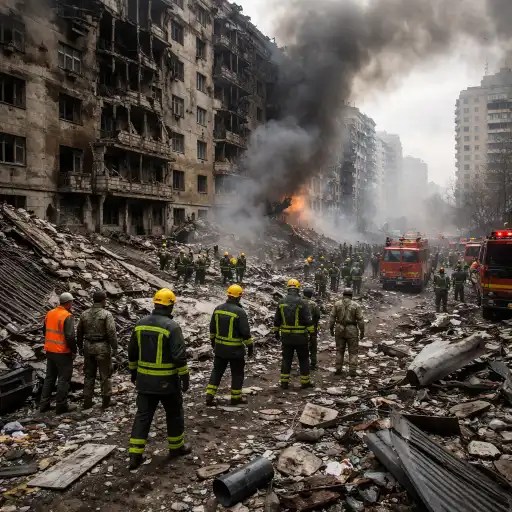
Residents of cities like Kramatorsk and Sloviansk, once industrial hubs, now live under the constant thud of artillery fire. “We hear explosions every day,” said Olha, a 52-year-old schoolteacher who has remained in Sloviansk despite evacuation orders. “But leaving would mean abandoning our homes. This is our life, and we defend it.”
Military analysts warn that should Russia attempt a full-scale breakthrough, the cost in lives could be catastrophic. “Northern Donetsk has become a fortress,” said Michael Carter, a senior fellow at the London-based Institute for War Studies. “Any assault would demand staggering manpower and resources. Conversely, if Ukraine loses it, the balance of the conflict shifts dramatically in Moscow’s favor.”
Western capitals have reacted cautiously to Putin’s demands. The European Union and the United States reaffirmed their support for Ukraine, while calling for restraint and diplomatic engagement. However, divisions within NATO remain evident as some governments push for stronger deterrence measures, while others warn against escalation.
For Ukrainian soldiers holding the line, the political maneuvering feels distant. “We fight because we must,” said Private Dmytro, a 23-year-old infantryman stationed near Kramatorsk. “This is not just about Donbas. It is about whether Ukraine lives or dies.”
As the war grinds on, the northern Donetsk belt stands not only as a military stronghold but also as a potent symbol of Ukraine’s refusal to yield — a line drawn in steel and sacrifice against a Kremlin still unwilling to compromise.


 The Tower Post