Canada’s prime minister gambles on tariff cuts to woo Trump, but U.S. protectionism shows no sign of retreat.
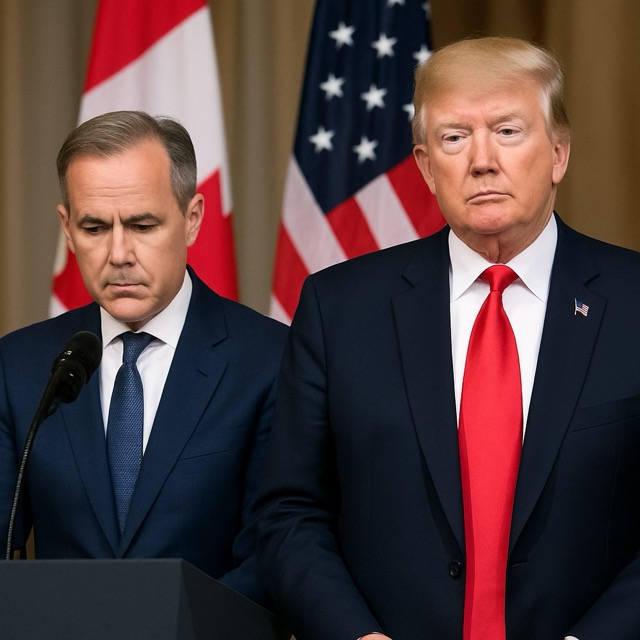
Ottawa — Canada’s trade gamble is entering a precarious phase. Prime Minister Mark Carney’s surprise move earlier this month to slash tariffs on a swath of American imports was widely interpreted as a bid to break the logjam in negotiations with Washington. Yet officials in both capitals now concede that U.S. President Donald Trump is unlikely to respond in kind, at least in the short term.
The unilateral Canadian concessions, announced on August 10, affect billions of dollars’ worth of U.S. agricultural machinery, industrial goods, and consumer products. “We cannot build prosperity behind walls,” Carney said at a press conference in Ottawa. “Canada must show leadership in lowering barriers, even when reciprocity is uncertain.”
The measures were cheered by Canadian retailers and manufacturers who rely on U.S. inputs. But they also triggered immediate criticism from opposition leaders and labor unions, who warned that Carney had “surrendered leverage” without securing concrete guarantees from Washington.
In the U.S., Trump has doubled down on his protectionist stance. At a rally in Ohio, he declared: “Canada needs us more than we need them. We’ll decide when tariffs come down, and it will be on our terms.” The White House has offered no timeline for lifting duties on Canadian steel, aluminum, and dairy products — the very sectors Carney hoped to shield.
Balancing risk and diplomacy
For Carney, a former central banker who rose to prominence during the 2008 financial crisis, the tariff cuts are both a calculated economic risk and a diplomatic gambit. His government argues that cheaper imports will ease inflationary pressures at home, while demonstrating goodwill to the U.S. Congress and American businesses that depend on Canadian supply chains.
Privately, however, Canadian officials admit they never expected Trump to scrap all tariffs. “We are aiming for incremental progress,” said one senior trade negotiator. “If we can lock in exemptions for certain sectors, or secure a pathway to broader talks, that will already be a win.”
Trade experts are divided. Some see Carney’s approach as pragmatic realpolitik — a way to reposition Canada as the adult in the room while Washington indulges in election-year populism. Others say it risks emboldening Trump to press for deeper concessions. “Unilateral disarmament rarely works in trade wars,” said Laura Michaels, a former U.S. trade official.
Economic stakes
The stakes are high. The United States is Canada’s largest trading partner, with two-way goods and services trade topping $900 billion in 2024. Canadian exports of autos, energy, and raw materials remain heavily dependent on U.S. markets, while American manufacturers rely on Canadian components to keep production lines running.
Financial markets have so far taken a cautious view. The Canadian dollar strengthened slightly after the announcement, buoyed by expectations of lower input costs, but bond markets signaled concern over slower growth if U.S. tariffs remain in place.
Looking ahead
In Ottawa, the political calculus is fraught. Carney’s minority government faces an election in 2026, and his opponents are already portraying the tariff cuts as evidence of weakness. South of the border, Trump’s re‑election campaign has little incentive to dial down its “America First” rhetoric before November.
For now, Canada’s concessions amount to a bet on patience — and on the hope that, eventually, pragmatism will trump politics in Washington. Until then, Canadians are bracing for a long wait at the negotiating table.




 The Tower Post