Executives warn that new levies on lenders could derail growth agenda, but Treasury signals tough choices ahead
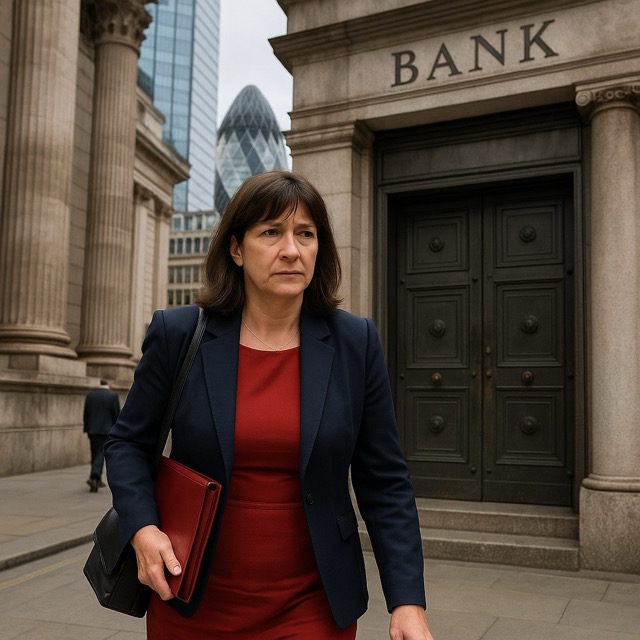
Tensions are rising in the City of London amid growing speculation that Chancellor Rachel Reeves is preparing to target banks in a bid to close a £20bn hole in the public finances. Industry executives and analysts fear that any move to impose additional taxes on the financial sector could undercut the government’s pro-growth commitments and harm the competitiveness of the UK as a global financial hub.
According to senior officials briefed on the matter, Treasury aides have floated two options: reinstating or raising a surcharge on bank profits, or introducing a new levy tied to lenders’ balance sheets. While no final decision has been made, sources close to the Chancellor say “all options remain on the table” as Reeves looks for politically viable ways to demonstrate fiscal responsibility without triggering spending cuts ahead of the autumn budget.
A Delicate Balancing Act
The Labour government, now in its second year in power, has staked much of its economic credibility on a pledge to rebuild public services while simultaneously delivering growth. Reeves, who has built a reputation as a cautious steward of the public purse, has insisted that “every pound spent must be paid for.”
Yet with borrowing costs high and tax receipts softer than expected, the Treasury faces a widening shortfall. Economists suggest the £20bn gap is too large to be closed through efficiency savings alone, leaving higher taxes as the most immediate lever.
Targeting banks may appear attractive politically. The sector has enjoyed bumper profits in recent years, fuelled in part by higher interest rates that widened margins on lending. Critics argue that lenders should contribute more, given their role in the 2008 financial crisis and subsequent taxpayer bailouts.
But bank executives counter that a raid on profits would be counterproductive. “The UK already has one of the heaviest effective tax burdens on financial services,” said one senior banking figure. “Another levy would not only discourage investment, but could also drive activity overseas at a time when London is competing fiercely with New York, Frankfurt and Paris.”
Industry Pushback Intensifies
In private meetings with ministers, City leaders have pressed their case, warning that punitive measures could deter capital inflows and undermine lending capacity. The British Bankers’ Association has commissioned research suggesting that a surcharge would reduce GDP growth by up to 0.3 percentage points annually if imposed over a five-year period.
“The message we are sending is clear,” said an association spokesperson. “Taxing banks more heavily may look appealing in the short term, but it risks long-term damage to the economy, jobs and investment.”
Executives also worry about the signal it sends internationally. London has spent years rebuilding its status after Brexit uncertainty and a series of market shocks. “The last thing we need is to look like we are penalising success,” one global investment banker commented.
Political Calculations
For Reeves, however, the politics are complicated. With the NHS under strain and public sector workers demanding pay rises, she faces mounting pressure to show that the wealthy and powerful are contributing their fair share. Polling suggests the idea of higher taxes on banks enjoys majority support among voters, particularly outside London.
“Politically, it is hard to defend a situation where banks are making billions while households are struggling with high mortgage payments,” said Dr. Sarah Keane, a political economist at King’s College London. “The government may feel it has no choice but to lean on the sector.”
Some analysts suggest Reeves could seek a compromise: a temporary surcharge linked explicitly to funding investment in schools or hospitals, rather than a permanent structural change. Such a move might blunt industry criticism while satisfying public demand for fairness.
Looking Ahead
Markets are watching closely. Sterling fell slightly against the dollar this week amid reports of internal Treasury debates, though gilts remained steady. Banking stocks, however, dipped on fears of a windfall tax, with shares in Lloyds, Barclays and NatWest all sliding by more than 2%.
The Chancellor is expected to outline her fiscal strategy in detail at the Labour Party conference in late September, before the formal budget in October. Until then, uncertainty is likely to weigh on sentiment in the Square Mile.
“Whatever path Reeves chooses, the stakes are high,” said Keane. “This is a test of her ability to balance fiscal discipline with economic growth, and to convince both the markets and the public that Labour can be trusted with the nation’s finances.”
For now, the City is bracing itself—and hoping that the Chancellor resists the temptation of what many fear would be an easy, but damaging, fix.




 The Tower Post