Renewed clashes, fragile ceasefires, and international concerns place Africa’s youngest nation in a precarious position.
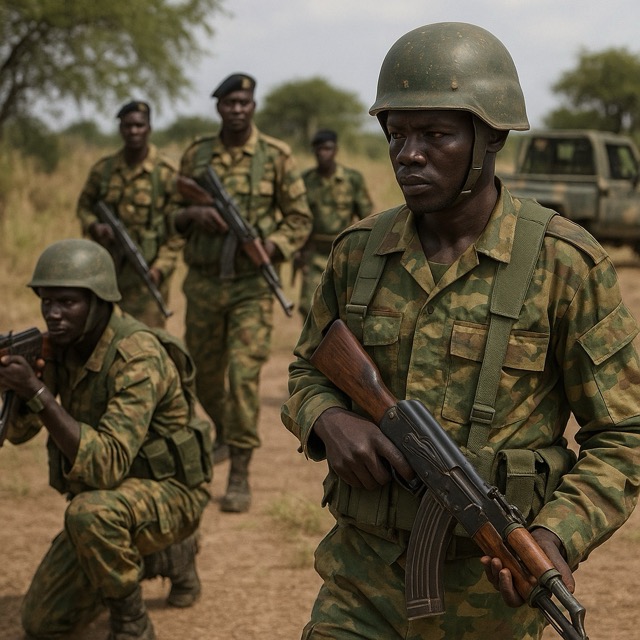
South Sudan, the world’s youngest country, is once again facing the specter of widespread conflict as military tensions escalate across several regions. Despite repeated attempts at reconciliation and international support, the fragile peace deal signed in 2018 appears to be unraveling, raising fears of a return to full-scale civil war.
Reports from Unity State and Upper Nile indicate renewed clashes between government troops loyal to President Salva Kiir and armed groups aligned with former Vice President Riek Machar. While both leaders pledged commitment to dialogue earlier this year, local commanders have accused each other of ceasefire violations. Civilians, as usual, are bearing the brunt of the violence, with the UN estimating more than 200,000 people displaced since June.
Witnesses describe entire villages being emptied overnight. “We left with nothing but our clothes,” said a 35-year-old mother of four who fled Leer County. Humanitarian organizations warn of worsening conditions, as flooding from the Nile combined with insecurity has restricted access to food and medicine. The World Food Programme has declared several areas at risk of famine if aid routes are not secured.
International actors are sounding the alarm. The African Union has urged restraint, while the United Nations Mission in South Sudan (UNMISS) has increased patrols around key towns. Yet the complexity of the conflict—rooted in ethnic divisions, struggles for resources, and political rivalries—makes durable peace elusive. “South Sudan stands at a dangerous crossroads,” said UN Special Representative Nicholas Haysom. “Without genuine political will, the military situation could spiral out of control.”
Complicating matters further is the growing influence of external actors. Analysts point to increased flows of weapons through porous borders, with allegations that neighboring states are covertly backing rival factions. Sudan’s own instability has added fuel to the fire, with reports of fighters crossing the border to join militias in South Sudan’s
oil-rich areas.
Meanwhile, South Sudan’s economy is teetering. The government relies heavily on oil revenues, but production has been hampered by insecurity and damaged infrastructure. Soldiers, often unpaid for months, have been accused of looting villages, further eroding trust between civilians and the military. Inflation has skyrocketed, and ordinary citizens struggle to afford basic necessities.
Despite the grim outlook, some glimmers of hope remain. Religious leaders and grassroots organizations continue to facilitate dialogue at the community level. Peace committees in Western Bahr el Ghazal have managed to prevent the spread of violence, demonstrating that local reconciliation can succeed where national efforts falter. Women’s groups, in particular, have emerged as powerful advocates for peace, demanding accountability from both the government and rebels.
In Washington, Brussels, and Addis Ababa, policymakers are debating how to respond. Some argue for targeted sanctions against commanders accused of war crimes, while others call for increased humanitarian aid and renewed diplomatic pressure. The Biden administration, while distracted by global crises in Ukraine and the Pacific, has reaffirmed its support for UNMISS but stopped short of announcing new initiatives.
For the people of South Sudan, however, the debate feels distant. What matters most is security, food, and the possibility of a future without war. “We are tired of promises,” said a displaced teacher in Malakal. “All we want is peace, so our children can go to school again.”
As August draws to a close, the situation remains fluid and dangerous. Whether the fragile government can hold together or whether the country will descend into another devastating conflict may be decided in the coming weeks. For a nation born in hope just 14 years ago, the stakes could not be higher.


 The Tower Post