Over 50,000 fewer overnight stays compared to last year: visitors come only for the day — and even bring their own packed lunches.
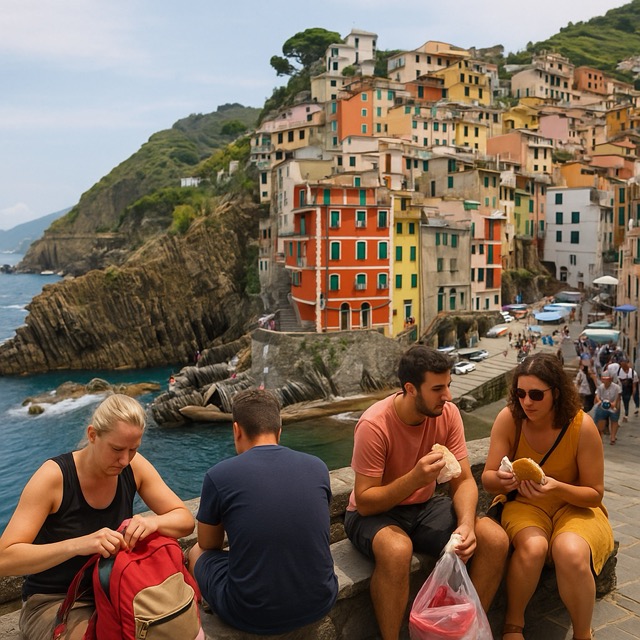
Cinque Terre, Italy – August 2025. The summer season that many hoped would mark a return to stability after years of fluctuating visitor trends has instead been branded as the “darkest summer” for the Cinque Terre. Rising prices, shifting travel habits, and a growing sense of fatigue with over-tourism have combined to produce one of the worst downturns in local hospitality in recent memory.
According to data released this week by the Ligurian Tourism Board, the five iconic villages — Monterosso, Vernazza, Corniglia, Manarola, and Riomaggiore — recorded at least 50,000 fewer overnight stays compared to summer 2024. The drop has left hoteliers, restaurateurs, and shopkeepers alarmed, while fueling debates about the sustainability of the current tourism model.
A Shift from Overnight to Day Trips
For years, Cinque Terre has been one of Italy’s most celebrated destinations, attracting millions of visitors with its pastel-colored homes clinging to cliffsides and panoramic hiking trails along the Ligurian coast. Yet this summer, the picture has shifted dramatically.
“People still come,” says Laura Bianchi, owner of a small guesthouse in Vernazza. “But they come for just a few hours. They arrive in the morning by train from La Spezia, walk around, take photos, and then leave in the afternoon. They don’t stay overnight, they don’t eat dinner here, and some even bring sandwiches from home.”
The habit of “hit-and-run” tourism has been noted before, but this year it has become the dominant trend. Local associations estimate that nearly 70 percent of visitors this summer were day-trippers, up from about 50 percent just two years ago.
The High-Price Squeeze
The downturn is being attributed, above all, to skyrocketing prices. The cost of a double room in high season has reached an average of €220 per night — a 30 percent increase compared to 2023. Restaurant menus, too, have seen prices climb, with a simple seafood pasta now costing €25–30 in many establishments.
For many international travelers, particularly families, this has proven prohibitive. “We had planned to stay in Cinque Terre for four nights,” says Michael Anderson, a tourist from the United States. “But when we saw the hotel prices, we decided to base ourselves in La Spezia. We spent just one day in the villages and then traveled elsewhere.”
Meanwhile, some Italians who once favored the area for weekend escapes are turning away altogether. On social media, disgruntled posts about “overpriced lemonades” and “tourist traps” have gone viral, adding to the region’s image problem.
Local Businesses Sound the Alarm
The economic consequences are already being felt. Restaurants report drops in dinner reservations of up to 40 percent, while souvenir shops are seeing sales fall by a third. “We used to count on evenings when the villages were alive, with people strolling, eating gelato, and enjoying the atmosphere,” says Paolo Ricci, who runs a wine bar in Manarola. “Now, by 8:30 p.m., the streets are empty.”
Hoteliers, too, are under pressure. Some have begun offering last-minute discounts to attract domestic travelers, while others are lobbying local authorities for regulatory changes. “We can’t compete with Airbnb in La Spezia or Levanto,” one hotel manager complained. “But if the Cinque Terre loses its overnight visitors, the entire ecosystem collapses.”
Environmental and Cultural Strain
Ironically, the decline in overnight stays has not necessarily eased pressure on the fragile landscape. The influx of short-term visitors means that popular hiking trails are still packed during the day, while villages struggle to handle surges of passengers arriving all at once on crowded regional trains.
Some residents argue that the current model of tourism has reached a breaking point. “It’s not just about money,” says Anna De Luca, a teacher in Riomaggiore. “We have fewer families staying overnight, fewer opportunities to exchange cultures. Instead, we get this quick consumption of the place — like taking a snapshot and moving on. It changes the soul of the villages.”
Looking Ahead
Local councils and regional authorities are now under pressure to act. Proposals include introducing a day-tripper fee, similar to Venice’s recently implemented system, or capping visitor numbers during peak hours. Others suggest creating incentives for longer stays, such as discounted train passes or partnerships with local businesses.
Yet the question remains whether the Cinque Terre can strike a balance between protecting its economy and preserving its cultural and environmental integrity. For now, the 2025 summer season will be remembered not for sunlit postcards, but for empty tables, vacant rooms, and a tourism model in urgent need of reform.
As the sun sets on a disappointing August, many here are left asking whether Cinque Terre’s golden years as a global tourist magnet have already passed — or if the region can reinvent itself before next summer brings another dark season.




 The Tower Post