“Try Before You Buy” Becomes a Luxury Real Estate Strategy as Buyers Become Increasingly Picky
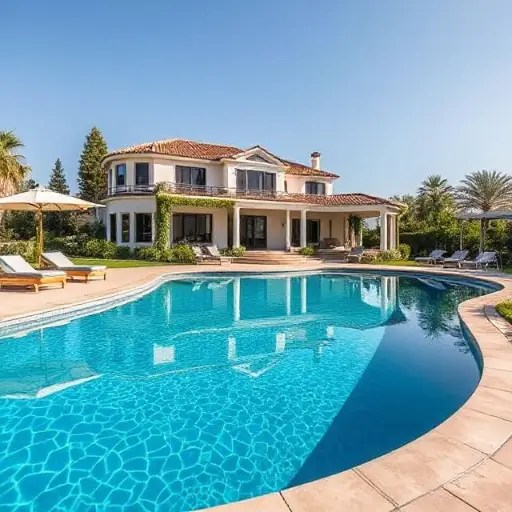
In the frozen luxury housing market, buyers are no longer just looking at properties; they’re sleeping in them. To entice prospective buyers, sellers are offering sleepovers in their multimillion-dollar mansions, a trend that’s gaining traction in high-end markets where buyers are more selective.
Julian Johnston, a real estate agent with The Corcoran Group in Miami, said this is a common tactic he’s seeing more frequently in today’s luxury market as sellers and agents are forced to become more open to creative strategies like pricing adjustments and unique marketing campaigns to stand out. “In the luxury sector, where buyers often have the means and the time to wait for the right property, anything that sparks fresh attention and differentiates a home from its competition can help move the market forward,” Johnston told Fortune.
The trend was first reported by The Wall Street Journal earlier this week, citing the example of a $60 million mansion where the owner allowed an overseas couple to stay at the home for two months at $250,000 per month before putting in an offer. The homeowner, Eric Albert, told WSJ that the potential buyers wanted to be sure the home was comfortable for them and made sure it was a good size and layout.
While Johnston said he’s not seeing this with the majority of listings yet, “it’s certainly gaining traction in high-end markets where buyers are more selective.” However, other real estate experts see this as potentially a move of desperation for sellers and a signal that some luxury homes are overpriced at the start.
The luxury housing market has been frozen for several years, with high-profile sellers being forced to drop prices on their megamansions. In April 2024, billionaire media mogul Rupert Murdoch majorly slashed the price of his Manhattan penthouse by 40% to $38.5 million. Jennifer Lopez and Ben Affleck also slashed the price of their $60 million Beverly Hills megamansion by more than $8 million.
The reason for these price drops is that luxury homes were mispriced in the first place, according to Simon Isaacs, founder of Palm Beach, Fla.-based luxury firm Simon Isaacs Real Estate. “Everybody has an expectation of what their home is worth, and real estate brokers who are on the ground showing people every day have a better understanding of what people want, what people’s appetite is, and what things are spent on,” he said. “Some things they’re willing to spend [on], and some things they’re not.”
The luxury housing market is not only affected by the high prices and mortgage rates but also by the additional taxes that are being imposed on luxury-home sales. In some markets, such as LA, a mansion tax applies an additional 4% tax to property sales of at least $5 million and a 5.5% tax for properties north of $10 million. This tax can be a “massive amount of money” for sellers, as Selling Sunset star and Oppenheim Group agent Emma Hernan previously told Fortune.
The frozen luxury housing market is not just limited to the United States, with municipalities considering mansion taxes in other countries. Cape Cod, for example, is considering a tax on wealthy homeowners that would tack on an extra 2% surcharge on luxury-home sales above $2 million. This tax will make luxury homeowners even more mindful when pricing their properties.
According to a recent report by Knight Frank, the global luxury real estate market has seen a decline in sales volumes over the past year, with a 10.3% decrease in the number of high-end properties sold. This decline is attributed to a combination of factors, including high prices, mortgage rates, and a lack of supply.
In response to the frozen luxury housing market, some sellers are turning to creative marketing strategies to attract buyers. For example, a $35 million mansion in the Hamptons is being marketed as a “private resort” with a private beach, pool, and tennis court. Another $25 million property in Beverly Hills is being marketed as a “private oasis” with a private movie theater and a private gym.
The luxury housing market is a complex and competitive market, and only time will tell if these unconventional tactics will work. However, one thing is certain: buyers are becoming increasingly picky, and sellers must be willing to adapt to their changing needs and expectations.
Key Statistics:
The global luxury real estate market has seen a decline in sales volumes over the past year, with a 10.3% decrease in the number of high-end properties sold.
The luxury housing market has been frozen for several years, with high-profile sellers being forced to drop prices on their megamansions.
The additional taxes imposed on luxury-home sales are making it more expensive for sellers to sell their properties.
The frozen luxury housing market is not just limited to the United States, with municipalities considering mansion taxes in other countries.
The luxury housing market is a complex and competitive market, and only time will tell if these unconventional tactics will work.
Expert Insights:
Julian Johnston, The Corcoran Group: “In the luxury sector, where buyers often have the means and the time to wait for the right property, anything that sparks fresh attention and differentiates a home from its competition can help move the market forward.”
Simon Isaacs, Simon Isaacs Real Estate: “Everybody has an expectation of what their home is worth, and real estate brokers who are on the ground showing people every day have a better understanding of what people want, what people’s appetite is, and what things are spent on.”
Emma Hernan, Oppenheim Group: “The mansion tax is a massive amount of money for sellers, and it’s something that they need to consider when pricing their properties.”




 The Tower Post